

25 Things You're Forgetting to Clean (That Holiday Guests Always Notice)
The uncomfortable truth about hosting is that you stop seeing your own house. You walk past the same light switch five times a day and never notice it has gone grey around the edges. Your guests are seeing everything for the first time, and they are sitting still, at eye level, with nothing to do but look around. None of these forgotten spots take long to clean. Most are under five minutes. Work through the list once and your clean house becomes an actually clean house, just in time for everyone you know to show up for the holidays.
Jump to a section
What You'll Need
Step-by-Step Instructions
Entryway: the doorbell and the front door
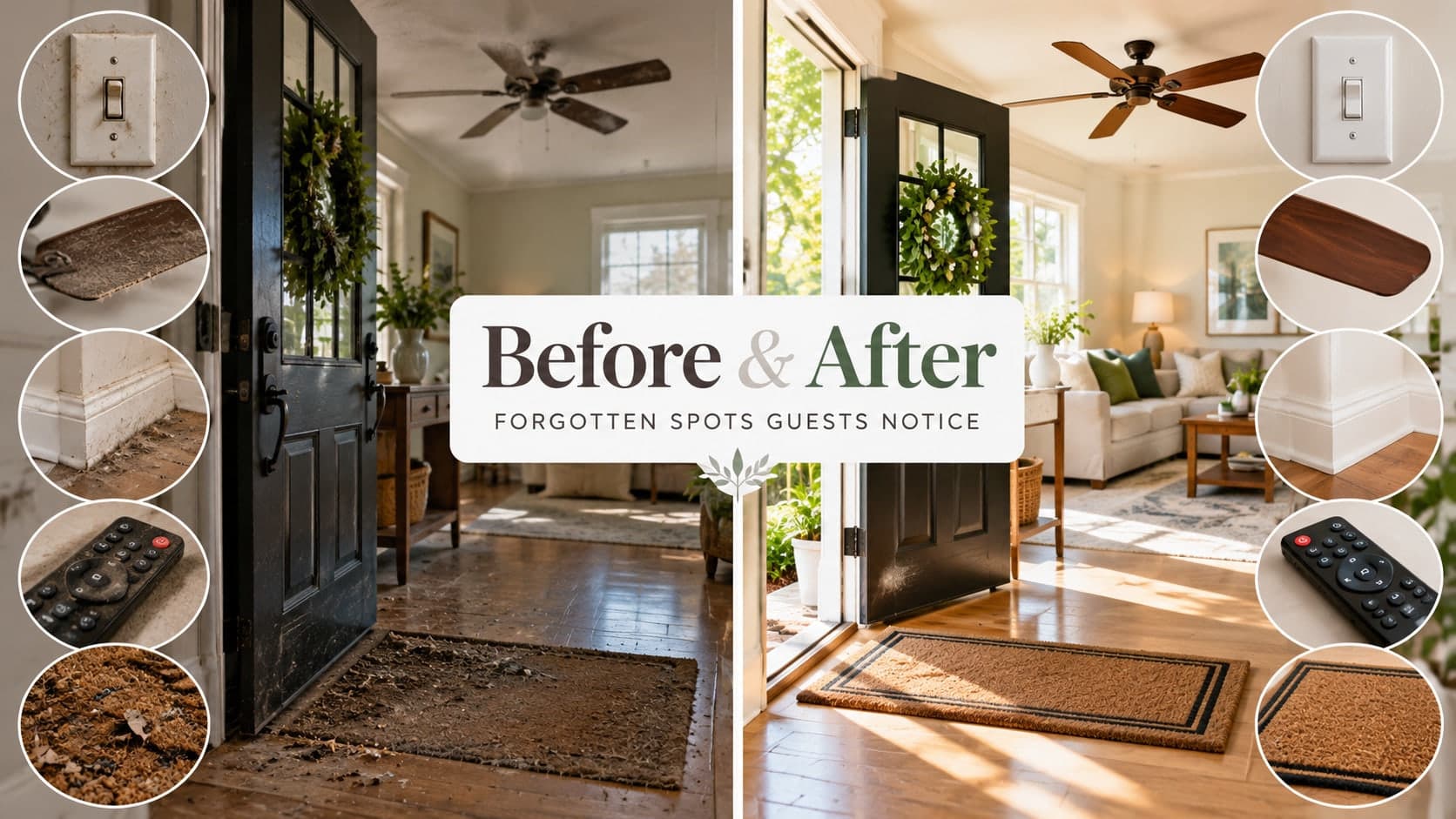
If you are hosting this season, pair this list with the complete Thanksgiving cleaning checklist, which tells you when to clean what. This list catches what a room by room pass tends to miss, and it starts before anyone is inside. The doorbell is the very first thing a guest touches and the door is the very first thing they stare at while they wait for you to answer. Wipe the doorbell button and its plate, the handle, and the door itself, paying attention to the stretch around the handle where hands land every day. A damp microfiber cloth with a drop of dish soap handles a painted or fiberglass door, and a dry cloth afterward stops streaks on a glossy finish. If the door is natural wood, keep the cloth barely damp. While you are out there, look at the door from the walkway the way a guest would. Cobwebs in the top corners of the frame and a dusty porch light are part of the same first impression, and both come off with the brush attachment on the vacuum in under a minute.
Entryway: the doormat
A dingy doormat announces the house before the door even opens. Shake it out hard over the lawn or the railing, then vacuum both sides, because grit works down through the fibers and comes back up every time someone steps on it. If the mat is coir or rubber, a scrub with warm water and a little dish soap followed by a rinse with the hose and a day in the sun gets it looking new, and the sun matters because a mat put back damp smells musty by the next morning. If it is the washable fabric kind, it goes through the machine on cold and air dries flat. Check the floor underneath the mat too. Fine dirt collects there in a perfect rectangle, and a mat that has been in place since last winter often hides a dark patch that a quick sweep or a mop removes.
Entryway: the light switch inside the door
Switch plates collect finger grime faster than almost any surface in the house, and the one inside the front door is the busiest of all because every arrival and every departure hits it, often with hands that have just been outside. A cloth lightly dampened with rubbing alcohol wipes the grey ring off the plate and the switch in seconds, and alcohol dries fast enough that there is no risk of moisture getting into the fitting. Do not spray anything directly at the switch. Spray the cloth. Once you have the cloth in your hand, keep going along the guest path: the switches in the hallway, the living room, the dining room, and the guest bathroom all get the same thirty second treatment, and a painted plate that will not come clean is cheap to replace. Handles and door knobs on that same path get wiped in the same walk through, which is covered in more detail in this rubbing alcohol guide.
Entryway: the coat closet
You are about to open this closet in front of people, and probably hand a guest a hanger while they watch. Clear a few hangers so there is actually room for coats, pick up the shoe pile and line it up or move it to a bedroom, and give the floor a quick vacuum, because closet floors collect the grit that falls off boots all year. Wipe the shelf above the rail, which is usually furry with dust nobody has looked at since the hats went up there. If the closet smells closed up, leave the door open for an afternoon with a small bowl of baking soda on the shelf. Anything that lives in there but does not belong, like the vacuum, the recycling, or a bag of returns, goes somewhere out of sight for the day. The goal is a closet a guest can look into without you apologizing for it.
Living room: the ceiling fan blades
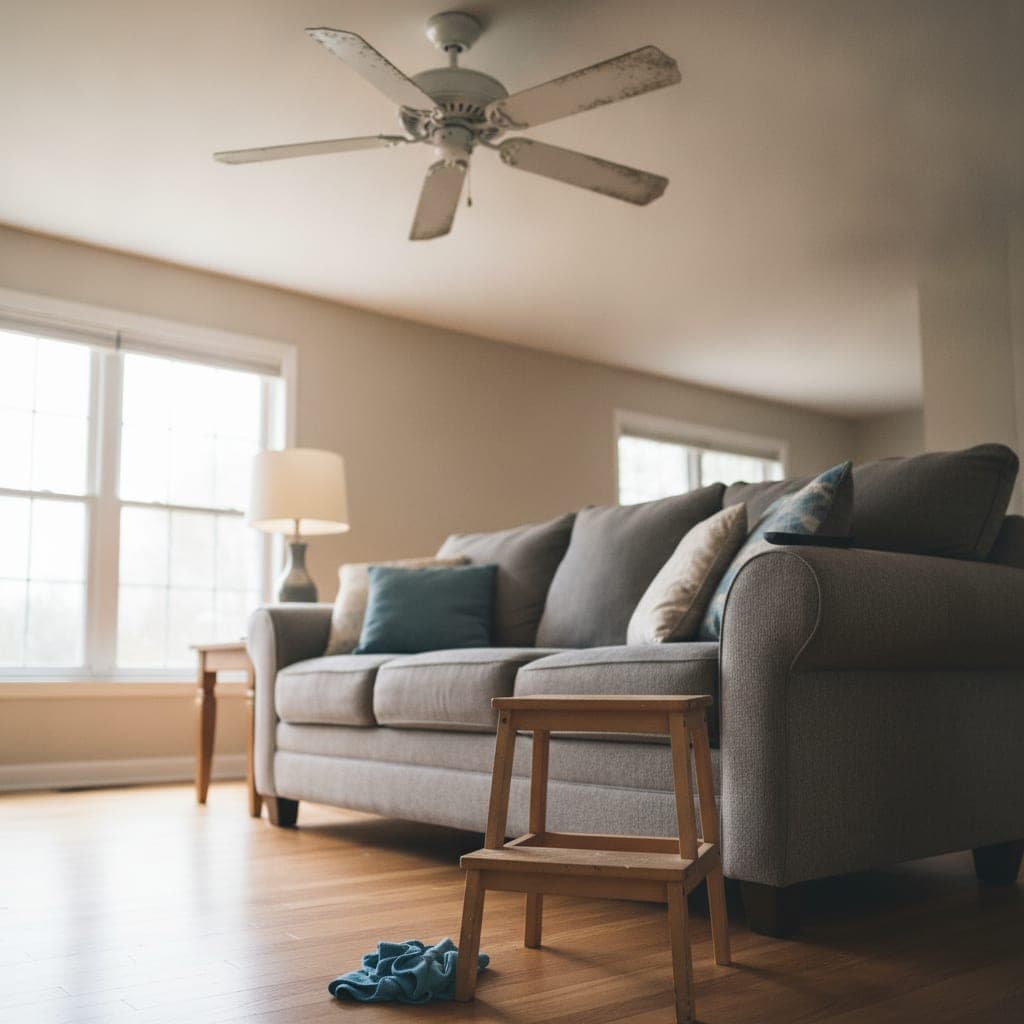
Guests on the couch look up. The tops of your fan blades are wearing a grey felt coat right now, and the moment someone turns the fan on, that coat drifts down onto the people below. The trick is to catch the dust rather than scatter it, and the pillowcase method does exactly that: slide an old pillowcase over a blade, press the fabric against the top surface, and pull it back so the dust comes off inside the case instead of onto the floor. Do each blade, then shake the case out outside. A damp cloth afterward lifts the sticky film that dust leaves behind, especially in a room near the kitchen. Switch the fan off at the wall first and use a proper step stool, not a dining chair. Check the light globes while you are up there, since a globe with a layer of dead insects inside shows badly once the lights come on.
Living room: the baseboards
Nobody notices clean baseboards, but everyone notices dirty ones, and the people most likely to notice are the ones sitting on a low couch with the baseboard right in their line of sight. Vacuum the length of them with the brush attachment first to lift the loose dust, then follow with a damp microfiber cloth with a drop of dish soap for the grey film and the scuffs. Work along the wall in sections rather than trying to do a whole room in one pass, and change the water when it goes grey. The slow part is the bending, and this method covers the shortcuts that keep you off your knees, including a cloth wrapped over a mop head. Do the hallway and the guest bathroom first, since those are the rooms where a baseboard is at eye level from a chair or a toilet.
Living room: the remote controls
Remotes are handled by everyone in the house, usually with snack hands, and they are the first thing a lounging guest picks up. Take the batteries out, then wipe every side with a cloth dampened with rubbing alcohol, working the cloth into the gaps between the buttons. A cotton swab dipped in alcohol gets the grime out around the buttons that a cloth skips over. Give it thirty seconds to dry before the batteries go back. Do the same for the game controllers, the sound bar remote, and the one for the fan, and while the cloth is out, wipe the phone chargers and the tablet that lives on the coffee table. None of this takes more than a few minutes and it is the kind of thing a guest clocks without saying anything.
Living room: under the couch cushions
If a guest hunts for a phone that slipped down the side, they will find your crumbs. Pull every cushion off and vacuum the frame underneath, where crumbs, coins, pet hair, and the odd pen collect, then use the crevice tool along the seams where the back meets the seat, because that is the channel everything falls into. If the cushions themselves look grubby once they are off, a small upholstery extractor sprays and pulls the water straight back out, so they are dry and back on the couch by evening. Vacuum both sides of each cushion with the upholstery attachment before they go back. While the cushions are off, look for stains on the fabric and deal with them now rather than the morning guests arrive. A microfiber couch needs rubbing alcohol rather than water, which is what causes the water rings people try to clean off and only make worse. Put the cushions back flipped and rotated so the worn side faces away, and plump them by hand. A couch that has been sat on all year looks newer than it is after this.
Living room: the lampshades
Lampshades quietly collect a layer of dust that dims the light and shows badly the moment the lamp is on, which during holiday evenings is always. A lint roller handles a fabric shade in about a minute. Roll from the top down with light pressure, and swap the sheet as it fills. For a pleated shade, a soft paintbrush or a clean makeup brush gets into the folds, and the vacuum with the brush attachment on its lowest setting works for a sturdy drum shade. Paper shades want a dry cloth only, since any moisture leaves a mark. Wipe the lamp base and the switch while you are there, and check the bulb. A dusty bulb throws a yellow, dingy light, and a quick wipe with a dry cloth once the bulb is cool brightens the whole corner of the room.
Living room: the TV screen and the picture frames
Dust shows on a television the moment the screen goes dark, and it shows on frame glass every time afternoon light hits it at an angle. Use a dry microfiber cloth on the screen and nothing else, no window cleaner and no sprays, because the coatings on a modern screen are easily damaged by anything with alcohol or ammonia in it. Wipe gently in one direction with the TV switched off, since a dark screen shows you what you have missed. For a mark that will not come off dry, breathe on the spot and wipe again, or use a cloth barely dampened with plain water and dry it straight after. Picture frames get the glass wiped and the top edge dusted, which is the part everyone forgets. Dust sits along the top of every frame and every mirror in the house, and a guest standing to look at a photo sees it from above.
Living room: the window and door tracks
Open a window or a slider in front of a guest and the track tells the truth. Grit, dead insects, and a black line of mold are the usual finds, and they come off in a few minutes once you know the order. Vacuum first with the crevice tool to get the loose material, then use an old toothbrush and a spray of warm water with a little dish soap to loosen what is stuck, and finish by wiping the channel with a cloth wrapped around a butter knife, which reaches the corners a finger cannot. For the black line, a spray of white vinegar left for ten minutes before the scrub usually lifts it. This guide walks through the stubborn tracks. Do the slider onto the deck and whichever window a guest is likely to open for air, and skip the rest until spring.
Living room: the vent covers
A dusty vent quietly blows dust across the whole room every time the heat comes on, and the grey streaks that form on the wall around it draw the eye straight to it. Switch the system off, then vacuum the cover with the brush attachment and wipe it with a damp cloth. If the cover is thick with dust, unscrew it, wash it in the sink with warm soapy water, and let it dry fully before it goes back, since a damp cover attracts the next layer twice as fast. Wipe the wall or ceiling around the opening while it is off. The streaks are dust that has stuck to the paint, and a damp cloth with a drop of dish soap takes them off without harming most finishes. The full vent cleaning method covers the ducts just behind the cover as well, which is where the smell comes from when the heat first kicks on in the fall.
Dining room: the chair seats and rungs
Guests look down as they sit, and what they see is the chair. Crumbs in the seam of a seat cushion and a line of dust along the rungs and stretchers are the classic miss, because chairs get wiped on top and nowhere else. Vacuum the seats with the upholstery attachment, including the crease where the seat meets the back, and wipe the rungs, the legs, and the back rail with a damp cloth. Sticky spots on the back of a chair, which come from hands pulling it out from the table, want a little dish soap. Turn a wooden chair upside down once a year and you will find the underside of the seat furry with dust; a dry cloth handles it. Do the host's chair too, since a guest will take whichever seat is open.
Dining room: the light fixture over the table
Everyone at dinner sits directly under it, looking up during the lulls in conversation. Switch it off at the wall and let the bulbs cool, then dust the fixture with a dry microfiber cloth or a soft brush, working from the top down so the dust falls onto a table you have not yet set. Glass shades lift off on most fixtures and wash in warm soapy water, which makes a difference you can see when the light goes back on. Dead insects collect in the bottom of upward facing shades and they are the thing guests notice most. Check for burnt out bulbs and replace them now, because a fixture with one dark bulb looks neglected even when the rest of the room is spotless, and make sure the replacements match the color of the others. A warm bulb next to a cool one is distracting over a long dinner.
Dining room: the houseplant leaves
Dusty leaves make even a healthy plant look neglected, and the big leafed plants people keep near a dining table are the worst for it because the leaves are flat and catch everything. Wipe large leaves with a soft cloth dampened with plain water, supporting each leaf from underneath with your other hand so it does not tear, and do both sides. The plant breathes better once the dust is off its leaves, which is why it looks instantly fresher, and the room does too. Small leafed plants can be rinsed gently in the shower and left to drip dry. Skip the leaf shine products, which clog the leaf and attract more dust. While you are at it, remove any dead leaves from the soil, wipe the rim of the pot, and dust the saucer underneath, which is the part that shows from a chair.
Kitchen: the top of the fridge
Tall guests see it, and anyone who reaches up to put something there finds it. The top of a fridge carries a sticky layer of dust bound together with cooking grease, and because it is sticky, a dry cloth just moves it around. Warm soapy water with a squirt of dish soap cuts it fast. Dawn is the usual choice because it is built for grease, and a cloth wrung out in it, followed by a rinse cloth and a dry one, takes the surface back to clean in a few minutes. Move whatever lives up there, wipe underneath it, and wipe the items themselves before they go back, since the cereal boxes and the bread maker are coated too. The same layer sits on top of the upper cabinets, and if a guest is tall enough to see the fridge, they can see those as well.
Kitchen: the appliance handles
The fridge, the oven, the microwave, and the dishwasher handles are the four most touched spots in the kitchen, and a helpful guest grabs every one of them in the first ten minutes. Hands straight from raw turkey, hands with butter on them, hands that have just been outside. Wipe all four with warm soapy water, including the underside of the handle where fingers actually land, then wipe the trim around them. Once the handles are clean, do the streak free pass on the stainless fronts: a cloth wrung out in warm water with a drop of dish soap, then a dry microfiber cloth wiped in the direction of the grain, and the fronts stop showing every fingerprint. This guide covers the fronts that streak no matter what you do. Add the cabinet handles around the sink and the stove, which get the same hands.
Kitchen: the toaster crumb tray
If a guest helps with breakfast the next morning, they will meet it. Unplug the toaster, slide the tray out from the bottom, dump it over the trash, and wipe it with a damp cloth. Then turn the toaster upside down over the sink and give it a gentle shake, since the tray only catches part of what falls. A burnt smell every time the toaster runs is almost always old crumbs on the heating element, and it goes away once they are out. Wipe the outside while it is unplugged, paying attention to the slots on top where butter and jam fingers leave marks. The same job applies to the toaster oven, which hides a tray full of cheese and crumbs under the rack, and to the air fryer basket, which a guest may well go looking for.
Kitchen: the sink drain and the disposal
A kitchen can look spotless and still smell like the drain. The smell lives in the rubber splash guard of the disposal, in the grinding chamber underneath, and in the film inside the drain pipe. Lift the edges of the splash guard and scrub the underside with an old toothbrush and dish soap, which is where most of the smell sits. Then run a tray of ice cubes and a handful of coarse salt through the disposal to scour the chamber, and follow with a few citrus peels for the scent. The full disposal method covers the stubborn cases, and these sink odor fixes handle a smell coming from the drain itself. Do this a day before guests arrive rather than the morning of, so the kitchen smells of nothing by the time the cooking starts.
Kitchen: the sponge sitting on your sink
A guest washing a single glass will reach for it, and a smelly sponge undoes every other clean surface in the room. A sponge that smells is one that has been sitting wet with food in it, and no amount of rinsing fixes that once it starts. Either sterilize it or replace it. The dishwasher on a hot cycle, or two minutes in boiling water, kills most of what is living in it, and this ranking of the methods covers which ones actually work. A new sponge costs pennies, and for a holiday with a dozen people washing up, a fresh one on the day is the simpler answer. Put the old one aside for cleaning the trash can. Wring the sponge out properly and stand it on edge between uses so it dries, which is the whole reason it starts smelling in the first place.
Kitchen: the trash can itself
Not the bag, the can. Drips down the inside, a ring of gunk under the lid, and a dried puddle at the bottom are where mystery kitchen smells live, and a new bag on top of all that does nothing. Take the can outside, rinse it with the hose or in the tub, and scrub the inside with hot water and dish soap, giving the underside of the lid and the pedal mechanism the same attention. Spray it with a solution of equal parts white vinegar and water, let it sit for ten minutes, then rinse again and leave it to dry in the sun, which does more for the smell than any spray. Put a few sheets of newspaper or a sprinkle of baking soda in the bottom before the new bag goes in, so the next leak is caught. Do the recycling bin and the bathroom bins at the same time, since they are the ones that get forgotten for a year.
Bathroom: the toilet base, the hinges, and behind it
You clean the bowl. Guests notice the base, the seat hinges, and the floor behind, because the bathroom is the one room they spend time in alone at close range. Those little hinge caps pop open for a reason: lift them with a flat screwdriver and you will find the build up that causes the smell no amount of bowl cleaner shifts. A cotton swab dipped in hydrogen peroxide gets into the hinge and the bolt holes, and a second swab dries it out. Wipe the whole seat, top and underside, then the base where it meets the floor, then the floor behind the toilet with a cloth you will not use anywhere else. Finish with the wall beside it, which takes more splash than anyone likes to think about. A toilet that smells clean up close is what a guest remembers, and this bathroom list covers the rest of the room to the same standard. A steam cleaner with the small nozzle is the fastest way through the hinges and the base, since the heat lifts the dried on grime that a cloth only smears around.
Bathroom: the faucet aerator and the showerhead
Low pressure and a crusty, sideways spray pattern read as neglect, and overnight guests meet your shower up close. The cause is mineral scale blocking the tiny holes, and the fix is a soak rather than a scrub. Fill a plastic bag with white vinegar, tie it over the showerhead so the face is submerged, and leave it for a few hours or overnight, then run hot water to flush the loosened scale. Here is how to restore full water pressure, including the heads that do not unscrew. The faucet aerator at the sink unscrews by hand or with a cloth wrapped pair of pliers, and a thirty minute soak in vinegar clears the screen. While the vinegar is out, deal with the hard water spots on the faucet and the shower glass, which are the same scale in a different place. Dry the chrome with a cloth afterward so it shines rather than spotting again.
Bathroom: the toilet brush holder and the plunger
The two things everyone owns and no one cleans, and both sit in full guest view beside the toilet. The holder collects the water that drips off the brush and turns it into something that smells, so pour it out, wash it with hot soapy water, and let it dry upside down. The brush itself soaks in a bucket of hot water with a splash of bleach or a cup of vinegar for an hour, then air dries by wedging the handle under the toilet seat so the head hangs over the bowl. The plunger deep clean follows the same idea, and a plunger left to dry outside in the sun comes back without the smell. If either one is stained beyond saving, replace it. They cost a few dollars and a new set in a closed holder changes how the whole corner looks.
Bathroom: the bath mat and the hand towel
The hand towel is the one item every single guest touches, and a musty bath mat is the first thing socked feet discover. Wash both. The mat goes through the machine on warm with a little detergent and air dries, or tumbles on low if the backing allows it, and if it smells sour out of the wash, a cup of white vinegar in the rinse takes care of that. Put out the good hand towel, the one that has not been used, and put it out last, after your own hands are done for the day. Hide the family towels somewhere out of the room. If the bathroom has a fabric shower curtain, run it through the wash at the same time, and give the plastic liner a cycle with a couple of towels to scrub it. A fresh mat, a fresh towel, and a liner without a mildew hem make a bathroom feel cleaned even when the rest of it only got a wipe.
What the difference looks like
Pro Tips
- The ten minute version, if there is no time for all 25: the doorbell and front door, the light switches on the guest path, the ceiling fan over the seating area, the remote controls, the appliance handles, the toilet hinges and base, and a fresh hand towel. That covers every surface a guest actually touches or stares at.
- Finish with scent. A house that smells clean gets credit for being clean, and a simmer pot or any of these ten ways to make your house smell amazing seals it after the work is done.
- Work top to bottom in each room: fan, then light fixture, then frames and shelves, then baseboards, then the floor last, so the dust you knock loose lands on something you have not cleaned yet.
- Keep a cloth dampened with rubbing alcohol in a sandwich bag and do every switch, handle, and remote on the guest path in one walk through the house. It takes about five minutes and it is the part most people skip.
- Put the items that stay forgotten on a weekly cleaning schedule. Once the switches and handles are a Tuesday job, they stop being a problem the day before guests arrive.
Frequently Asked Questions
How often should these forgotten spots get cleaned?
Most need attention monthly, not weekly. The exceptions are the high touch items, meaning the switches, the handles, and the remotes, which earn a weekly wipe. Add them to a weekly cleaning schedule and they stop being forgotten at all.
What is the single most noticed forgotten spot?
The toilet area beyond the bowl: the base, the seat hinges, and the floor behind. Guests spend time alone in the bathroom at close range, and it is the room they judge hardest.
What should I clean these with?
You need almost nothing special. Rubbing alcohol for electronics and switches, white vinegar for hard water and trash cans, Dawn or any dish soap for grease, hydrogen peroxide on a cotton swab for the toilet hinges, and a microfiber cloth for everything else.
Should I do this list before or after the regular cleaning?
Before the floors. Dust falls, so do the fan, the fixtures, the frames, and the baseboards first, then vacuum and mop as the last job in each room. If you have already done the floors, work carefully and plan on a quick second pass with the vacuum.
How this guide was made
Fredler Pierre-Louis researched, wrote and edited this deep clean guide. The amounts and waiting times in its 25 steps come from published cleaning chemistry and from the guidance of the companies that make the products and surfaces involved, not from a test we ran ourselves. Where a popular version of a method does not work, or could damage a surface, the guide says so.
- Checked against manufacturer and materials guidance for the surfaces named.
- Reviewed by a person for chemical safety and surface compatibility before publication.
- Written to explain why a method works, not just to list steps.
- Corrected whenever a reader reports an error or an edge case we missed.
Read our full editorial policy or learn more about the team behind TryCleaningHacks.
Related Cleaning Guides
Safety Notes
- Switch the ceiling fan and the dining light off at the wall before dusting them, let the bulbs cool, and use a sturdy step stool rather than a dining chair.
- Spray cleaner onto the cloth, never onto a light switch, a remote, or a screen. Moisture in a switch plate or a remote is how they stop working.
- Never mix bleach with vinegar, ammonia, or any other cleaner, including when soaking the toilet brush. Pick one and rinse before using the other.
- Hydrogen peroxide can lighten colored grout and fabric. Keep it on the toilet hinges and the porcelain, and test any other surface in a hidden spot first.
- Unplug the toaster before you pull the crumb tray or turn it over, and let the heating elements cool first.
You might also like
7 Deep Cleaning Tricks That Save Hours Every Week
Most of the time spent cleaning a bathroom is spent waiting or backtracking, not scrubbing. Spraying one surface, waiting for it, wiping it, then starting the next one means you pay every dwell time separately. Batching those dwell times so every cleaner works at once is the single change that cuts the job roughly in half. None of this involves a gadget or a miracle spray, just the order you work in and where you stop wasting motion.
How to Deep Clean a Shower (10 Proven Methods)
I deep cleaned the same shower twice in one week once with my old routine and once with these ten methods applied in the right sequence. The difference wasn't even close. Here's what changed and the daily habit that eliminated most of my scrubbing for good.
30 Cleaning Myths You Need to Stop Believing
I believed most of these myths for years, and two of them left permanent marks on surfaces in my own house. This is the honest version of what I got wrong, why the popular advice fails, and the two safety myths that actually send people to the emergency room. I have kept the failures in here on purpose, because the mistakes taught me more than the wins did, and a myth is only dangerous while you still trust it.