

10 Easy Ways to Make Your House Smell Amazing All Day
I threw out every plug in and aerosol can in my house two years ago and switched to these ten methods instead. The simmer pot gets more genuine "what is that smell, it's incredible" comments than any candle I ever burned, and it costs almost nothing. Here is what actually holds up day after day, which tricks are overhyped, and the one habit that matters more than any fragrance you add on top.
Jump to a section
- What you'll need
- Step-by-step
- Mix a linen and room spray that actually clings to fabric
- Simmer a stovetop pot of citrus and spice
- Set out baking soda jars dosed with oil
- Tuck dryer sheets into vents, drawers, and cushions
- Warm vanilla on a light bulb or a small dish
- Deodorize carpets with scented baking soda before you vacuum
- Pro tips
- FAQ
Which method to use
| Method | Effort | Best for | Where it falls short |
|---|---|---|---|
| Linen and room spray | 3 minutes to mix, seconds to use | Fast reset before guests, sofas, curtains | Surface level and short lived. It does nothing about the source of a smell. |
| Stovetop simmer | 5 minutes, then 1 to 3 hours unattended | Filling a whole floor, cooking odors, winter | Needs watching so the pot does not boil dry, and it stops working the moment you turn it off. |
| Baking soda jars | 2 minutes, replace monthly | Continuous background absorption in small rooms | Absorbs rather than scents. Nearly invisible in a large or well ventilated room. |
| Dryer sheets in vents | Under a minute | Drawers, closets, cushions, air return vents | Purely masking, and the effect fades within days. |
| Warm vanilla | 1 minute | A small warm bakery note in one room | The light bulb version needs an incandescent bulb. LEDs stay cool and it will not work at all. |
| Scented baking soda on carpet | 5 minutes, plus 15+ minutes dwell | Carpet and rugs holding pet or smoke odor | The only method here that removes odor rather than covering it, but it needs a real vacuum pass to lift back out. |
What You'll Need
Step-by-Step Instructions
Mix a linen and room spray that actually clings to fabric
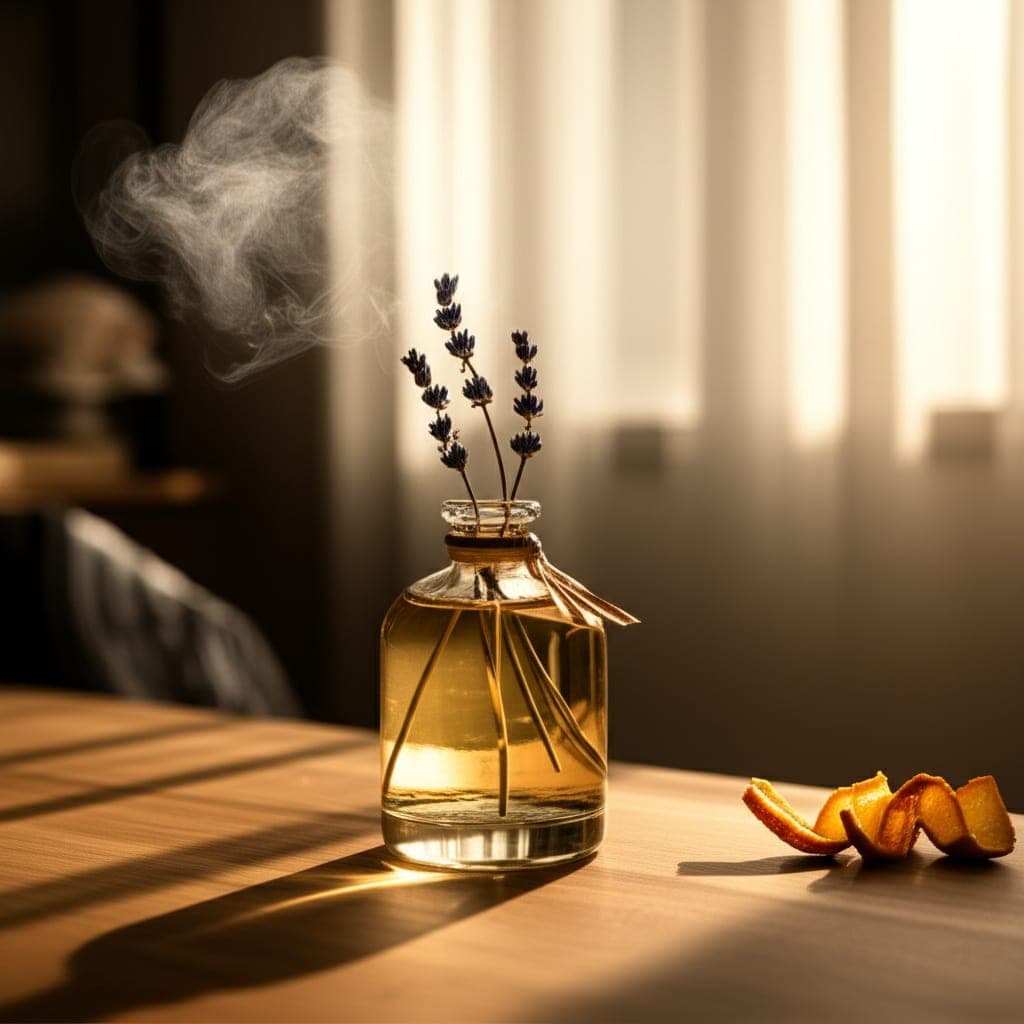
This is the first thing I make when I want a quick reset, and the recipe took me a few tries to get right. Into a glass spray bottle goes one cup of distilled water, two tablespoons of vodka or 91 percent rubbing alcohol, and about 18 to 20 drops of essential oil. Lavender and orange together is my house standard. The alcohol is the part people skip, and skipping it is why homemade sprays disappoint. Water and oil separate no matter how hard you shake, so without the alcohol you spray a mist of plain water followed by a few oily beads that leave dots on your throw pillows. The first bottle I made did exactly that and I nearly gave up on the whole idea. Alcohol dissolves the oil into the water and helps it flash off cleanly, so the scent lands and the fabric dries in a minute. Shake hard before every use, mist curtains, bedding, and upholstery from about a foot away, and stay off silk or anything dry clean only because even the alcohol version can water spot delicate weaves. Do a hidden test patch on new furniture first. Expect a soft scent that reads within about an inch of the fabric, not a cloud that fills the room. Cap it at 20 drops per cup. I went to 35 once thinking more was better and gave myself a headache in a closed bedroom.
Simmer a stovetop pot of citrus and spice
If you only try one thing on this list, make it this one. It is the method that consistently stops guests mid sentence. Fill a small saucepan with water, add one sliced orange, three or four cinnamon sticks, a tablespoon of whole cloves, and two sprigs of rosemary. Bring it to a bare simmer on the lowest heat and leave it there. Within about five minutes I can smell it two floors up, which is the whole point. Candles saturate one room, but the steam here rides your home's airflow and spreads everywhere. Top the water off every 30 to 45 minutes, because a dry pan is both a scorched smell and a fire risk, and never walk out of the house with it going. I set a phone timer so I do not forget it. When you are done, let it cool, cover it, and stash it in the fridge. It holds up for about three days of reheating before the fruit turns dull and slightly sour, which is your cue to compost it. For summer I switch to sliced lemon, a handful of fresh mint, and a teaspoon of vanilla, which comes out brighter and less like a holiday. One warning, this only masks. If your kitchen trash or a damp mop smells underneath, the simmer just layers a covered up note over it, so deal with the source first.
Set out baking soda jars dosed with oil
Baking soda is the workhorse of odor control because it chemically neutralizes smells instead of perfuming over them, but plain soda in a box does almost nothing you can smell. The fix is to turn it into a scent carrier. Half fill small mason jars or ramekins with baking soda, add eight to ten drops of essential oil, and stir it through with a fork so the oil is not just pooled on top. I keep one under each bathroom sink, one by the kitchen trash, one in the coat closet, and one in the mudroom where shoes live. The soda pulls in the ambient funk while the oil gives off a low, steady scent that never overwhelms. Cover each jar with a square of breathable cloth like muslin held on with a rubber band. This hides the powder, keeps curious pets and toddlers out, and still lets air move through. The mistake I made early was expecting these to fill a room. They will not, and they are not supposed to. Think of them as removing the baseline staleness so the room reads neutral. Give the jar a stir every few days to wake the oil back up, and swap the whole thing every two to three weeks once the soda stops taking on odor. Old batches go straight down the drain to freshen it on the way out.
Tuck dryer sheets into vents, drawers, and cushions
This one is almost too easy, and it works better than it has any right to. Slide a dryer sheet behind a supply or return air vent, drop one in each dresser drawer, slip a couple between couch cushions, and put one in every shoe bin. Air moving over the sheet lifts a faint clean laundry note and carries it along. The return vents are the trick worth knowing. Your HVAC system pulls household air across that sheet and pushes the scent back out through every register in the house, so a single sheet on a return does more than five scattered around a room. I taped one lightly to the grille of my hallway return and could tell the difference in the bedrooms upstairs. A caution I learned the annoying way, do not let a sheet get sucked into the ductwork or lie flat against a filter and choke airflow, so wedge it at the edge of the grille where it stays put. I now buy unscented sheets and add three or four drops of my own oil, because the perfumed store versions clash with everything else I have going and a few of them made the return smell cloying. Scent fades in about a month, sometimes sooner near a hot vent, so just swap them when a room stops smelling like anything.
Warm vanilla on a light bulb or a small dish
This is the oldest trick my grandmother used and it still smells like a bakery in the best way. Put two or three drops of pure vanilla extract on a cool incandescent bulb, then switch the light on. As the glass heats, it gently bakes the vanilla and pushes out a warm, sweet aroma that people read as cookies without being able to name it. Two things matter here. Use pure extract, not imitation, because imitation goes plasticky when heated, and use very little, since vanilla is strong and a puddle just smokes and stinks. The obvious catch in 2026 is that almost nobody runs incandescent bulbs anymore, and this does not work on an LED because LEDs stay cool. I tried it on an LED bulb and got nothing but a wet spot. My workaround is a small ceramic dish with a few drops of vanilla set on top of a warm lamp base or on a radiator shelf, which warms it slowly and safely. Never put the extract directly on an LED, a halogen, or anything with exposed wiring. I like this best in an entryway right before people arrive, because the scent hits them at the door and reads as comfort. It fades within an hour or two, so it is a welcome trick, not an all day one.
Deodorize carpets with scented baking soda before you vacuum
Of everything here, this is the one method that pulls odor out of carpet instead of hiding it, which makes it the option worth using on pet odors specifically. Mix one cup of baking soda with about 15 drops of essential oil in a lidded container and shake it, then let it rest a full 24 hours so the oil soaks evenly into the powder instead of clumping. If you sprinkle it right after mixing you get scented dots and bare patches. Scatter it generously over carpets, area rugs, and fabric furniture, working it lightly into high traffic lanes and the spots where pets sleep. Let it sit 15 to 20 minutes, longer if the smell is stubborn, then vacuum slowly and thoroughly in two directions. The powder makes physical contact with the fibers and absorbs the trapped odor molecules, which is why it beats a spray that only floats fresh scent over the problem. A real caution, keep the layer thin and vacuum it all up, because heavy baking soda buildup can dull a vacuum's motor and clog the filter over time. Empty the canister right after. On truly set in urine you may need two rounds a few days apart, and if it survives that, the odor is likely in the pad underneath and no powder will reach it.
Hang a eucalyptus bundle in the shower
This is the most spa like trick on the list and takes about thirty seconds to set up. Buy a fresh bundle of eucalyptus, most grocery floral sections carry it, and tie it to the shower head with a rubber band or twine so the leaves hang just outside the direct spray. You do not want it soaking, you want it in the steam. When you run a hot shower, the humidity coaxes the natural oils out of the leaves and the whole bathroom fills with a clean, cooling menthol scent. During allergy season it genuinely helps me breathe easier, which is a nice bonus on top of the smell. A fresh bundle lasts two to three weeks. Here is the honest part, once it dries out and browns it does almost nothing, and a lot of people keep a crispy dead bundle up for months thinking it still works. It does not, so replace it when the leaves stop releasing scent when you crush one. Keep it out of the direct stream or it goes slimy and moldy fast in the constant wet, which smells worse than no eucalyptus at all. If your bathroom has poor ventilation, run the fan afterward so the bundle dries between showers and lasts longer. It will not scent the room when the shower is off, so this is a shower time luxury rather than round the clock fragrance.
Refresh the garbage disposal with frozen citrus cubes
A sour, musty kitchen smell you cannot place is very often the disposal, where a film of old food clings inside the grinding chamber where you cannot see or reach it. Save your lemon, lime, and orange peels through the week. You can toss a handful straight in with a few ice cubes and a run of cold water for 15 seconds, and the ice scours the chamber while the citrus oils cut the grease and leave a fresh smell that hangs around the kitchen for hours. What I actually do now is better. I freeze chopped peels in an ice cube tray topped with plain white vinegar, and once frozen I keep the cubes in a labeled bag. Two or three cubes down the disposal with cold water running does the scouring and deodorizing in one step, and it is idiot proof enough that anyone in the house can do it without a recipe. A safety note that matters, run cold water not hot, since hot water melts fats and lets them recoat the chamber, and keep your fingers well clear whenever the switch is anywhere near on. Do this twice a week and the disposal never gets a chance to turn. One thing it will not fix is a smell coming from the P trap below, so if citrus does not touch it, the problem is deeper in the plumbing.
Put dried coffee grounds where nothing else works
Coffee grounds are my secret weapon for the ugly, stubborn smells that fragrance only makes worse, think refrigerator funk, litter box, a musty garage, or a shoe rack. The key word is dried. Spread your used grounds on a baking sheet and let them dry completely first, because damp grounds will grow mold within days and hand you a brand new problem, which I learned the hard way with a fuzzy bowl in the back of my fridge. Once dry, put them in a shallow open bowl and set it in the problem zone. The grounds absorb odor molecules rather than covering them, and they are strong enough to knock down fish, garlic, and cigarette smoke without adding an artificial perfume. In the fridge they read as neutral, not coffee, which is what you want near food. Everywhere else you get a faint, pleasant roasted note. Swap them every one to two weeks, sooner in a high humidity spot. For a living area I pour dried grounds into a small ceramic dish and add three drops of vanilla, which turns it into a warm cafe smell that visitors always ask about. Keep the bowls up out of reach of dogs, since a dog that eats a pile of coffee grounds can get a dangerous caffeine dose. This is the least glamorous method here and the one I would give up last.
Build a reed diffuser for pennies a week
For steady background scent with zero effort once it is set up, nothing beats a reed diffuser, and the homemade version costs almost nothing next to the store bottles. Pour about a quarter cup of a light carrier oil, sweet almond or fractionated coconut both work, into a narrow necked glass bottle or a small bud vase. Add 20 to 25 drops of essential oil and two tablespoons of rubbing alcohol, which thins the mix so it climbs the reeds instead of sitting at the bottom. That alcohol tip is the difference between a diffuser that throws scent and one that just sits there looking pretty, which is how my first attempt went. Slide in five to eight rattan reeds, the tan porous kind, not bamboo skewers, which are too dense to wick. Flip the reeds every three or four days to refresh the scent as the exposed ends dry out. A narrow neck slows evaporation, so one setup runs four to six weeks, and I costed mine at roughly forty cents a week against about eight dollars for a comparable store bottle. Match the scent to the room, calm lavender in bedrooms, citrus in the kitchen, eucalyptus in the bath. Keep it on a stable shelf away from pets and children, because the oil stains fabric, is not safe to drink, and a knocked over bottle is a genuinely awful cleanup. Wipe the neck when you flip the reeds so it does not get gummy.
What it costs
| Linen and room spray8 oz batch, vodka base plus 30 drops of essential oil | $0.90 |
|---|---|
| Name brand fabric refreshertypical 27 oz bottle | $4.99 |
| Stovetop citrus and spice simmerone pot, using a spent orange peel and 2 cinnamon sticks | $1.10 |
| Baking soda jar with oilone jar, lasts about 30 days | $0.35 |
| Name brand gel air freshenertypical single cone, about 30 days | $3.49 |
| Plug in air freshener, first yearwarmer plus roughly 12 refills | $58.00 |
| Essential oil starter setone time, enough for months of the recipes above | $18.00 |
Prices are approximate US retail and will vary by store and region.
Pro Tips
- Fix the smell before you add a smell. Take the trash out every single night and open the windows for ten minutes each morning. These two free habits killed the stale baseline funk in my house better than any product, and every method above works twice as well on top of a genuinely clean room.
- Layer scents by how the room is used. Calming lavender in bedrooms, bright citrus in the kitchen and bathrooms, and something warm like vanilla or cinnamon near the entry where people first walk in.
- Buy pure essential oils, not fragrance oils. Fragrance oils are synthetic, fade faster, and are the usual culprit behind headaches in a closed room. The pure oils cost more up front but you use fewer drops.
- Keep a made up bottle of linen spray in every room so a two second spritz is always within reach. If it lives in a cabinet you will never use it.
- Twenty drops of oil per cup of water or half cup of soda is the practical ceiling. More does not read as stronger, it reads as chemical, and it can genuinely give people a headache.
Frequently Asked Questions
What is the fastest way to make my whole house smell good before guests arrive?
Start a stovetop simmer pot of sliced orange, cinnamon sticks, cloves, and rosemary on the lowest heat about twenty minutes before people come. The steam spreads through your home's airflow and reaches other floors within five minutes, which candles cannot do. For a last second boost near the door, warm a few drops of vanilla on a lamp base or a ceramic dish in the entryway.
How do I get rid of a bad smell instead of just covering it up?
Find and remove the source first, because fragrance on top of a real odor just smells like something being hidden. Empty and wash the trash can, clean the garbage disposal and drains, wash any fabrics that hold smell, and air the room out. Then let baking soda or dried coffee grounds absorb what remains. Absorbers neutralize odor molecules, while sprays and candles only mask them.
Are these methods safe to use around cats and dogs?
Some are and some are not. Baking soda jars and simmer pots are generally fine, but many essential oils, especially tea tree, eucalyptus, and peppermint, are toxic to cats and dogs, so check each oil before diffusing or spraying it regularly. Keep reed diffuser oil and coffee grounds where pets cannot reach them, since spilled oil and eaten grounds can both make an animal sick.
Why does my homemade room spray or reed diffuser barely smell like anything?
Almost always because there is no alcohol in the mix. Oil and water separate, so a spray without a little vodka or rubbing alcohol lays down mostly plain water. A diffuser without alcohol leaves the oil sitting at the bottom instead of climbing the reeds. Add two tablespoons of alcohol per batch, use pure essential oil rather than fragrance oil, and flip diffuser reeds every few days.
How often do I need to refresh each of these?
Linen spray lasts weeks in the bottle. Baking soda jars and stovetop pot ingredients go every two to three weeks and three days respectively. Dryer sheets last about a month, eucalyptus bundles two to three weeks, coffee grounds one to two weeks, and homemade reed diffusers four to six weeks. When something stops giving off scent, that is your cue, not the calendar.
Do plug in air fresheners and gel fresheners work better than these?
They are more convenient but they only mask, and they burn through fastest exactly where you tend to put them, near vents and open windows, because high airflow evaporates them in days. If you use a gel, put it in a low airflow spot like a closet or under a sink. Overall the absorber based methods here last longer, cost far less, and actually reduce odor rather than layering scent over it.
How this guide was made
This Home Fragrance guide was researched, written, edited, and published by Fredler Pierre-Louis. The 10 steps below are built around Pure essential oils (lavender, orange, eucalyptus, and one or two others you like), A glass spray bottle and Vodka or 91 percent rubbing alcohol, and the quantities and dwell times come from published cleaning-chemistry and manufacturer guidance for those materials, not from a controlled trial we ran ourselves. Where a popular version of this hack does not work, or is risky on a particular surface, this 10 min guide says so.
- Checked against manufacturer and materials guidance for the surfaces named.
- Reviewed by a person for chemical safety and surface compatibility before publication.
- Written to explain why a method works, not just to list steps.
- Corrected whenever a reader reports an error or an edge case we missed.
Read our full editorial policy or learn more about the team behind TryCleaningHacks.
Related Cleaning Guides
Safety Notes
- Many essential oils are toxic to cats and dogs, especially tea tree, eucalyptus, and peppermint. Cats in particular cannot process certain terpene compounds. Research pet safe oils before you diffuse or spray anything regularly in a home with animals, and never let pets drink from a diffuser or eat coffee grounds.
- Never leave a stovetop simmer pot unattended and never let it boil dry. Use the lowest heat, top off the water often, keep it in sight, and turn it off before you leave the house or go to sleep. A dry pan is a scorch smell at best and a fire at worst.
- Only put vanilla extract on a cool incandescent bulb, and use just a few drops. Do not apply it to LED, halogen, or CFL bulbs, to light fixtures with exposed wiring, or to anything already hot. When in doubt, use a ceramic dish near a warm surface instead of the bulb itself.
- Keep homemade sprays, reed diffuser oil, and concentrated essential oils well out of reach of children. Undiluted oils can irritate skin and are dangerous if swallowed, even in small amounts.
- Never mix cleaning chemicals to chase an odor. Do not combine bleach with vinegar, ammonia, or any other product, since the fumes can be seriously harmful. Every method here relies on natural absorbers and diluted oils on their own.
You might also like
How to Get Onion Smell Out of the House
I diced two large onions for a stew on a Sunday and the smell was still hanging in the curtains on Tuesday. After timing four different deodorizing methods over a real onion-cooking session, here is the order that actually clears the air fastest and the mistakes that just spread the smell to other rooms.
How to Make Your Entire Home Smell Like Cinnamon
Cinnamon is the most forgiving home scent in the kitchen aromatic family. It pairs with morning coffee, with afternoon baking, and with evening tea without ever clashing. After running four different cinnamon methods through a real two-story home for a full week, here is the layered routine that fills every room evenly and the mistakes that leave the upstairs untouched.
How to Get Garlic Smell Out of the House
I roasted three whole heads of garlic for a Sunday pasta and the smell was still clinging to the dish towels two days later. After timing the methods that actually cleared the air against the ones that only spread the smell, here is the order that worked fastest and the mistakes that kept the garlic ghost hanging around until midweek.