

11 Ways to Use Dawn Dish Soap Beyond the Sink
I have kept a squeeze bottle of watered down Dawn next to my stove for about three years now, and honestly it beats every dedicated degreaser spray I have paid real money for. Below are the uses that earned a permanent spot in my kitchen, plus the two places people swear Dawn works where it quietly fails. I will tell you the one that cost me a good cast iron skillet before I learned better. None of this is fancy. It is one bottle of soap doing about nine jobs, and once you dial in the dilution and the timing, most of these become two minute habits rather than weekend projects. I have tried to be honest throughout, including the moments where Dawn is the wrong tool and something plainer works better.
Jump to a section
- What you'll need
- Step-by-step
- Mix the everyday degreasing spray first
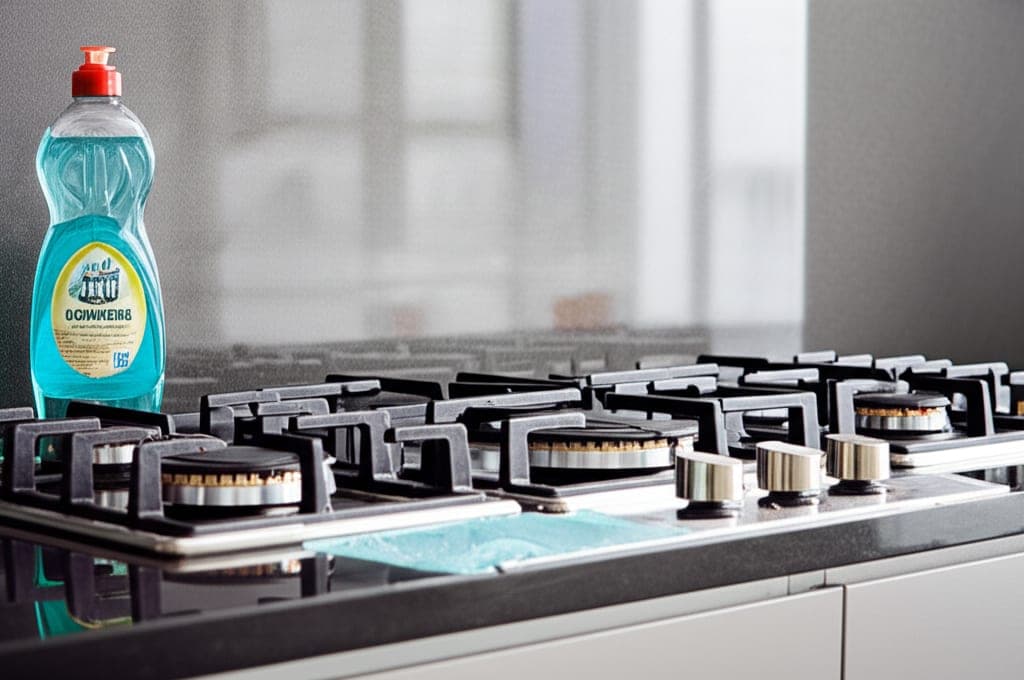
- Wipe the stovetop down while it is still slightly warm
- Soak the range hood filters in the sink
- Clean cabinet fronts, especially the undersides you never look at
- Wash the backsplash before the splatter hardens
- Pretreat grease stains on laundry, then wash the same day
- Pro tips
- FAQ
What You'll Need
Step-by-Step Instructions
Mix the everyday degreasing spray first
This is the base for half the other steps, so make it once. I add about 10 drops of original blue Dawn to a 16 ounce spray bottle, then fill the rest with warm water. Warm matters. Cold water leaves the soap sitting in a clear layer at the bottom that never really blends, which is the usual explanation when a homemade degreaser feels weak for no obvious reason. Swirl it, do not shake it hard, or you get a bottle of foam instead of liquid. Set the nozzle to stream rather than mist. On a vertical backsplash a stream lands where you aim it, while a mist drifts onto everything nearby, including the food on your counter. One bottle lasts me roughly three weeks of nightly wipe downs, which works out to a few cents a week. A word on strength. Ten drops in 16 ounces is deliberately weak, because a weak solution rinses clean and a strong one leaves a film that attracts dust. If a job resists, do not dump in more soap, just let the spray dwell longer or hit it a second time. I label the bottle with a marker so nobody in the house mistakes it for glass cleaner, and I mix a fresh batch rather than topping off an old one, because warm tap water sitting for weeks can grow a faint funk. If yours ever smells off or looks cloudy beyond the soap, empty it, rinse the bottle, and start over. Expect a clear, slightly slippery liquid that foams lightly when you wipe. That light foam is the sign you got the ratio right.
Wipe the stovetop down while it is still slightly warm
The trick nobody mentions is timing. I spray the stovetop when it has cooled to barely warm, not hot and not stone cold. Warm grease releases, while cold grease has already hardened. Never spray a hot surface, because the water flashes into steam and can spatter back at you, and the soap can bake onto the glass. Let the spray sit five minutes, then wipe with microfiber from the back edge toward you so you drag crumbs off the front instead of into the burners. For a welded on spot, I put a couple drops of straight Dawn on it, sprinkle a pinch of baking soda, and rub in small circles. The baking soda gives just enough grit to shift the crust without scratching the glass. While that soaks, drop the grates into the sink to soak too, so nothing sits idle. If the glass still looks hazy after it dries, that haze is almost always leftover soap film, not grease, so go back over it with a cloth wrung out in plain water and buff dry. On a smooth glass or ceramic cooktop this works on daily splatter without a dedicated cooktop cream, though for a thick burnt ring I still reach for a proper cooktop scraper held flat at a low angle. On gas burners, lift the caps and wipe underneath, because that hidden lip collects boil over that later smells burnt. Expect a clean matte surface with no sticky drag when you run a dry finger across it. If your finger catches or squeaks unevenly, there is still grease and it wants one more pass.
Soak the range hood filters in the sink
The metal mesh filters above your stove trap airborne grease, and mine looked fine until I actually pulled one down. Plug the sink, run it full of the hottest tap water you can stand, and add a real squirt of Dawn, roughly a tablespoon. Lay the filters flat so they stay submerged and leave them 15 minutes. Scrub the mesh with an old toothbrush, then rinse under hot running water. Here is the check. Hold the filter up to a window afterward. If light does not pass cleanly through the honeycomb, it goes back for another round. The first time I did this, the water turned the color of weak coffee. I do this monthly now and it takes ten minutes. A few things I learned the hard way. Wear rubber gloves, because water hot enough to melt grease is hot enough to redden your hands after ten minutes of scrubbing. If the grease is old and thick, add two tablespoons of baking soda to the soak, which helps lift the tacky layer faster. Dry the filter completely before you slide it back, since a wet aluminum mesh dropped back into the hood can leave water marks and, over time, a faint white oxidation on the metal. Most mesh filters are dishwasher safe if you would rather run them on the top rack, but skip that for charcoal odor filters, which are not washable and simply get replaced. Expect the mesh to go from a greasy gray sheen to a bright clean metal that light shines straight through. A clean filter also lets the fan pull air properly again, so the kitchen clears smoke faster.
Clean cabinet fronts, especially the undersides you never look at
Dip microfiber in warm water with a few drops of Dawn, wring it until it is barely damp, and wipe cabinet faces top to bottom. Then go over them again with a plain water cloth, because leftover soap film actually grabs dust. Handles and the edge right below the door take the worst of it from greasy fingers. The spot people miss completely is the underside of the upper cabinets directly over the stove. Vaporized cooking oil settles there as a thin tacky film. I ran a clean cloth across mine once out of curiosity and it came away brown. Now I hit those undersides once a month before the film turns into something that drips. The word barely damp is doing real work here. Painted and laminate cabinets tolerate a light damp wipe, but standing water is the enemy, especially at the seams and around the hinges where it can seep in and swell the wood or lift the laminate edge. On real wood cabinets I test a hidden corner first, then keep the cloth almost dry and never let a puddle sit in the grain. Do not use the gritty baking soda trick here, because it can dull a satin or gloss finish and leave fine scratches you only notice in raking light. If a handle has a sticky buildup that a damp cloth will not budge, put a drop of straight Dawn on the toothbrush and work just the handle, then wipe the residue off. Expect the surface to feel clean and slightly matte rather than slick. If it feels tacky as it dries, that is soap you did not rinse, so chase it with the plain water cloth.
Wash the backsplash before the splatter hardens
Spray tile or glass behind the stove, wait three minutes, and wipe with a damp sponge. For textured tile or grout lines, a soft brush works the solution into the crevices better than a flat cloth ever will. The reason to do this soon after cooking is simple. Warm oil splatter is still soft, but if you leave it for days it slowly polymerizes into a hard film like dried varnish that a quick wipe will not touch. On glass or polished tile, dry it fully with a lint free cloth right after so you do not trade grease for water spots. This is a two minute job the same night and a real chore if you wait a month. If your backsplash is natural stone rather than ceramic tile, that changes things. Marble, travertine, and other porous stones do not love repeated soap and water, and the citrus scented soaps can etch them, which is one more reason I stick to the original blue and keep the solution weak. For grout that has gone gray with old grease, let the Dawn spray dwell a full five minutes, scrub along the line with the toothbrush, then rinse, because grout is porous and holds oil that a single wipe smears rather than removes. If a hardened splatter refuses to lift, lay a cloth soaked in the warm Dawn solution over it like a compress for ten minutes to soften the polymerized layer before you scrub, which beats gouging at it with your nail and risking a scratch. Expect the surface to come back to an even sheen with no shadowy grease halos when the light hits it sideways.
Pretreat grease stains on laundry, then wash the same day
This is where Dawn genuinely shocked me. I had a white shirt with a cooking oil splash that survived a full wash cycle untreated, so the stain looked permanent. I put one drop of undiluted Dawn on it, worked it in with my thumb, waited ten minutes, and rewashed it. Gone completely. It was originally formulated to lift oil off feathers in wildlife rescues, so grease is exactly its job. It has since beaten every stain pen I own on salad dressing, butter, and bike chain grease. Two rules. Never let a heat dryer touch the garment first, because that sets the oil for good, and treat then wash in the same session rather than tossing it damp in the hamper. A little more nuance from doing this a lot. On a fresh stain, blot up any excess oil with a paper towel before you add soap, so you are not just spreading it. Use one drop, not a puddle, because too much soap on a small area can leave a lightened ring on dark fabrics that then needs its own rinse. Work it in gently with a fingertip or the soft toothbrush and let it sit, but do not let it dry out on delicate fabric, ten minutes is plenty. Silk, wool, and anything labeled dry clean only are the exception, so leave those to a professional rather than experimenting. For an old set stain that already went through the dryer, Dawn gives you a fighting chance but not a guarantee, so temper your expectations and repeat the treatment two or three times before you give up. Expect fresh grease to vanish and older marks to fade noticeably.
Buff stainless steel appliances with the grain
Put a tiny dab of Dawn on a damp microfiber, wipe the appliance following the direction of the brushed grain, then immediately buff dry with a second cloth. Fingerprints and the greasy haze near the stove lift off and you get a soft shine without any special polish. The grain direction is not optional. I once wiped a fridge door in lazy circles and left a dull swirl pattern that caught the light for weeks, because going against the grain drags tiny scratches across the finish. On tall doors start at the top and work down so you catch drips as you go instead of chasing them later. Find the grain before you start by looking at the brushed lines in the metal, which usually run horizontally on a fridge and dishwasher and can run either way on a range, and always follow whatever direction they go. Skip any abrasive here, no baking soda and no scrubby side of the sponge, since stainless scratches more easily than people think and the marks are permanent. If the surface still looks smeary after buffing, you used too much soap, so wipe it again with a cloth wrung out in plain water, then dry. For the fingerprint magnet handles, a drop of straight Dawn on a damp cloth cuts the oil faster than the diluted spray. One honest limit. Dawn cleans stainless beautifully but it does not leave the protective, streak resistant sheen that a dedicated stainless polish or a drop of mineral oil buffed in thin will, so for a showroom look before guests I finish with a whisper of oil. Expect a clean, even, low glare finish with the fingerprints gone.
Soak burnt pots overnight instead of scrubbing
Fill the burnt pan with hot water, add a solid squirt of Dawn, and leave it overnight. By morning the scorched layer has softened enough that a soft sponge clears most of it. For a rough case I add two tablespoons of baking soda to the soak, and for stainless with heavy char I actually bring the Dawn water to a boil for five minutes first, then let it sit overnight. The soak does the labor so you do not need steel wool, which is the whole point on nonstick pans, because steel wool ruins the coating. Skip this entirely on cast iron, which I explain in the pitfalls below. A couple of details that make the difference. Use hot water to start, not cold, because heat keeps the burnt sugars and oils soft rather than letting them reset. If only the bottom is scorched, you do not need to fill the whole pot, just cover the burnt layer by an inch. When you boil the Dawn water on stainless, keep the heat at a gentle simmer and stand nearby, since a boiling pot of soapy water foams up and can climb over the rim if you walk away. For nonstick, never boil the soak and never use anything harder than a soft sponge or a wooden spoon edge, because once the coating is scratched the pan is done. Enameled cast iron, the kind with the smooth colored coating, is fine to soak with Dawn, unlike bare cast iron. If a stubborn ring remains after the overnight soak, make a paste of baking soda and a few drops of Dawn, spread it on, and give it another hour. Expect most of the char to wipe away with light pressure.
Keep the kitchen drain clear with a weekly pour
Once a week I pour a tablespoon of Dawn down the kitchen drain, then chase it with a full kettle of boiling water. The soap emulsifies the grease film that builds up from rinsing oily dishes, and the boiling water flushes it through before it can reset. This works far better as prevention than as a rescue. A grease clog that is a few days old clears easily, while one that has been packing in for months barely budges, so do it the moment you notice the water draining slower. It is safe for PVC and metal pipes alike, unlike some caustic drain products that can soften plastic. My habit trick is a sticky note on the kettle, so it piggybacks on tea I am already making. A safety caveat on the boiling water. If your drain pipe is older PVC or you have any doubt, use very hot tap water rather than a rolling boil, because a large volume of boiling water poured into a bone dry plastic trap can, in rare cases, soften a joint, and running the hot tap first warms the pipe gradually. Pour the Dawn in first, let it sit two minutes so it coats the grease, then send the hot water through. This routine will not clear a hard blockage of food scraps or a fully set grease plug, so do not expect it to replace a plumber for a true clog, and never chase it with a chemical drain opener, since mixing products in a pipe is how you get dangerous fumes. The real win is that you rarely reach the clog stage at all. Expect water that drains fast and a sink that stops smelling faintly of old grease between deep cleans.
Pro Tips
- Buy the original blue Dawn for stone counters and pans, not a lemon or citrus scented version. The acidic fragrance additives can slowly etch polished granite and marble into a cloudy dullness you cannot buff out at home.
- Aim for light foam, not a mountain of suds. Heavy suds mean you used too much, and the leftover film dries sticky and pulls in fresh dust faster than the dirt you just removed.
- Keep two microfiber cloths going and rinse the working one often. A grease loaded cloth just smears the oil around, and swapping to a clean face is the difference between streaky and spotless.
- For countertops, a few drops of Dawn in warm water is safe on granite, quartz, laminate, and butcher block. Dry butcher block right away so the wood does not swell, and always rinse the soap off rather than letting it dry on.
- On stainless, that final dry buff with a separate cloth is what turns an acceptable wipe into an actual shine. The wet pass cleans and the dry pass polishes.
- Match the water temperature to the grease. Warm to hot water melts oil so the soap can grab it, while cold water lets grease stay solid, which is why a cold wipe always feels like it is just pushing the mess around.
- Let the solution dwell instead of adding more soap. Ninety percent of the time a spot that resists just needs another two to five minutes of contact, not a stronger mix, and the weaker mix rinses clean without film.
- Wash microfiber cloths on their own without fabric softener. Softener coats the fibers and kills their grip on grease, so a softened cloth smears where a clean one lifts. Air dry them or use low heat.
- A dab of white paste toothpaste is a mild abrasive that polishes chrome and lifts scuffs Dawn cannot. Once your kitchen is degreased, try these genius toothpaste cleaning hacks on faucets, sneakers, and headlights.
- Dawn is my grease workhorse, but it does not deodorize. For a smelly drain, trash can, or cutting board I reach for antiseptic mouthwash instead, these surprising ways to clean with Listerine explain why the amber formula works.
Frequently Asked Questions
Why does Dawn cut grease better than a lot of dedicated degreasers?
It comes down to the surfactants, which are molecules that grab onto oil on one end and water on the other, so they lift grease off a surface and let you rinse it away. The formula was built to clean crude oil off wildlife, so cooking grease is a mild job for it. In my own testing the diluted spray handled daily stovetop splatter as well as the commercial kitchen degreaser I used to buy, at a tiny fraction of the cost per use.
Can Dawn really pull grease stains out of clothes?
Yes, and it is the use that surprised me most. Put one drop of undiluted Dawn directly on the oil or grease stain, work it in with your fingers, and let it sit about ten minutes before washing as usual. Two cautions. Check the stain before it goes in the dryer, because heat locks grease in permanently, and wash the garment the same session rather than leaving it treated and damp in the hamper, where concentrated soap can leave a lightened patch.
How much Dawn should I use per bottle of spray, and why so little?
About 10 drops in a 16 ounce bottle of warm water is plenty. It looks too weak, but that is the point. A weak solution still lifts everyday grease and, more importantly, rinses off clean, while a strong soapy mix leaves a sticky film that dries on the surface and then attracts dust faster than the grease you just removed. If a job resists, let the spray sit longer or hit it twice rather than reaching for more soap.
Is Dawn safe on granite, quartz, and other stone counters?
A few drops of the original blue Dawn in warm water is fine for occasional cleaning of granite, quartz, and laminate, as long as you rinse it and do not let soap film build up over time. The one to avoid is any citrus or lemon scented version, because the acidic fragrance additives can slowly etch polished natural stone into a dull haze. For daily stone care, many people prefer a dedicated stone cleaner, but plain diluted blue Dawn will not harm a sealed counter.
Will pouring Dawn down the drain damage my pipes?
No, diluted dish soap is gentle on both PVC and metal pipes, unlike caustic chemical drain openers that can soften plastic over time. The only caution is the chaser water. If your pipes are older plastic, use very hot tap water rather than a rolling boil, and run the hot tap for a moment first so the pipe warms gradually instead of getting hit with boiling water all at once. Never follow the soap with a chemical drain opener.
Why did my surface look hazy or streaky after cleaning with Dawn?
That haze is almost always leftover soap, not grease. It means either the solution was too strong or you did not rinse it. The fix is simple. Go back over the surface with a cloth wrung out in plain water, then buff dry with a clean lint free cloth. Next time, use fewer drops of soap and always finish glass and stainless steel with a dry pass, which is what turns a clean wipe into an actual streak free shine.
Can I use Dawn in the dishwasher if I run out of dishwasher detergent?
Do not. This is the one place the sudsing works against you. Dawn is built to foam in an open sink, and a dishwasher with its jets and pump will whip even a small amount into a mountain of suds that overflows onto your floor and can strain the machine. Dishwasher detergents are specifically low foaming for that reason. Save Dawn for hand washing and the hacks above, and keep a backup box of actual dishwasher detergent instead.
How this guide was made
This Dawn Hacks guide was researched, written, edited, and published by Fredler Pierre-Louis. The 9 steps below are built around Dawn dish soap (the original blue, not the scented citrus one), Warm water and A clean spray bottle, ideally 16 ounces with an adjustable nozzle, and the quantities and dwell times come from published cleaning-chemistry and manufacturer guidance for those materials, not from a controlled trial we ran ourselves. Where a popular version of this hack does not work, or is risky on a particular surface, this 12 min guide says so.
- Checked against manufacturer and materials guidance for the surfaces named.
- Reviewed by a person for chemical safety and surface compatibility before publication.
- Written to explain why a method works, not just to list steps.
- Corrected whenever a reader reports an error or an edge case we missed.
Read our full editorial policy or learn more about the team behind TryCleaningHacks.
Related Cleaning Guides
Safety Notes
- Dawn is a surfactant, not a disinfectant. It strips grease and physically carries bacteria away, but it does not kill pathogens, so follow up with a food safe sanitizer on cutting boards and prep surfaces after raw meat.
- Never use Dawn on cast iron. The surfactants strip the seasoning that keeps it nonstick and rust free. Clean cast iron with hot water and a stiff brush only. This is the mistake that cost me a well seasoned skillet before I knew better.
- Keep Dawn and any dish soap away from pet water bowls and feeding areas. A pet drinking soapy water can end up with vomiting and stomach upset, and puddles of sudsy water on the floor are also a slip hazard.
- Never mix Dawn with bleach, ammonia, or any other cleaning chemical, and do not pour it into a drain that still holds a chemical drain opener. Combining cleaning products can release toxic fumes. Use Dawn on its own or with plain baking soda and water only.
- Do not spray any water based solution onto a hot stovetop or a live burner. The water can flash to steam and spatter hot droplets back toward your face, so always let the surface cool to just warm first.
- Wear rubber gloves for the hot water soaks. Water hot enough to cut baked on grease can scald or leave your hands raw after a few minutes, and gloves also give you a better grip on slippery filters and pans.