
12 Ways to Clean and Disinfect With Rubbing Alcohol
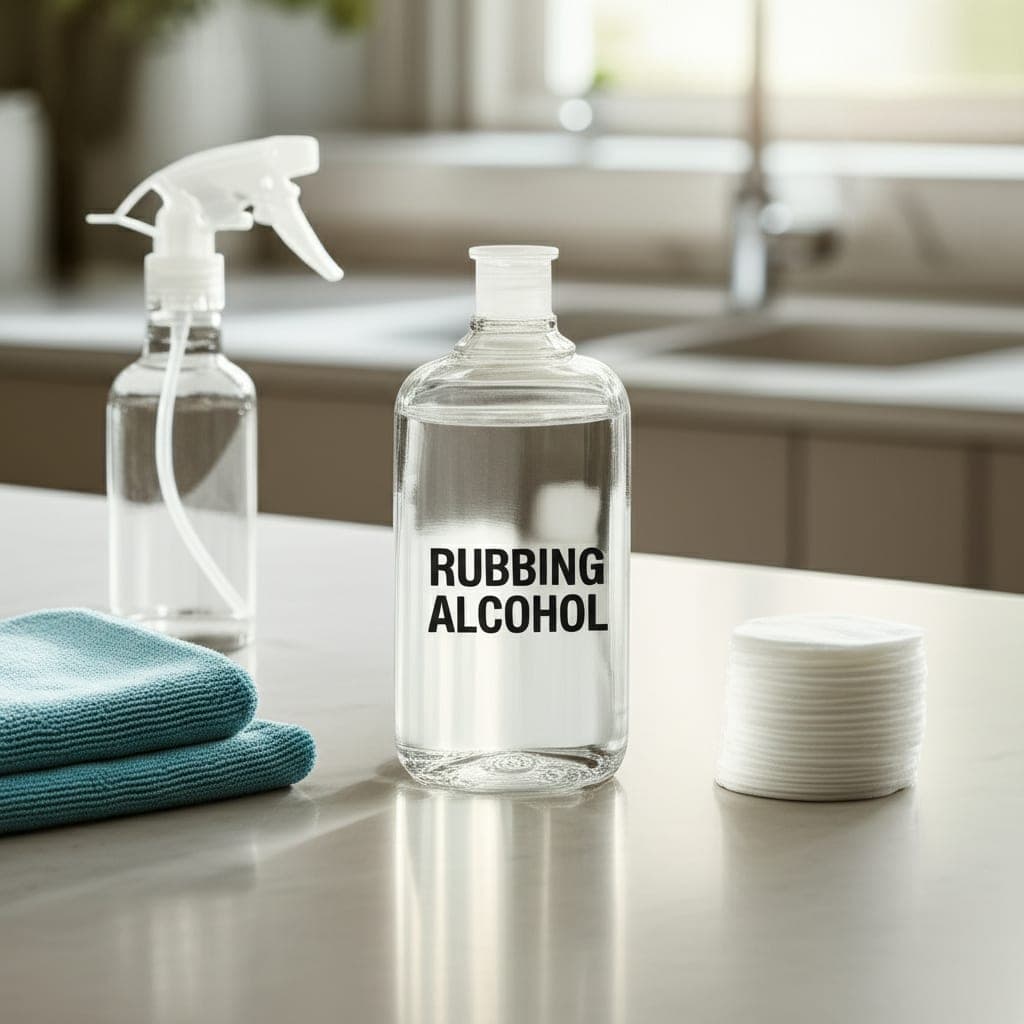
Isopropyl alcohol is cheap, evaporates without residue, and disinfects at the right concentration, which makes it better than most store bought sprays for a specific set of jobs and useless for others. The concentration matters more than people expect: 70% disinfects better than 91%, while 91% is what you want for streak-free glass. Here are twelve uses worth adopting, with exact ratios and dwell times, and the finishes it will strip.
Jump to a section
- What you'll need
- Step-by-step
- Mix a glass and mirror cleaner that beats the blue stuff
- Disinfect countertops the right way, after cleaning not instead of it
- Erase permanent marker and other stubborn ink
- Degrease stainless steel and leave no film to grab fingerprints
- Safely sanitize your phone, remote, and keyboard
- Hit the high touch spots everyone forgets
- Pro tips
- FAQ
What You'll Need
Step-by-Step Instructions
Mix a glass and mirror cleaner that beats the blue stuff
My everyday batch is one cup of 91% isopropyl, one cup of distilled water, and one tablespoon of white vinegar in a spray bottle. I use 91% here on purpose because fast evaporation is the whole point on glass, and distilled water instead of tap because tap water minerals are what leave those faint white specks after the cloth passes. Spray a light mist, then wipe in overlapping S strokes with a dry lint free microfiber cloth. Do not flood the glass. The first time I tried this I soaked a mirror and got runs that dried into streaks worse than what I started with, so a couple of quick pulls on the trigger is genuinely enough for a bathroom mirror. On exterior windows the film is oxidized pollen and dust that pure alcohol smears rather than lifts, so for those I switch to two parts alcohol, one part water, and an extra teaspoon of dish soap, wash with that, then follow with a plain alcohol mist to clear the soap haze. Expect zero streaks even in direct afternoon sun, which is the real test since sunlight shows every miss. One honest limitation: on very greasy kitchen window glass over the stove, a single pass will not cut baked on cooking film. That needs a soapy wash first. Make a fresh batch every couple of weeks; the vinegar and alcohol do not spoil, but the ratio drifts as alcohol evaporates through a nozzle that never seals quite tight.
Disinfect countertops the right way, after cleaning not instead of it
This is the step most people get backward, myself included for years. Alcohol is a disinfectant, not a cleaner. It kills germs but does not lift grease or crumbs, so if you spray it on a dirty counter you are just wetting the grime. My routine now: wipe the counter with dish soap and warm water first to physically remove the mess, then mist 70% isopropyl over the clean surface and leave it visibly wet for a full 30 seconds before wiping dry. That 30 second dwell time matters. If it flashes off in five seconds because you used 91%, it has not had contact time to do much, which is exactly why 70% is the disinfecting concentration despite sounding weaker. It is safe on sealed granite, quartz, laminate, and stainless steel. Keep it off unsealed marble and any painted or limed surface, where repeated alcohol contact dulls and etches over time. I learned the marble part the hard way on a windowsill that went cloudy in one summer. After raw chicken prep I do the soap wash, then two full alcohol passes with dry time between them, because that is one job where I want belt and suspenders. I keep this alcohol bottle physically separate from my all purpose spray and label it, because when the two look identical the disinfecting step quietly gets skipped.
Erase permanent marker and other stubborn ink
Permanent marker is essentially pigment held in a solvent, and alcohol redissolves it. Wet a cotton pad with alcohol and press it flat on the mark for about 15 seconds so the ink softens, then wipe rather than scrub. On a whiteboard where a dry erase marker has ghosted in, 91% is the better pick because it cuts the residue fast and evaporates before it can smear the ghost across the whole board. On countertops, sealed wood, glass, and metal, either concentration works. The trick nobody mentions: go slow and lift the pad often, because if you scrub hard with a saturated pad you spread the dissolved ink into a gray halo that is bigger than the original mark. Ask me how I know. On porous surfaces like raw wood, untreated stone, or fabric, alcohol drives the pigment deeper instead of pulling it out, so this is strictly a fix for nonporous sealed surfaces. Always test a hidden corner on anything painted, printed, or coated, since alcohol will happily strip a logo or a painted trim right along with the marker. Expect the ink to release almost instantly on a true nonporous surface; if it does not, the mark is likely bonded into a coating rather than sitting on it, and more scrubbing will only damage the finish.
Degrease stainless steel and leave no film to grab fingerprints
Spray 70% or 91% isopropyl onto a microfiber cloth, not directly on the appliance, and wipe the fridge, dishwasher, or oven front in the direction of the grain. You can see the grain as fine parallel lines; wiping across them leaves visible smears, wiping along them disappears them. Alcohol dissolves the skin oils and cooking splatter that make stainless steel look smudged, and because it evaporates clean it leaves no waxy layer behind. That last part is the whole reason I switched. The dedicated stainless steel sprays I used to buy left a thin oily sheen that looked great for an hour and then grabbed every new fingerprint, so I was cleaning the same surface again constantly. Alcohol dries to nothing, so the surface stays clean noticeably longer. For a greasy range hood or the oven handle where buildup is thick, dampen the cloth heavily, hold it against the spot for a minute to soften the grease, then wipe. One caveat: some appliances have a fingerprint resistant coating on the stainless, and on a couple of newer units that coating can haze if you go over it repeatedly with strong alcohol, so start with 70% and test an edge. Buff with a second dry cloth at the end and the finish comes up with a genuine shine, not a greasy gloss.
Safely sanitize your phone, remote, and keyboard
Dampen a microfiber cloth with 70% alcohol until it is barely moist, wring it so nothing drips, then wipe your phone screen, laptop keyboard, TV remote, and tablet. The single rule that matters: alcohol goes on the cloth, never on the device. A spray aimed at a phone sends liquid straight into the charging port, speaker mesh, and the tiny gap at the screen edge, and once it wicks under the glass it can kill the display. I ruined a cheap tablet learning this. Applied to a cloth, the amount transferred is small enough to flash off in a few seconds before it can migrate anywhere it should not be. For keyboard crumbs, a cotton swab dipped in alcohol and run between the keys lifts the greasy grime that a cloth just rides over. Most phone cases and screens tolerate 70% fine; the old warning about alcohol stripping oleophobic coatings mostly applied to years of daily scrubbing with strong concentrations, and a quick 70% wipe is gentle by comparison. Still, skip alcohol on camera lenses and any matte antiglare film, where it can leave a permanent cloudy patch. I wipe my phone once a day now as a reflex, and whether or not it made me sick less often, it definitely stopped the screen from looking like a fingerprint museum.
Hit the high touch spots everyone forgets
Light switches, outlet plates, doorknobs, cabinet pulls, the fridge handle, the toilet flush lever, and the faucet handles you touch with dirty hands before you wash them. These are the germiest square inches in a house and almost never make it into a normal cleaning pass. Spray 70% alcohol onto a cloth and go room to room; a full pass through a small home takes about five minutes and everything dries in under ten seconds with no sticky residue, so there is nothing to rinse. The detail that makes a real difference is the textured switch plates and grooved handles. A flat cloth glides right over the ridges and never touches the dark greasy line that builds up in the grooves, so I switched to a cotton swab dipped in alcohol and run it along every seam and indentation. The gunk that comes off a switch plate you thought was clean is genuinely unsettling. During cold and flu season I do this daily; the rest of the year, once a week. One note: on brass or bronze fixtures with a lacquer coating, keep the alcohol on the cloth and the contact brief, because prolonged exposure can cloud that lacquer the same way it does on painted wood.
Cut soap scum and water spots off chrome
Chrome faucets, showerheads, and towel bars collect a film that is part dried soap and part hard water minerals, and it dulls the shine fast in a hard water area. Spray 91% alcohol directly onto the chrome, let it sit about a minute so it can dissolve the soap component, then buff dry with a microfiber cloth. On chrome I do spray directly because it is a durable nonporous metal that handles it fine and evaporates without spotting. I like this better than the vinegar method for weekly upkeep because it does not fill a small bathroom with that sharp vinegar smell, and it dries clear without needing a rinse. Be honest with yourself about what it can and cannot do, though. Alcohol lifts fresh soap film and light water spotting beautifully, but it does not dissolve hardened mineral scale, the crusty white buildup around a showerhead nozzle. That is calcium, and it needs an acid like diluted vinegar or a dedicated descaler, not alcohol. So my split is alcohol for the weekly wipe that keeps scum from ever building up, and vinegar reserved for the occasional deep descale. Kept up weekly, the alcohol pass means the mineral scale barely gets a chance to form in the first place, which is the easier fight.
Refresh upholstery, mattresses, and pet beds between deep cleans
Mix three parts 70% alcohol to one part water and mist, lightly, over sofa cushions, a mattress, a fabric headboard, or a pet bed. The goal is a fine even fog that dampens the surface fibers, not a soaking. Alcohol kills a lot of the odor causing bacteria living in the fabric and then evaporates fast enough that the fabric is dry in 15 to 20 minutes, which is why it beats a wet upholstery shampoo for a quick refresh. The colorfastness test is not optional here. Spray a hidden patch, the back corner of a cushion or the underside of the mattress, wait for it to dry, and check for any color lifting onto a white cloth before you touch the visible areas. I skipped this once on a dark dyed throw pillow and got a faded blotch that never came back. Alcohol is also risky on certain fabrics regardless of color: it can dissolve some glues and leave rings on acetate, rayon, and anything with a delicate sheen, and it is a hard no on genuine leather or vinyl where it strips the finish. Stick to sturdy cotton, polyester, and microfiber blends. This is a trick for deodorizing and freshening, not a stain remover; a stain that has set in needs proper treatment, but for pulling the funk out of a pet bed before company arrives it works fast.
Dissolve sticky hairspray and product buildup in the bathroom
If your bathroom counter, mirror edges, and cabinet fronts feel faintly tacky even right after you clean them, the culprit is almost always hairspray or aerosol product overspray. These products are built on polymers designed to hold their grip, so they bond to nearby surfaces and then grab airborne dust, leaving a gummy film that ordinary spray cleaners just smear around. Alcohol breaks those polymers down on contact. Spray 70% or 91% onto the sticky surface, give it 30 seconds, wipe with a damp cloth to carry the dissolved residue away, then finish with a dry cloth. That two cloth method matters, because if you only do one pass you relocate the softened gunk rather than removing it. I was blaming my cleaner for years before I realized the stickiness was a slow hairspray varnish building up on everything within a few feet of where I got ready. Once I stripped it with alcohol and then started aiming the hairspray away from the mirror, the tackiness stopped coming back. Keep it off the mirror's silvered back edge and any painted cabinet trim, and on painted cabinets test first, since the same solvent action that dissolves hairspray will lift some paints and clear coats if you dwell on them too long.
Clean venetian blinds without taking them down
Taking blinds down to soak them in the tub is a miserable afternoon, so this is my favorite shortcut. Wrap a microfiber cloth around a pair of kitchen tongs and hold it on with two rubber bands, dip or lightly spray the cloth with 70% alcohol, then close the blinds and slide the wrapped tongs along each slat so both faces get cleaned in one pass. The alcohol dissolves the greasy dust that plain water just muddies, and it dries before it can drip down onto the sill and window frame, which is the whole advantage over a wet rag. A standard window of blinds takes me about three minutes. This works on aluminum, vinyl, and faux wood slats. It is not for real wood blinds, where alcohol can strip the finish and the moisture can warp the slat, so those get a dry microfiber dusting instead. Two practical notes from doing this a lot: dampen the cloth again every few slats because it dries out fast, and do the top slats first and work down so the dust you knock loose falls onto slats you have not cleaned yet rather than the ones you just finished. If the tongs feel awkward, an old sock over your hand works nearly as well, though you lose the trick of doing both sides at once.
Brighten grout lines and knock back mildew
Grout is porous, so it soaks up soap film, moisture, and the mildew that grows in it, and mopping only cleans the surface it sits below. Pour or spray 70% alcohol directly along the grout lines, let it sit two minutes so it can soak into the porous surface, then work it with an old toothbrush and wipe with a damp cloth. For a mildew smell or light surface mold in a shower, the alcohol both cleans and disinfects in that one pass, which is handy. For grout that is more discolored than dirty, I make a loose paste of alcohol and baking soda, spread it on the lines, wait five minutes, then scrub and rinse; the baking soda gives it a mild abrasive bite that plain alcohol lacks. Here is the honest limit, and it is a real one. Alcohol is excellent maintenance but it does not touch discoloration that has set in deep, the grout that has gone permanently gray or brown over years. That is embedded staining, and only an oxygen bleach paste or a dedicated grout stain remover pulls it back. I spent an evening scrubbing with alcohol expecting to reverse years of neglect and got very little for it. Use alcohol to keep clean grout clean and to handle fresh mildew, and reach for oxygen bleach when the stain is already set.
Set an instant fruit fly trap and stop the common alcohol mistakes
For the fruit flies that appear around the fruit bowl and sink drain, pour about half an inch of rubbing alcohol into a shallow dish and set it where they swarm. Unlike a vinegar trap that relies on the flies drowning slowly, alcohol kills on contact, and in my kitchen it cleared a stubborn swarm in about two days versus the week the apple cider vinegar dish had been dragging on. Refresh the dish every two to three days, and pair it with tossing overripe fruit and pouring a little alcohol down the drain where the larvae actually breed, or the trap just becomes a permanent fixture. Now the four mistakes that quietly wreck every other hack on this list, gathered here so they stick. First, using 91% when you mean to disinfect: it evaporates before it can kill anything, so 70% is the disinfecting concentration and 91% is for glass and adhesive where fast drying is the point. Second, spraying electronics directly instead of onto a cloth, which sends liquid into ports and under screens. Third, using it near a lit gas burner or candle: alcohol vapor is flammable and an aerosol mist near a flame is a genuine ignition risk, so kill the flame first. Fourth, letting it touch lacquered, painted, or varnished wood, where it strips the finish to a dull or tacky patch on contact. Keep it to sealed nonporous surfaces and it stays a hero.
Pro Tips
- Keep two labeled bottles: 70% for anything you want to disinfect (the water content slows evaporation so it actually kills germs) and 91% for glass, adhesive, and chrome where fast drying is the goal.
- Spray alcohol onto the cloth, not the surface, any time electronics, painted wood, or delicate finishes are anywhere nearby. Direct spraying is what causes almost every alcohol cleaning disaster.
- Use distilled water, not tap, in any alcohol solution you make. Tap water minerals are what leave faint white specks on glass and chrome after everything dries.
- Always run a colorfastness and finish test on a hidden spot before you commit, on fabric, painted surfaces, and anything coated. Ten seconds of testing beats a permanent faded patch.
- Buy the big bottle. At pennies per use, alcohol replaced several single purpose sprays in my cabinet, which cleared shelf space and saved real money over two months.
Frequently Asked Questions
Is 70% or 91% rubbing alcohol better for cleaning?
It depends on the job. Use 70% for disinfecting, because the 30% water content slows evaporation and gives the alcohol enough contact time to actually kill bacteria and viruses. Use 91% for glass and mirror cleaning, adhesive and marker removal, and chrome, where fast evaporation and less residue are the advantage. I keep both on hand and label the bottles so I don't grab the wrong one.
Can I use rubbing alcohol on all surfaces?
No. It's safe on most sealed nonporous hard surfaces including granite, quartz, stainless steel, glass, chrome, and laminate. Keep it off unsealed marble and natural stone, lacquered or painted wood, acrylic and plexiglass, genuine leather, and vinyl, where it can cloud, etch, or strip the finish. On fabric and anything coated, always test a hidden spot first.
Why should I never spray rubbing alcohol directly on my phone?
A direct spray sends liquid into the charging port, speaker mesh, and the seam at the edge of the screen, and once it wicks underneath the glass it can permanently damage the display. Put 70% alcohol on a barely damp microfiber cloth instead, wring out any drips, and wipe. The small amount transferred flashes off before it can migrate into any opening.
Is it safe to mix rubbing alcohol with other cleaners?
Never mix it with bleach or any product based on chlorine, which can create toxic chloroform and other harmful gases, and keep it away from ammonia and hydrogen peroxide. It's fine to combine with plain water, a splash of white vinegar, or a few drops of dish soap for the specific solutions in this guide. Always work in a ventilated area.
How long does rubbing alcohol need to sit to disinfect a surface?
For most common household bacteria and viruses, aim for a 30 second dwell time: the surface should stay visibly wet with 70% alcohol for about half a minute before you wipe it dry. If it evaporates in a few seconds, you likely used 91%, which dries too fast to disinfect well. And remember to clean the surface with soap and water first, since alcohol disinfects but doesn't lift grease or crumbs.
Does rubbing alcohol remove set in grout stains and hard water scale?
Not reliably. It's great maintenance for keeping clean grout clean and for killing fresh mildew, but it won't reverse grout that has gone permanently gray or brown; that needs an oxygen bleach paste. Similarly, alcohol dissolves fresh soap scum on chrome but not hardened white mineral scale, which is calcium and needs an acid like diluted vinegar or a descaler.
How this guide was made
This Deep Clean guide was researched, written, edited, and published by Fredler Pierre-Louis. The 12 steps below are built around Isopropyl rubbing alcohol, both 70% and 91%, Empty spray bottles (label them) and Lint free microfiber cloths, and the quantities and dwell times come from published cleaning-chemistry and manufacturer guidance for those materials, not from a controlled trial we ran ourselves. Where a popular version of this hack does not work, or is risky on a particular surface, this 10 min guide says so.
- Checked against manufacturer and materials guidance for the surfaces named.
- Reviewed by a person for chemical safety and surface compatibility before publication.
- Written to explain why a method works, not just to list steps.
- Corrected whenever a reader reports an error or an edge case we missed.
Read our full editorial policy or learn more about the team behind TryCleaningHacks.
Related Cleaning Guides
Safety Notes
- Rubbing alcohol is flammable and its vapor can ignite. Never spray it near open flames, hot stovetops, pilot lights, or candles, and let treated surfaces dry fully before using any heat producing appliance nearby.
- Never mix rubbing alcohol with bleach or any product that contains chlorine. The combination can produce toxic chloroform and other harmful compounds. Keep it away from bleach, ammonia, and peroxide.
- Use it in a well ventilated space. Prolonged breathing of isopropyl fumes in a closed bathroom can cause headaches, dizziness, and airway irritation, so open a window or run the fan.
- Store it in its original container with the childproof cap on, and keep it out of reach of children and pets. Ingesting even a small amount is toxic and needs immediate medical attention.
- Skip it on unsealed marble and natural stone, lacquered or painted wood, acrylic and plexiglass, genuine leather, and vinyl, where it causes clouding, etching, or finish stripping.
You might also like
7 Deep Cleaning Tricks That Save Hours Every Week
Most of the time spent cleaning a bathroom is spent waiting or backtracking, not scrubbing. Spraying one surface, waiting for it, wiping it, then starting the next one means you pay every dwell time separately. Batching those dwell times so every cleaner works at once is the single change that cuts the job roughly in half. None of this involves a gadget or a miracle spray, just the order you work in and where you stop wasting motion.
How to Deep Clean a Shower (10 Proven Methods)
I deep cleaned the same shower twice in one week once with my old routine and once with these ten methods applied in the right sequence. The difference wasn't even close. Here's what changed and the daily habit that eliminated most of my scrubbing for good.
30 Cleaning Myths You Need to Stop Believing
I believed most of these myths for years, and two of them left permanent marks on surfaces in my own house. This is the honest version of what I got wrong, why the popular advice fails, and the two safety myths that actually send people to the emergency room. I have kept the failures in here on purpose, because the mistakes taught me more than the wins did, and a myth is only dangerous while you still trust it.