

How to Clean a Plastic Shower Curtain Liner by Hand and in a Washer
A plastic shower curtain liner builds up soap scum, mildew, and pink Serratia bacteria faster than almost any other bathroom surface, and most people throw theirs out long before it needs replacing. There are two ways to clean one, a bathtub hand wash and a washing machine cycle, and the right choice depends on the liner material rather than on how dirty it is. Here is how each works, which liners tolerate which, and the mistakes that destroy a liner instead of cleaning it.
Jump to a section
- What you'll need
- Step-by-step
- Inspect the liner and remove the rings
- Method 1 Hand wash the liner in your bathtub
- Method 2 Wash the liner in a washing machine
- Treat heavy mildew with a vinegar pre soak
- Air dry the liner correctly to prevent new mildew
- Set a maintenance routine that prevents the deep clean problem
- Pro tips
- FAQ
What You'll Need
Step-by-Step Instructions
Inspect the liner and remove the rings
Before choosing a cleaning method, take the liner down from the rod and lay it flat in good light to assess the level of buildup. Look for three specific issues that determine the right approach. Pink or orange streaks near the bottom hem indicate Serratia marcescens, a common bathroom bacterium that thrives on soap residue. Black or gray speckling along the seams indicates mildew that has started to colonize the plastic. White or cloudy film across the body of the liner is soap scum and hard water mineral buildup. A liner with only soap scum can be hand washed quickly. A liner with mildew or pink bacterial growth needs the deeper soak treatment described later. Remove every ring or hook from the top of the liner and set them aside in a small bowl. Cleaning the liner with the rings still attached leaves residue around each grommet and prevents the cleaner from reaching the top edge of the plastic where soap scum collects most heavily. While you have the rings off, drop them into a small bowl of warm water and a splash of white vinegar to soak. They will come out free of soap film and ready to reattach when the liner is clean and dry.
Method 1 Hand wash the liner in your bathtub
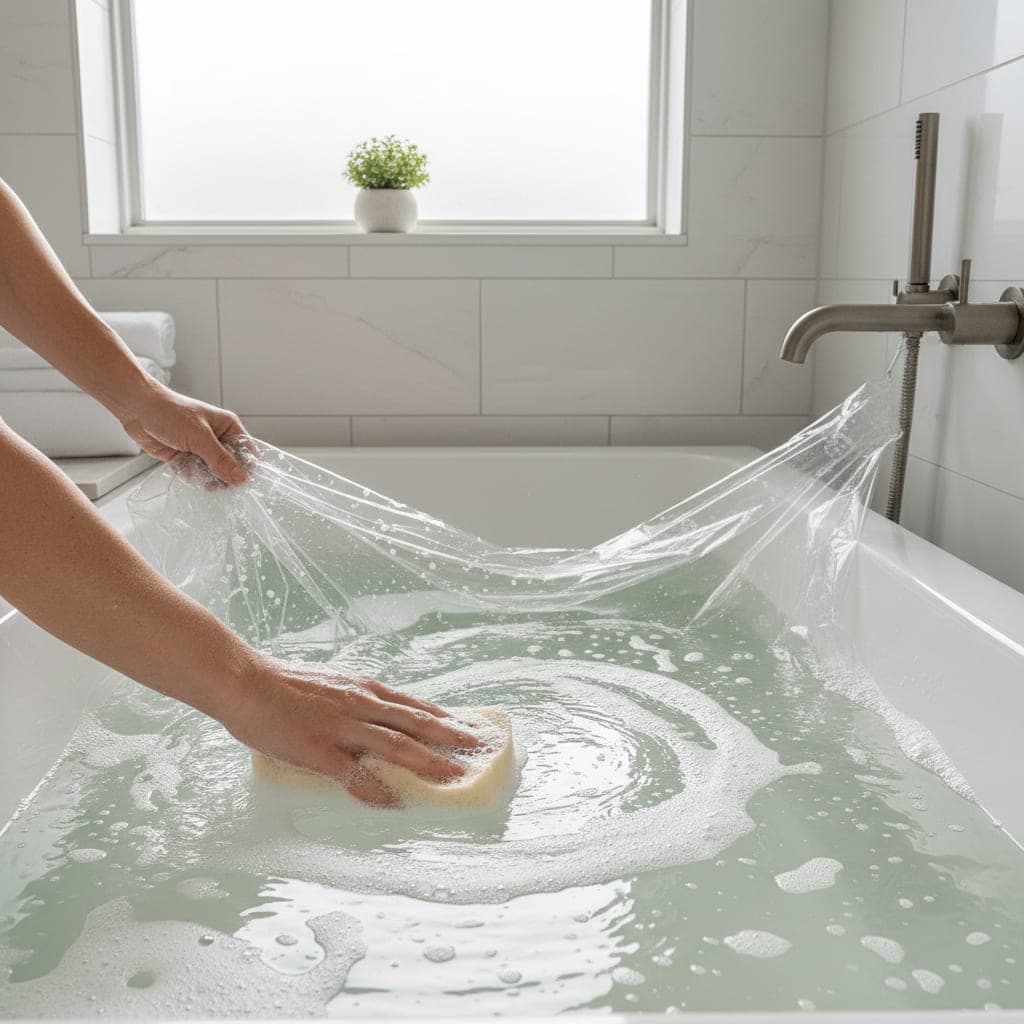
The bathtub hand wash method gives you the most direct control over scrubbing pressure and is the right choice for vinyl and PEVA liners that may not survive a washing machine cycle. Lay the liner flat in an empty bathtub and run warm water until the bottom of the tub holds about three inches. Add half a cup of baking soda and a generous squirt of liquid dish soap to the water and swirl it gently with your hand to dissolve. Submerge the entire liner by pressing it down into the water with both hands until air bubbles stop rising. Let the liner soak for fifteen minutes. The baking soda lifts soap scum from the plastic surface while the dish soap breaks down the oily residue from body wash and shampoo. After the soak, take a soft microfiber cloth or a non-abrasive sponge and gently wipe the liner from top to bottom on both sides. Pay special attention to the bottom hem where most of the staining sits and to the area around each grommet at the top. Drain the bathtub, refill with clean cool water, and rinse the liner by lifting and lowering it through the fresh water several times. Hang it back on the rod immediately while damp so it can air dry without creasing.
Method 2 Wash the liner in a washing machine
Machine washing is faster than the hand wash method and removes more set in mold and pink bacteria stains because of the agitation, but it requires the right settings to avoid tearing the liner. Most plastic shower curtain liners labeled as PEVA, EVA, or vinyl can be machine washed safely if you follow this exact procedure. Place the liner in the washing machine along with two large bath towels. The towels are essential because they cushion the liner during agitation and prevent the plastic from balling up, twisting, or tearing against the drum. Add one half cup of regular liquid laundry detergent and one half cup of baking soda directly to the wash drum. Set the machine to a gentle or delicate cycle with warm water, never hot. Hot water can warp or melt the plastic depending on the liner material. During the rinse cycle, add one cup of white vinegar to the fabric softener compartment. The vinegar dissolves any remaining soap residue and acts as a mild antibacterial rinse. When the cycle finishes, do not put the liner in the dryer under any circumstances. The dryer heat will permanently warp or melt the plastic. Hang the liner directly on the shower rod while still damp so the weight pulls out wrinkles as it air dries.
Treat heavy mildew with a vinegar pre soak
If your liner has visible black or gray mildew speckling along the seams or hem, do a vinegar pre soak before either washing method. Fill a bathtub or large utility sink with two parts warm water to one part undiluted white vinegar. Submerge the liner completely and let it soak for thirty minutes. The acetic acid in the vinegar penetrates the porous plastic seams where mildew has rooted itself and breaks down the cellular structure of the mildew colony. After the soak, drain the vinegar water and proceed with either the hand wash or machine wash method. The vinegar pre soak makes the difference between a liner that comes out streaky and a liner that comes out genuinely clean when you start with significant mildew. For the worst cases, scrub the visible mildew spots with a soft toothbrush dipped in baking soda paste before the vinegar soak. The mild abrasion of the baking soda lifts the surface mildew while the vinegar that follows kills the remaining colony underneath.
Air dry the liner correctly to prevent new mildew
How you dry the liner determines how long it stays clean. A liner that is left wadded or folded after washing will grow new mildew within days even if it was scrubbed perfectly. The single most important step is to rehang the liner on the shower rod immediately after washing while it is still wet. The weight of the water pulls out wrinkles as it dries and the open extended position allows airflow on both sides of the plastic. Open a bathroom window or run the bathroom exhaust fan for at least one hour after rehanging. The faster the liner dries the less time bacteria and mildew have to recolonize. After the initial dry, leave the liner stretched fully across the shower rod between uses rather than bunched at one end. A liner that is bunched together stays damp in the folds for hours after each shower while a fully extended liner dries within thirty minutes. This single habit change extends the time between deep cleanings from one week to four weeks for most households.
Set a maintenance routine that prevents the deep clean problem
Once the liner is clean, a small weekly habit prevents the buildup that requires deep cleaning in the first place. After your last shower of the week, take a microfiber cloth and wipe down the inside of the liner from top to bottom while the surface is still wet. The shower water has already softened any soap residue and a single one minute wipe removes it before it dries and bonds to the plastic. Once a month, mix one part white vinegar with three parts water in a spray bottle, mist the entire liner generously, and let it air dry without rinsing. The diluted vinegar evaporates without residue and kills the bacterial and mildew colonies before they become visible. This monthly spray takes thirty seconds and is the single most effective preventive habit for shower curtain liners. With these two routines combined, a quality plastic liner lasts six to twelve months between deep cleanings and you avoid replacing it entirely.
Which method to use for which liner
Choose between the two methods by liner material, not by which sounds easier. The washing machine method cleans more thoroughly, because agitation reaches the seams and the grommet area along the top and the bottom hem where mildew and pink Serratia bacteria concentrate, and hand wiping tends to skate over exactly those places. The trade off is mechanical stress: thin PEVA liners and any liner more than about six months old can stretch or tear in the drum, because the plasticizers that keep the sheet flexible migrate out as it ages. So thick vinyl and EVA liners go in the machine, where they tolerate agitation easily and you get the better result. Thin PEVA and older liners get the gentler hand wash. Whichever you choose, the thirty minute vinegar pre soak matters more than the washing method that follows it, because it loosens the mineral and soap film that the mildew is anchored in. Skipping the pre soak is the most common reason a liner comes out of either method still looking stained.
Mistakes that ruin the liner instead of cleaning it
Mistake one: using hot water in the washing machine. Hot water permanently warps or melts most plastic liner materials within a single cycle and the warping cannot be reversed. Always use the warm setting, never hot. Mistake two: putting the liner in the dryer. Dryer heat is even more destructive than hot wash water and will fuse the plastic to itself within a few minutes. Always air dry on the shower rod. Mistake three: machine washing without towels. A liner washed alone twists and balls up against the drum, often tearing along the grommet line. Always include two bath towels to cushion the agitation. Mistake four: using bleach on a colored or printed liner. Even diluted bleach removes color and printed patterns from a liner within one wash cycle. Use vinegar or baking soda instead for any liner that is not solid white. Mistake five: skipping the rinse on the hand wash method. Soap residue left on the liner attracts new dirt and bacteria within days, undoing the cleaning work you just did. Always do a thorough cool water rinse after the soak and scrub. Mistake six: storing the liner bunched at one end of the rod between uses. The folded plastic stays damp for hours and grows new mildew within days. Always leave the liner extended fully across the rod after every shower.
Pro Tips
- ✓Add two bath towels to the washing machine load with your liner. They cushion the plastic during agitation and prevent it from twisting, balling up, or tearing against the drum.
- ✓Hang the liner back on the shower rod immediately after washing while it is still wet. The weight of the water pulls out wrinkles as it dries and the open position prevents new mildew from forming in folds.
- ✓Spray the liner with a one to three vinegar and water solution once a month and let it air dry without rinsing. This thirty second habit kills mildew and bacteria before they become visible and extends the time between deep cleanings.
Frequently Asked Questions
Can you wash a plastic shower curtain liner in the washing machine?
Yes, most plastic shower curtain liners labeled as PEVA, EVA, or vinyl can be safely machine washed on a gentle or delicate cycle with warm water. Add two bath towels to the load to cushion the liner and prevent tearing, use one half cup of liquid laundry detergent and one half cup of baking soda, and add one cup of white vinegar to the rinse cycle. Never use hot water and never put the liner in the dryer.
How do you remove pink stains from a shower curtain liner?
The pink or orange staining is caused by Serratia marcescens, a common bathroom bacterium that thrives on soap residue. Soak the liner in a mix of two parts warm water to one part white vinegar for thirty minutes, then wash either by hand in the bathtub or in the washing machine. The vinegar kills the bacterial colony and the wash removes the residue. Hang the liner immediately to air dry to prevent the bacteria from returning.
How often should you clean a plastic shower curtain liner?
Deep clean a plastic shower curtain liner every four to six weeks for most households. With a weekly one minute wipe down using a microfiber cloth and a monthly vinegar water spray, you can extend the time between deep cleanings to once every two to three months. Liners in bathrooms with poor ventilation or hard water need cleaning more frequently than liners in well ventilated bathrooms.
Can you use bleach to clean a shower curtain liner?
Bleach is effective for white liners and can be added to the washing machine cycle at one half cup. Do not use bleach on colored or printed liners as it will remove the color within one cycle. Never combine bleach with vinegar in the same wash because the combination produces toxic chlorine gas. For most liners, baking soda and vinegar are gentler and produce excellent results without the risk of damage or toxic fumes.
How this guide was made
This bathroom cleaning guide was researched, written, edited, and published by Fredler Pierre-Louis. The 8 steps below are built around Plastic shower curtain liner, Warm water and Liquid laundry detergent, and the quantities and dwell times come from published cleaning-chemistry and manufacturer guidance for those materials, not from a controlled trial we ran ourselves. Where a popular version of this hack does not work, or is risky on a particular surface, this 9 min guide says so.
- Checked against manufacturer and materials guidance for the surfaces named.
- Reviewed by a person for chemical safety and surface compatibility before publication.
- Written to explain why a method works, not just to list steps.
- Corrected whenever a reader reports an error or an edge case we missed.
Read our full editorial policy or learn more about the team behind TryCleaningHacks.
Related Cleaning Guides
Safety Notes
- ⚠Never put a plastic shower curtain liner in the clothes dryer. Dryer heat permanently warps or melts the plastic within minutes and ruins the liner.
- ⚠Do not mix bleach and vinegar at any stage of cleaning. The combination produces toxic chlorine gas. If you choose to use bleach on a white liner, rinse the liner thoroughly with plain water before any vinegar treatment.
- ⚠Wear rubber gloves when handling a liner with visible pink bacterial staining or black mildew. Both can cause skin irritation in sensitive people, and the bacterial colonies should not be transferred to your hands and then to other bathroom surfaces.
You might also like
How to Remove Hard Water Stains From a Toilet (7 Proven Methods)
My apartment toilet had a rust-brown mineral ring nearly half an inch thick and no prior cleaning had touched it. Here's what actually worked on severe established buildup and the cheap weekly habit that prevents any ring from forming in the first place.
How to Remove Mold and Mildew From Bathroom Caulk (8 Methods)
Black mold in bathroom caulk is a different problem from surface mildew, because the growth has rooted into the porous silicone rather than sitting on top of it. That is why wiping it off works for a week and then it is back. Here is what genuinely clears established caulk mold, what only cosmetically bleaches it, and the step most people skip afterward that lets it return within weeks.
How to Clean a Bathroom Drain That Smells
I traced the persistent sewer smell in our guest bathroom to a slow drain that looked clean from the top but was coated with a thick black biofilm two inches down. After testing every popular drain cleaning method on the same drain over a month, the foaming baking soda and vinegar combination beat the chemical drain cleaners on speed, smell, and safety. Here is the exact step by step that eliminates bathroom drain odor in under thirty minutes and the maintenance routine that keeps it from coming back.