

How to Remove Hard Water Stains From a Toilet (7 Proven Methods)
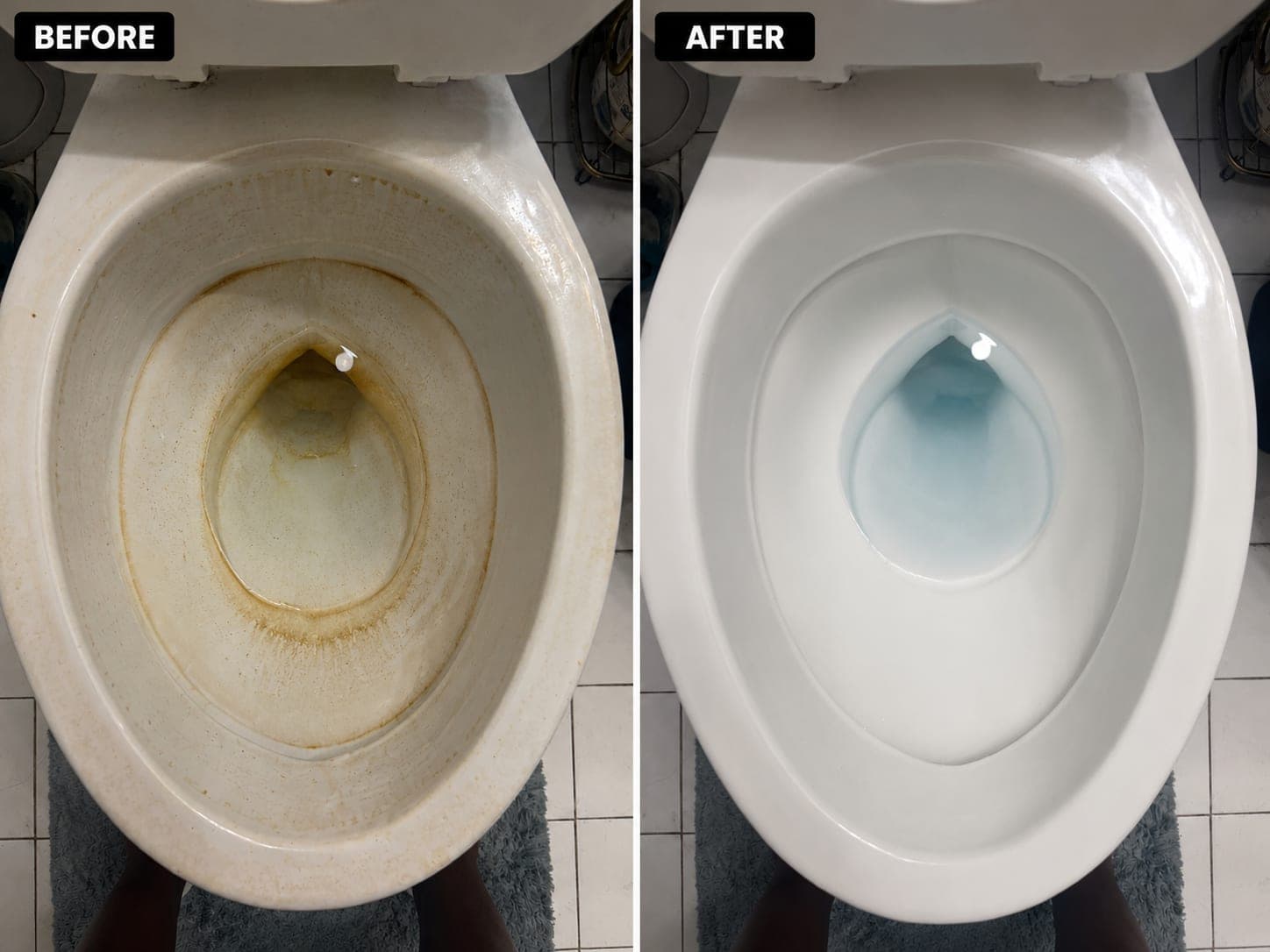
My apartment toilet had a rust-brown mineral ring nearly half an inch thick and no prior cleaning had touched it. Here's what actually worked on severe established buildup and the cheap weekly habit that prevents any ring from forming in the first place.
Jump to a section
What You'll Need
Photos
Step-by-Step Instructions
Understand what causes hard water stains
Hard water stains form when water with high mineral content primarily calcium, magnesium, and iron evaporates and leaves mineral deposits behind on your toilet bowl surface. These deposits build up over time into crusty white, brown, rust-orange, or greenish rings at the waterline and under the rim where water constantly flows. The longer the minerals sit, the harder they bond to the porcelain, which is why regular toilet bowl cleaner and a quick scrub often fail to remove them. Municipal water supplies in many regions contain elevated mineral levels, and homes with well water are especially prone to this problem. Understanding that these are mineral deposits not dirt is key to choosing the right removal method, because you need acidic or abrasive solutions that dissolve or lift minerals rather than general-purpose cleaning sprays.
Method 1 White vinegar soak
White vinegar is the most accessible and effective first line of attack against hard water stains in a toilet. Pour three cups of undiluted white vinegar directly into the toilet bowl, making sure it reaches the stained areas at the waterline. For stains under the rim, soak paper towels in vinegar and press them against the stained areas so the acid stays in contact with the deposits. Let the vinegar sit for at least two hours overnight produces the best results for heavy buildup. The acetic acid in vinegar dissolves calcium and magnesium deposits without damaging porcelain. After soaking, scrub the bowl with a stiff toilet brush, focusing on the waterline ring and under the rim. Flush to rinse. For moderate stains, a single overnight vinegar soak followed by scrubbing removes most buildup completely. This method costs pennies and uses no harsh chemicals, making it safe for septic systems and households with children or pets.
Method 2 Baking soda and vinegar combination
For stains that vinegar alone cannot fully dissolve, combining baking soda with vinegar creates a powerful fizzing reaction that loosens stubborn mineral deposits. First, pour one cup of white vinegar into the toilet bowl and swish it around with a toilet brush to coat the stained surfaces. Let it sit for one minute. Then sprinkle one cup of baking soda into the bowl, followed by another cup of vinegar. The mixture will fizz vigorously this is the carbon dioxide reaction breaking the bond between the mineral buildup and the porcelain surface. Let the fizzing solution work for 30 minutes. Scrub thoroughly with a toilet brush, paying attention to the waterline and any visible rings. Flush to rinse. This method works well on medium-severity stains that have been building for a few weeks to a couple of months. The baking soda adds mild abrasion that helps the vinegar's acid dissolve the minerals faster. Repeat the process if any residue remains after the first treatment.
Method 3 Borax paste for stubborn rings
Borax is a natural mineral compound that excels at dissolving hard water deposits that resist vinegar treatments. Shut off the water supply valve behind the toilet and flush to lower the water level this exposes the stained ring at the waterline so you can apply a paste directly to the deposits. Mix half a cup of borax with enough vinegar to form a thick paste. Spread the paste over the stained areas using a gloved hand or old toothbrush, pressing it into the buildup so it adheres to vertical surfaces. Let the paste sit for 15 to 20 minutes. Scrub with a stiff toilet brush in firm circular motions. Turn the water supply back on and flush to rinse. Borax's alkaline pH combined with vinegar's acidity creates a dual-action cleaning effect that breaks down even calcified mineral deposits. This method is particularly effective on the thick white or yellowish rings that form at the waterline in toilets that haven't been deep-cleaned in months.
Method 4 Pumice stone scrubbing
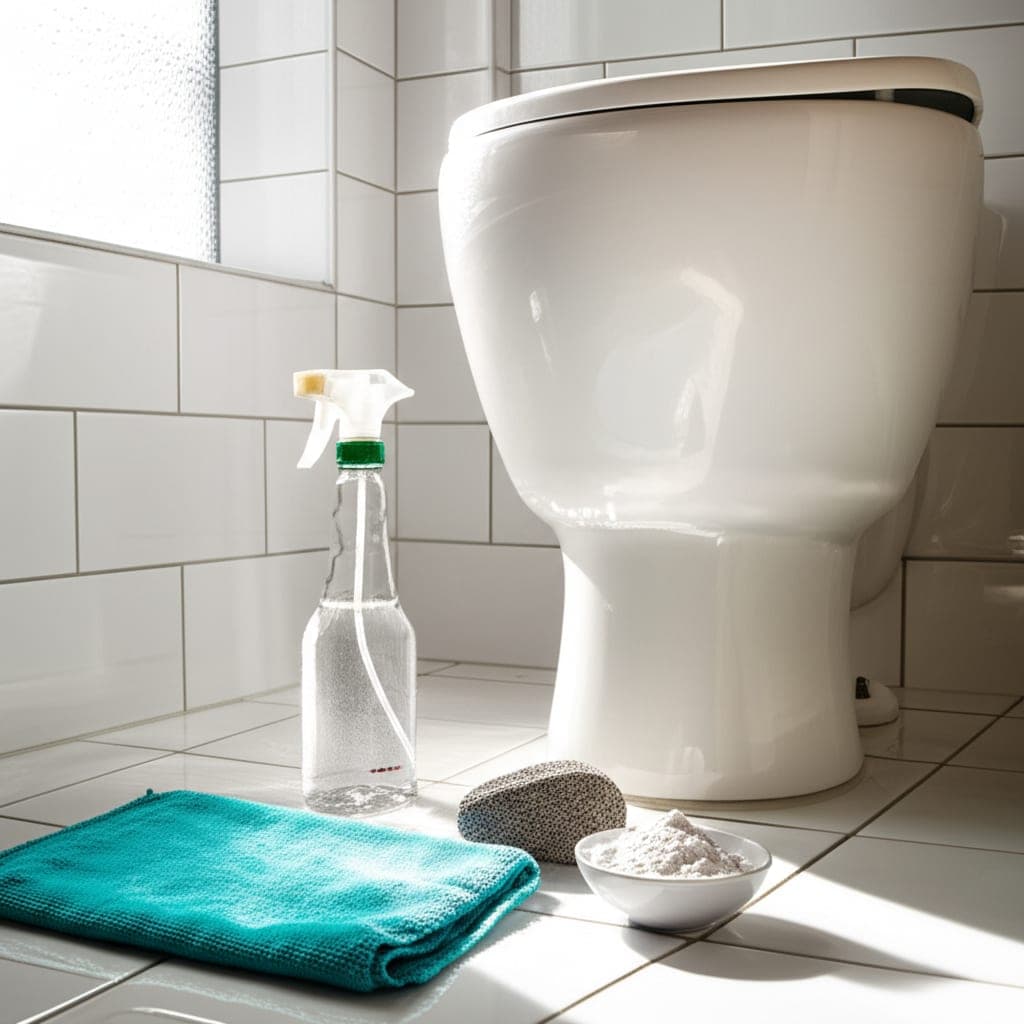
A wet pumice stone is one of the most effective physical tools for removing hard water stains from porcelain without scratching the surface. Always use a pumice stone specifically designed for toilet cleaning these are softer than construction-grade pumice. Soak the pumice stone in warm water for five minutes before use. This is critical because a dry pumice stone will scratch porcelain. With the stone fully saturated, gently rub it against the hard water stains using light, even pressure. The pumice is softer than porcelain but harder than mineral deposits, so it abrades the calcium and lime buildup without damaging the bowl surface. Work in small sections, keeping both the stone and the surface wet at all times. Rinse the stone frequently to clear mineral debris from its surface. For stains under the rim, use a smaller pumice stick or break a larger stone into a workable piece. After scrubbing, flush the toilet to rinse away loosened residue. This method handles the most severe, years-old hard water stains that chemical treatments alone cannot fully remove.
Method 5 Citric acid powder treatment
Citric acid is a concentrated natural acid that dissolves calcium and lime deposits more aggressively than vinegar, making it ideal for severe hard water stains. You can find food-grade citric acid powder at grocery stores or online. Sprinkle three to four tablespoons of citric acid powder directly into the toilet bowl water. Swish with a toilet brush to distribute the powder evenly. Let the solution sit for at least one hour for heavy calcium rings, leave it overnight. The citric acid breaks the molecular bonds in calcium carbonate deposits, turning them into a soluble compound that scrubs away easily. After soaking, scrub the bowl with a toilet brush and flush. Citric acid is biodegradable, non-toxic, and safe for septic systems. It is especially effective on the thick white limescale deposits common in areas with extremely hard water. Unlike commercial toilet bowl cleaners that mask stains with bleach, citric acid actually dissolves the mineral buildup at its source.
Method 6 Hydrogen peroxide and baking soda
Hydrogen peroxide combined with baking soda creates a gentle oxidizing paste that lifts hard water stains and brightens discolored porcelain. Pour half a cup of 3% hydrogen peroxide into the toilet bowl. Add half a cup of baking soda and stir with a toilet brush to form a loose slurry that coats the stained surfaces. Let the mixture sit for 30 minutes. The hydrogen peroxide acts as a mild bleaching agent that lightens mineral stain discoloration, while the baking soda provides physical scrubbing power and additional cleaning action. Scrub the bowl thoroughly, focusing on areas with visible rings or discoloration. Flush to rinse. This method is particularly effective on iron-based hard water stains that appear as rust-colored or reddish-brown streaks. Iron deposits respond better to oxidizing agents like peroxide than to acidic solutions alone. For persistent rust stains, apply the paste directly to the stain, cover with plastic wrap to keep it moist, and let it sit for two hours before scrubbing.
Method 7 Vinegar and essential oil overnight soak
For a thorough deep clean that tackles stains, bacteria, and odor in a single treatment, combine vinegar with tea tree essential oil for an overnight toilet soak. Pour two cups of white vinegar into the bowl. Add 10 drops of tea tree essential oil tea tree has natural antimicrobial properties that complement vinegar's mineral-dissolving action. Swish with a toilet brush to distribute the solution under the rim and across all stained surfaces. Leave the solution overnight without flushing. In the morning, sprinkle a tablespoon of baking soda into the bowl for extra scrubbing power and scrub the entire bowl with a stiff toilet brush. Flush to rinse. The extended contact time allows the vinegar to penetrate and dissolve even deep-set mineral buildup. The tea tree oil leaves the bowl sanitized and smelling fresh without artificial fragrances. This method doubles as both a stain remover and a deodorizer, making it an excellent monthly maintenance treatment for toilets in hard water areas.
Prevent hard water stains from returning
Removing existing stains is only half the solution prevention stops you from repeating the deep-cleaning process every few weeks. The most effective prevention method is a weekly vinegar flush: pour one cup of white vinegar into the toilet bowl every week and let it sit for 30 minutes before scrubbing and flushing. This dissolves new mineral deposits before they have time to harden and bond to the porcelain. Clean under the rim weekly with a curved toilet brush, since mineral-rich water flows from rim jets and leaves deposits in hard-to-see areas. Consider installing a whole-house water softener if your water hardness exceeds 7 grains per gallon this addresses the root cause by removing calcium and magnesium before they reach your fixtures. For a budget alternative, drop-in toilet bowl tablets containing citric acid provide continuous mild cleaning between manual sessions. Keep the toilet bowl brush dry between uses to prevent bacteria growth on the brush itself.
Natural vs chemical cleaning methods compared
Natural cleaning methods vinegar, baking soda, citric acid, and borax are effective for most hard water stains and carry no risk to your plumbing, septic system, or household air quality. They work by dissolving mineral deposits through acid-base reactions and mild abrasion. Chemical toilet bowl cleaners containing hydrochloric acid or sodium hypochlorite work faster on severe buildup but produce harsh fumes, can irritate skin and eyes, and may damage older plumbing seals with repeated use. For routine toilet stain removal, natural methods provide more than enough cleaning power and are safer for homes with children, pets, and septic systems. Reserve commercial chemical cleaners for extreme cases where natural methods have been tried and failed such as years of untreated calcified buildup in a neglected toilet. Never mix chemical cleaners together or combine bleach with ammonia-based products, as this produces toxic chloramine gas. When using any method, always wear rubber gloves and ensure adequate bathroom ventilation by running the exhaust fan or opening a window.
What worked on severe, long-established toilet mineral buildup
On heavy buildup, an overnight citric acid soak does more than anything else on this list. Left in place from bedtime to morning, a thick rust-brown ring at the waterline usually lightens before a brush ever touches it, and a wet pumice scrub afterward lifts what is left without scratching the glaze. Pumice beats a toilet brush on calcified deposits for a mechanical reason: bristles cannot get under mineral crystals that have effectively fused to the porcelain, while wet pumice abrades them off. Vinegar handles light to moderate staining and is the sensible first thing to reach for, but on buildup that has had years to form, citric acid is meaningfully stronger. The most useful trick here has nothing to do with which acid you choose. Shut off the supply valve and flush before you treat. That drops the water level and exposes the deposits sitting above the waterline to undiluted acid, instead of acid immediately watered down by whatever is in the bowl.
Mistakes that damage the toilet or allow stains to return immediately
Mistake one: using a dry pumice stone. A dry pumice stone is abrasive enough to permanently scratch porcelain. Soak it in water for five minutes minimum and keep both the stone and the bowl surface wet throughout. Mistake two: using bleach to treat mineral deposits. Bleach whitens by oxidizing pigments it cannot dissolve minerals. It masks the stain cosmetically for a short period while the underlying mineral buildup remains and the ring returns within one to two weeks. Use acidic products (vinegar, citric acid) to actually dissolve the mineral structure. Mistake three: not establishing a weekly vinegar maintenance habit. Mineral deposits begin forming again immediately after deep cleaning. A cup of vinegar per week takes 60 seconds and prevents the ring from reaching visible severity again. Mistake four: treating the bowl surface only, not under the rim. Rust-colored streaking down the bowl often originates from mineral buildup under the rim where water jets constantly deposit minerals. Include undiluted vinegar or citric acid under the rim in every maintenance treatment.
Pro Tips
- Lower the water level before scrubbing by turning off the supply valve and flushing this exposes the stain ring for direct contact with your cleaning solution.
- Always wet a pumice stone before using it on porcelain a dry pumice stone will scratch the surface permanently.
- Pour one cup of vinegar into the toilet weekly as a preventive flush to stop mineral deposits from building up.
- The same acids that dissolve toilet-bowl scale also brighten dingy grout lines. If your tile floor or shower needs help too, here is how to clean grout without scrubbing.
Frequently Asked Questions
What removes hard water stains from a toilet bowl?
White vinegar is the most effective and accessible remedy. Pour three cups into the bowl, let it soak for two hours or overnight, then scrub with a stiff toilet brush. For severe stains, use a baking soda and vinegar combination, borax paste, or a wet pumice stone. Citric acid powder works best on thick limescale deposits that resist vinegar alone.
Can hard water stains be permanent in a toilet?
No, hard water stains are not permanent, but they become harder to remove the longer they sit. Fresh mineral deposits dissolve easily with vinegar or citric acid. Years-old calcified buildup may require physical abrasion with a wet pumice stone after an acid soak. Even the most severe stains can be removed with the right combination of chemical and physical methods.
How do you prevent hard water stains in a toilet?
Pour one cup of white vinegar into the toilet bowl weekly and let it sit for 30 minutes before scrubbing and flushing. This dissolves new mineral deposits before they harden. For a long-term solution, install a water softener to remove calcium and magnesium from your water supply at the source.
Is it safe to use a pumice stone on a toilet bowl?
Yes, a wet pumice stone is safe for porcelain toilet bowls. Pumice is softer than porcelain but harder than mineral deposits, so it removes stains without scratching the surface. Always soak the stone in water for five minutes before use a dry pumice stone will scratch porcelain. Keep both the stone and the bowl surface wet during scrubbing.
Does vinegar remove toilet bowl hard water rings?
Yes, white vinegar effectively dissolves hard water rings caused by calcium and magnesium deposits. Pour undiluted vinegar into the bowl, let it soak for at least two hours, and scrub with a toilet brush. For stains under the rim, press vinegar-soaked paper towels against the deposits to maintain contact. Overnight soaking produces the best results.
How this guide was made
This Bathroom Cleaning guide was researched, written, edited, and published by Fredler Pierre-Louis. The 12 steps below are built around White vinegar, Baking soda and Pumice stone (toilet-safe), and the quantities and dwell times come from published cleaning-chemistry and manufacturer guidance for those materials, not from a controlled trial we ran ourselves. Where a popular version of this hack does not work, or is risky on a particular surface, this 12 min guide says so.
- Checked against manufacturer and materials guidance for the surfaces named.
- Reviewed by a person for chemical safety and surface compatibility before publication.
- Written to explain why a method works, not just to list steps.
- Corrected whenever a reader reports an error or an edge case we missed.
Read our full editorial policy or learn more about the team behind TryCleaningHacks.
Related Cleaning Guides
Safety Notes
- Never mix bleach with vinegar or ammonia-based products. These combinations produce toxic chlorine or chloramine gas that causes respiratory damage in enclosed bathroom spaces.
- Always wear rubber gloves when scrubbing hard water stains. Prolonged contact with acidic solutions like vinegar and citric acid can dry out and irritate skin.
- Ensure adequate ventilation when using any cleaning solution in the bathroom. Run the exhaust fan or open a window to prevent fume buildup, especially when using borax or hydrogen peroxide.
- Keep all cleaning supplies including natural ones like borax and citric acid out of reach of children and pets. Even non-toxic solutions can cause irritation if ingested or splashed in eyes.
You might also like
How to Remove Mold and Mildew From Bathroom Caulk (8 Methods)
Black mold in bathroom caulk is a different problem from surface mildew, because the growth has rooted into the porous silicone rather than sitting on top of it. That is why wiping it off works for a week and then it is back. Here is what genuinely clears established caulk mold, what only cosmetically bleaches it, and the step most people skip afterward that lets it return within weeks.
How to Clean a Plastic Shower Curtain Liner by Hand and in a Washer
A plastic shower curtain liner builds up soap scum, mildew, and pink Serratia bacteria faster than almost any other bathroom surface, and most people throw theirs out long before it needs replacing. There are two ways to clean one, a bathtub hand wash and a washing machine cycle, and the right choice depends on the liner material rather than on how dirty it is. Here is how each works, which liners tolerate which, and the mistakes that destroy a liner instead of cleaning it.
How to Clean a Bathroom Drain That Smells
I traced the persistent sewer smell in our guest bathroom to a slow drain that looked clean from the top but was coated with a thick black biofilm two inches down. After testing every popular drain cleaning method on the same drain over a month, the foaming baking soda and vinegar combination beat the chemical drain cleaners on speed, smell, and safety. Here is the exact step by step that eliminates bathroom drain odor in under thirty minutes and the maintenance routine that keeps it from coming back.