

How to Clean a Bathroom Drain That Smells
I traced the persistent sewer smell in our guest bathroom to a slow drain that looked clean from the top but was coated with a thick black biofilm two inches down. After testing every popular drain cleaning method on the same drain over a month, the foaming baking soda and vinegar combination beat the chemical drain cleaners on speed, smell, and safety. Here is the exact step by step that eliminates bathroom drain odor in under thirty minutes and the maintenance routine that keeps it from coming back.
Jump to a section
- What you'll need
- Step-by-step
- Identify what is actually causing the smell
- Remove the drain stopper or strainer and clean it separately
- Pull out visible hair and debris with a drain snake
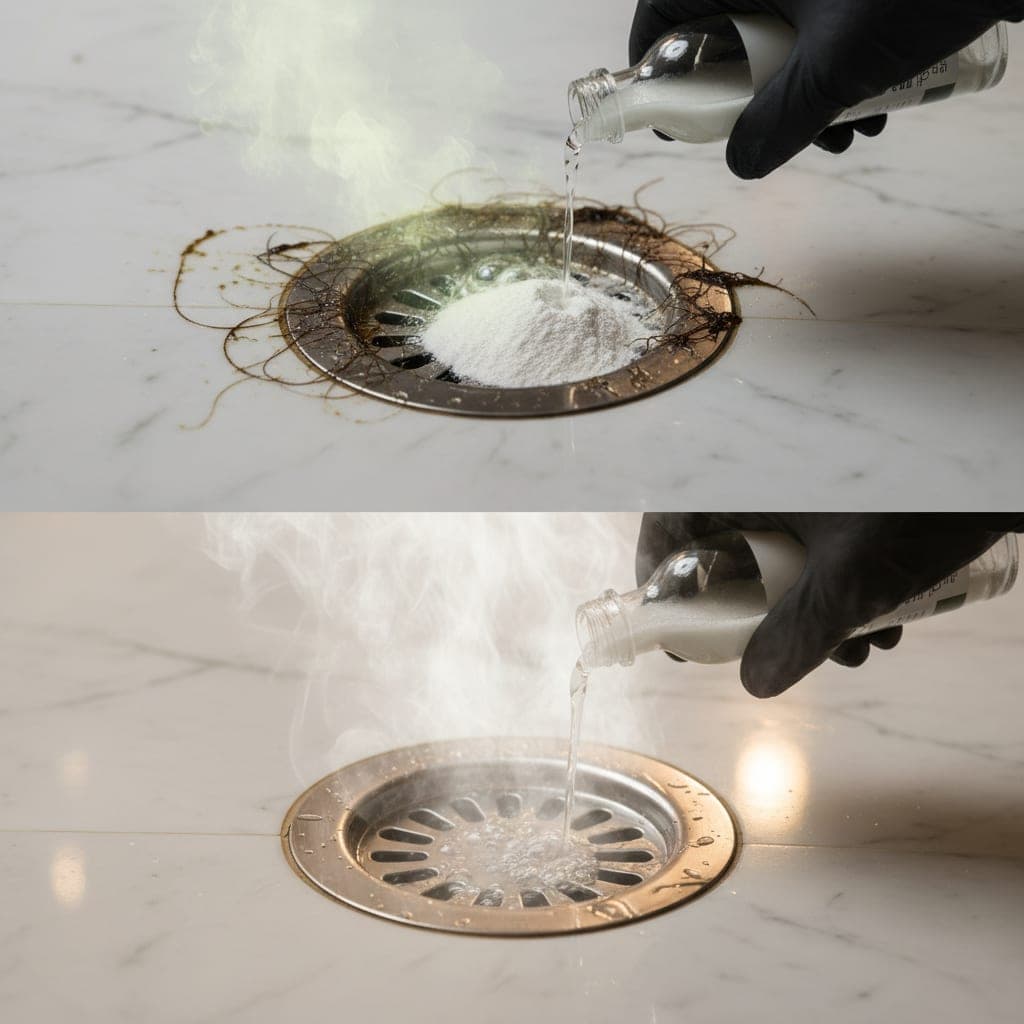
- Pour a baking soda and salt scrub into the drain
- Activate with white vinegar for the foaming reaction
- Flush with boiling water to clear the loosened biofilm
- Pro tips
- FAQ
What You'll Need
Step-by-Step Instructions
Identify what is actually causing the smell
A bathroom drain that smells does not always have the same cause, and the right cleaning method depends on which one you are dealing with. The most common culprit is a layer of biofilm. This is a slimy black or pink coating made of soap residue, body oils, hair, skin cells, and bacteria that builds up on the inside walls of the drain pipe just below the strainer. It is the source of about ninety percent of bathroom drain odors. The second cause is hair and product buildup deeper in the trap, where shampoo and conditioner residue binds with hair into a solid plug that holds standing water and rotting debris. The third and least common cause is a dried out p trap, the U shaped section of pipe under the sink that holds water to block sewer gas. If a bathroom is rarely used the water in the trap evaporates and sewer gas vents directly through the drain. Shine a flashlight directly into the drain. If you see slime coating the walls, the issue is biofilm. If the water drains slowly or stands in the basin, the issue includes a clog. If the drain is fast and clean looking but the smell is sulfurous and intense, the issue is a dry p trap and the fix is simply running the tap for thirty seconds to refill it.
Remove the drain stopper or strainer and clean it separately
Most bathroom sink drains have a pop up stopper that lifts out with a slight twist and pull. Shower drains usually have a strainer that unscrews or pries up with a flat screwdriver. Take the stopper or strainer out of the drain before any cleaning, because the underside of the stopper is the dirtiest single part of the entire drain assembly and is responsible for a significant portion of the smell on its own. The pivot rod that connects the sink stopper to the drain mechanism collects a thick black sludge of hair, soap, and bacteria that wipes off easily once removed but is impossible to clean while the stopper is in place. Drop the stopper or strainer into a small bowl of hot water with a teaspoon of dish soap and let it soak while you work on the drain itself. After ten minutes, scrub the soaked stopper with an old toothbrush, paying special attention to the underside and the pivot ball, rinse under hot running water, and set aside to reattach after the drain is cleaned.
Pull out visible hair and debris with a drain snake
If the drain is slow or holding water, physical obstruction must be removed before any liquid cleaner will reach the inside of the pipe. A flexible plastic drain snake works for almost every bathroom drain situation and costs about two dollars. Push the snake down into the drain past the resistance you feel, twist it gently, and pull it back up slowly. The barbs on the snake catch hair and the gummy product residue that holds the clog together. Do this two or three times until the snake comes back relatively clean. For deep clogs that the snake cannot reach, an unbent wire coat hanger with a small hook bent into the end works similarly and reaches further. Pull all extracted debris into a paper towel and dispose of it in the trash, never back into the drain or toilet. Run hot water for thirty seconds to confirm the drain flows freely. If water still pools, the clog is past where the snake reaches and you should proceed to the next steps which dissolve the rest of the buildup chemically.
Pour a baking soda and salt scrub into the drain
With debris removed, the next step coats the inside walls of the drain pipe with a mild abrasive paste that scrubs the biofilm off as it sits. Mix half a cup of baking soda with a quarter cup of fine salt in a small bowl and pour the dry mixture directly into the drain. The salt is essential because baking soda alone is too soft to lift biofilm from the pipe walls. The salt particles act as a microscopic scouring agent that grips the slime layer while the baking soda neutralizes the acidic odors trapped in the buildup. Let the dry mixture sit in the drain for ten to fifteen minutes before adding any liquid. During this dwell time the salt and baking soda are pulling moisture out of the biofilm and weakening its grip on the pipe walls. This step is the single biggest improvement over the standard pour and rinse drain cleaning advice, because the dry contact time is what breaks the biofilm bond before the foaming reaction physically lifts it off.
Activate with white vinegar for the foaming reaction
Pour one cup of white vinegar slowly into the drain on top of the baking soda and salt mixture. The reaction begins immediately and you will hear and see a thick white foam rise up the drain opening. The foam is the visible result of carbon dioxide bubbles forming as the acetic acid in vinegar reacts with the sodium bicarbonate. Those bubbles fill the entire diameter of the drain pipe and push the cleaning paste against every interior surface where it can scrub the biofilm. Cover the drain with a damp paper towel to prevent the foam from escaping upward and force the reaction down into the pipe where the cleaning needs to happen. Let the foaming reaction continue for fifteen to twenty minutes. The smell during this time is sharp from the vinegar and not pleasant, but it is the active cleaning process and dissipates quickly once the next step is complete. The combination is safe to mix because the reaction produces only carbon dioxide and water, unlike the dangerous chemical reactions that occur when commercial drain cleaners are mixed with anything else.
Flush with boiling water to clear the loosened biofilm
Boil two to three cups of water in a kettle or large pot. Pour the boiling water slowly into the drain in a steady stream. The hot water dissolves any remaining soap residue, melts the loosened biofilm into a flowing mixture, and flushes everything down through the trap into the wastewater line. The combination of heat and the previous cleaning chemistry is what produces a thoroughly clean drain rather than just a temporarily masked smell. Pour the boiling water in two pours separated by about thirty seconds rather than all at once. The pause between pours lets the first pour break the bond between the biofilm and the pipe walls, and the second pour carries the loosened material away cleanly. For PVC drain pipes, which most modern bathrooms use, near boiling water is safe in normal quantities. For old metal pipes that may be more fragile, use very hot tap water rather than freshly boiled water to avoid thermal stress on the joints. The drain should now smell clean and run freely. If a faint smell remains after this step, the issue is likely deeper in the line than household cleaning can reach and a follow up with the maintenance routine in the next steps prevents the issue from coming back.
Scrub the drain opening and overflow port with a toothbrush
The visible drain opening and the small overflow holes near the rim of the sink basin are part of the same drain system and harbor the same biofilm. Once the inside of the pipe is clean, dip an old soft toothbrush into a bowl of hot water with a few drops of dish soap and scrub the inside of the drain opening, the rim where the strainer sits, and the small overflow port that vents air to allow water to drain freely. The overflow port in particular is rarely cleaned and often holds standing pockets of slime that contribute to the smell even after the main pipe is clean. For bathroom sinks that have a deep overflow channel, push the toothbrush bristles into the opening as far as they reach and work back and forth in a scrubbing motion. Rinse the toothbrush in hot water frequently as it picks up residue. This detail step adds about three minutes to the cleaning and is the difference between a drain that smells fresh for a week and a drain that smells fresh for a month or longer.
Replace the stopper and run hot water as a final flush
Reattach the cleaned drain stopper or strainer and run hot tap water down the drain for one to two minutes as a final flush. This pushes any remaining cleaning residue through the system and confirms that the drain flows freely and smells neutral. Inhale near the drain opening to verify the result. There should be no detectable sewer or sour smell. If a faint vinegar scent remains, run the hot water for an additional minute and the residual acid will dilute and clear. The drain is now clean. The smell is gone. The maintenance routine in the next step is what determines whether you have to do this again next month or in six months.
Set up the weekly maintenance routine that prevents the smell from coming back
A clean drain stays clean only if you prevent biofilm from rebuilding. The single most effective maintenance habit is a weekly thirty second flush that takes virtually no effort. Once a week, pour half a cup of boiling water down each bathroom drain, immediately followed by a quarter cup of white vinegar. The combination kills any biofilm starting to form on the pipe walls before it has a chance to colonize. This single weekly habit prevents the deep clean from being needed again for six months or longer in most bathrooms. Once a month, repeat the full baking soda and vinegar process from the earlier steps as a deeper preventive treatment. Take five seconds after every shower to pull visible hair out of the drain strainer with a paper towel before it goes down the pipe. Hair is the structural backbone of every bad drain clog and stopping it at the strainer prevents about ninety percent of future buildup. For shower drains where hair is the dominant issue, install a removable hair catcher that sits flat over the drain opening. The few dollars and thirty seconds of installation save hours of clearing clogs over the years.
Why the smell keeps coming back
The reason drain odor comes back has almost nothing to do with how fast a product clears the drain and everything to do with whether it removes biofilm. Biofilm is the soft bacterial layer clinging to the pipe wall just below the opening, and it is what actually smells. The baking soda, salt, vinegar, and boiling water sequence works on odor specifically because the salt is abrasive and the boiling water flush physically lifts that layer off the wall. Enzyme cleaners digest organic matter and do help, but the effect fades as the enzymes are washed out, so they need repeating on a schedule. Chemical drain openers are the fastest way to get a slow drain running again, but they dissolve the obstruction without scouring the pipe wall, so the smell comes back even though the water is moving fine. That difference, clearing versus scouring, is why a drain can run perfectly and still smell. Bleach is the one to skip here. It knocks bacteria back temporarily without lifting the biofilm, the chlorine fumes come straight back up out of the drain, and it can react dangerously with any acidic cleaner used in the same bathroom that week.
Mistakes that make the smell worse instead of fixing it
Mistake one: pouring chemical drain cleaners and other products into the same drain in sequence. The combinations of bleach with vinegar, ammonia, or commercial drain openers produce toxic fumes ranging from chlorine gas to chloramines. If you used a chemical drain cleaner first, run cold water for ten minutes before any other treatment to flush the system completely. Mistake two: using boiling water on a porcelain sink or in a porcelain basin without running cold water first. Pouring boiling water against cool porcelain can crack the basin from thermal shock. Run warm tap water for thirty seconds first to bring the porcelain temperature up gradually before the boiling pour. Mistake three: skipping the dry contact time on the baking soda and salt step. Pouring vinegar in immediately after the baking soda produces a quick flashy reaction but does not give the salt enough time to weaken the biofilm bond. The full ten to fifteen minute dry sit is what makes this method significantly more effective than the standard pour and rinse advice. Mistake four: not removing the drain stopper before cleaning. The underside of the stopper holds the dirtiest layer of buildup in the entire drain system and cleaning around it leaves the source of the smell in place. Always remove and clean the stopper separately. Mistake five: ignoring the overflow port. The small holes near the top of a bathroom sink basin lead to the same drain pipe and harbor the same biofilm. A drain that is cleaned but has an overflow port left untouched will smell again within days because the slime in the overflow keeps reseeding the cleaned pipe.
Pro Tips
- ✓Always remove the drain stopper or strainer and clean the underside separately. The pivot rod and stopper underside hold the dirtiest layer of buildup in the entire drain system and are responsible for a large portion of the smell on their own.
- ✓Let the baking soda and salt mixture sit dry in the drain for ten to fifteen minutes before pouring vinegar. The salt is the key abrasive that breaks the biofilm bond, and the dry contact time is the single biggest factor in how thoroughly this method cleans.
- ✓Run a weekly thirty second flush of half a cup of boiling water followed by a quarter cup of white vinegar. This single habit prevents the biofilm from rebuilding and extends the time between deep cleanings to six months or longer in most bathrooms.
- ✓A smelly drain is often only half the bathroom's odor problem, the plunger sitting next to it is the other half. Here is how to deep clean a plunger so it stops spreading bacteria.
Frequently Asked Questions
Why does my bathroom drain smell like sewer?
The most common cause is a layer of biofilm coating the inside walls of the drain pipe just below the strainer. This slimy buildup is made of soap residue, body oils, hair, and bacteria, and it produces a sulfurous smell as it decomposes. A second common cause is a dried out p trap if the bathroom is rarely used, since the water seal that blocks sewer gas evaporates and the gas vents up through the drain. Run hot water for thirty seconds to refill a dry trap, and use the baking soda and vinegar deep clean method to remove biofilm.
Does baking soda and vinegar actually clean drains?
Yes, when combined with salt and boiling water in the right sequence. Pour half a cup of baking soda mixed with a quarter cup of fine salt into the drain and let it sit dry for ten to fifteen minutes. Pour one cup of white vinegar on top, cover the drain with a damp paper towel, and let the foaming reaction work for fifteen to twenty minutes. Flush with two to three cups of boiling water poured in two stages. The salt acts as the abrasive that lifts biofilm off the pipe walls, the foaming reaction physically scrubs every interior surface, and the boiling water flushes the loosened material away.
How do I get rid of the rotten egg smell from a bathroom drain?
The rotten egg smell is hydrogen sulfide gas produced by bacteria in the biofilm coating the drain pipe. Remove the drain stopper, pull out any visible hair with a drain snake, then pour half a cup of baking soda and a quarter cup of salt into the drain and let sit dry for fifteen minutes. Add one cup of vinegar, wait twenty minutes, and flush with boiling water. Scrub the drain opening and overflow port with a soapy toothbrush. The smell is gone the same day and stays away for several weeks if you maintain a weekly hot water and vinegar flush.
How often should you clean a bathroom drain?
Run a quick maintenance flush of half a cup of boiling water followed by a quarter cup of white vinegar once a week. Do the full baking soda, salt, vinegar, and boiling water deep clean once every two to three months for sinks and once a month for shower drains, which collect more hair and product residue. Pull visible hair out of the strainer after every shower as a thirty second habit that prevents the majority of clogs and odors before they form.
How this guide was made
This bathroom cleaning guide was researched, written, edited, and published by Fredler Pierre-Louis. The 11 steps below are built around Baking soda, White vinegar and Boiling water, and the quantities and dwell times come from published cleaning-chemistry and manufacturer guidance for those materials, not from a controlled trial we ran ourselves. Where a popular version of this hack does not work, or is risky on a particular surface, this 11 min guide says so.
- Checked against manufacturer and materials guidance for the surfaces named.
- Reviewed by a person for chemical safety and surface compatibility before publication.
- Written to explain why a method works, not just to list steps.
- Corrected whenever a reader reports an error or an edge case we missed.
Read our full editorial policy or learn more about the team behind TryCleaningHacks.
Related Cleaning Guides
Safety Notes
- ⚠Never combine baking soda and vinegar with any commercial drain cleaner in the same session. If a chemical product was used recently, run cold water down the drain for ten minutes to flush the system before any other cleaning. Mixing bleach with vinegar produces toxic chlorine gas, and mixing bleach with ammonia produces chloramine fumes.
- ⚠Pour boiling water down the drain slowly and only after running warm tap water for thirty seconds. Sudden temperature changes against a cool porcelain sink can crack the basin from thermal shock, and very old metal drain pipes can stress at the joints from repeated boiling water exposure.
- ⚠Wear rubber gloves when handling drain debris pulled out by a snake or hanger. The biofilm and hair plug from a bathroom drain contains concentrated bacteria that can irritate skin and should not contact mucous membranes or open cuts.
You might also like
How to Remove Hard Water Stains From a Toilet (7 Proven Methods)
My apartment toilet had a rust-brown mineral ring nearly half an inch thick and no prior cleaning had touched it. Here's what actually worked on severe established buildup and the cheap weekly habit that prevents any ring from forming in the first place.
How to Remove Mold and Mildew From Bathroom Caulk (8 Methods)
Black mold in bathroom caulk is a different problem from surface mildew, because the growth has rooted into the porous silicone rather than sitting on top of it. That is why wiping it off works for a week and then it is back. Here is what genuinely clears established caulk mold, what only cosmetically bleaches it, and the step most people skip afterward that lets it return within weeks.
How to Clean a Plastic Shower Curtain Liner by Hand and in a Washer
A plastic shower curtain liner builds up soap scum, mildew, and pink Serratia bacteria faster than almost any other bathroom surface, and most people throw theirs out long before it needs replacing. There are two ways to clean one, a bathtub hand wash and a washing machine cycle, and the right choice depends on the liner material rather than on how dirty it is. Here is how each works, which liners tolerate which, and the mistakes that destroy a liner instead of cleaning it.