

How to Clean a Humidifier to Stop White Dust, Pink Slime, and That Musty Smell
My humidifier was leaving a fine white film on the nightstand, the tank had developed a pink slimy ring at the waterline, and the mist had picked up a faint musty smell that filled the bedroom overnight. Each of those is a different problem with a different fix. Here is how to clean a humidifier properly, descale it, and stop all three from coming back.
Jump to a section
- What you'll need
- Step-by-step
- Unplug it and understand what each problem actually is
- Disassemble fully and dump the old water away from the drain trap
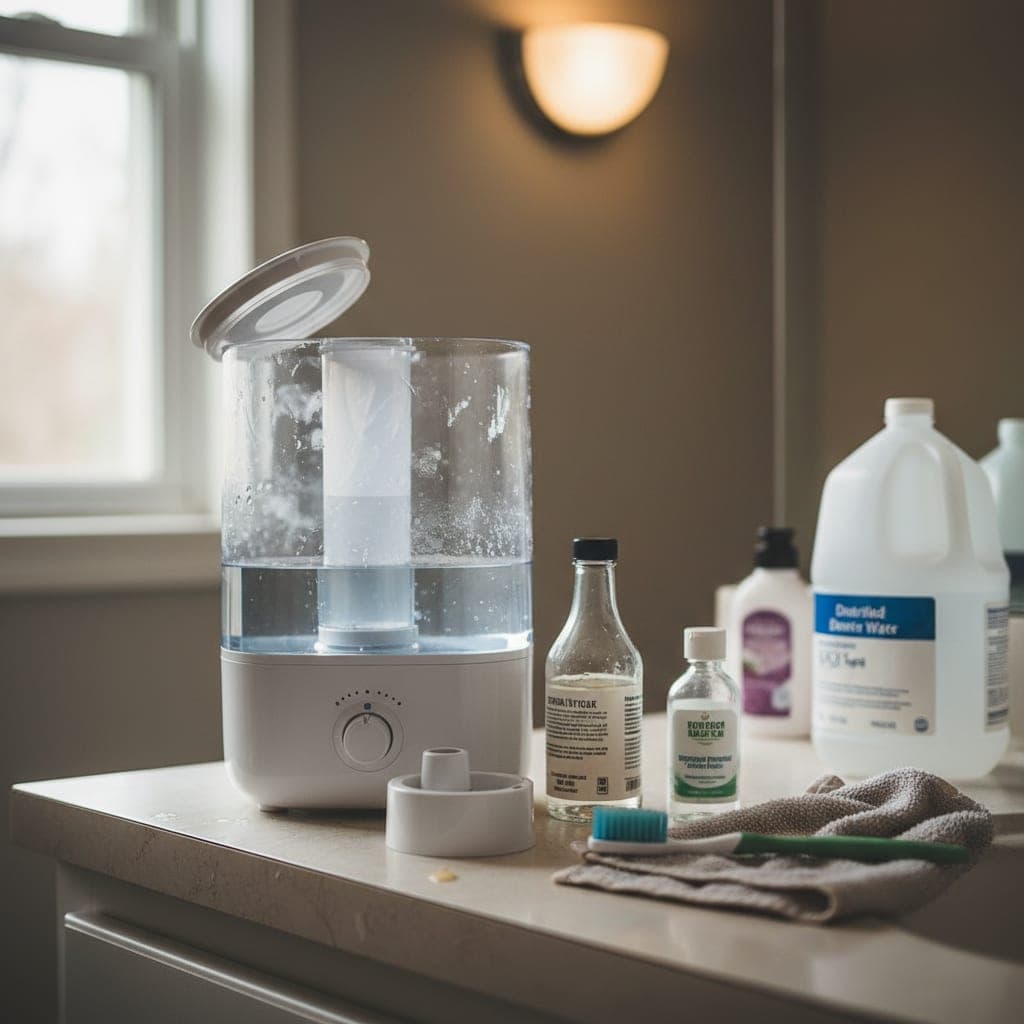
- Descale the tank and base with white vinegar to remove white dust at the source
- Disinfect the tank with hydrogen peroxide to kill the pink slime and mold
- Handle the wick filter or demineralization cartridge correctly
- Dry every part completely before reassembling
- Pro tips
- FAQ
What You'll Need
Step-by-Step Instructions
Unplug it and understand what each problem actually is
Always unplug the humidifier and empty any remaining water before cleaning, and never let water get near the base unit's electrical housing or the fan and ultrasonic components inside it. A humidifier produces three distinct nuisances that people often lump together but that have separate causes. The white dust settling on furniture is not mold or dirt, it is the dissolved minerals from hard tap water, which an ultrasonic humidifier atomizes along with the water and deposits as a fine powder on every nearby surface. The pink or orange slimy ring at the waterline is Serratia marcescens, a common airborne bacterium that thrives in standing water, while a black or green slime is mold, and both grow whenever water sits in the tank between uses. The musty smell in the mist comes from that same bacterial and mold growth being aerosolized and blown into the room, which means a humidifier with a dirty tank is actively spraying microbial growth into the air you breathe all night. Knowing which of the three you are dealing with tells you which step matters most, but a full clean addresses all of them at once and should be done far more often than most people realize.
Disassemble fully and dump the old water away from the drain trap
Separate the humidifier into its parts: the water tank, the base or reservoir that holds the heating element or ultrasonic disc, the mist nozzle or cap, and any wick filter or demineralization cartridge. Pour out any standing water, and pour it into a toilet or outdoor area rather than the kitchen sink if the tank has visible slime, because you do not want to splash bacterial growth around a food-prep surface. Take out the wick filter or cartridge and set it aside, because most of these must never be scrubbed with cleaners or soap, only rinsed or replaced, and we will handle it separately. Tip the base unit to drain it without getting water into the air outlet or the electrical compartment. Getting everything apart and the old water out is the necessary first move, because the slime and scale live in specific spots, the tank waterline, the base reservoir floor, and around the nozzle, that you can only reach once the unit is fully separated.
Descale the tank and base with white vinegar to remove white dust at the source
Mineral scale is what feeds the white-dust problem and what eventually clogs the misting element, so descaling is the core of the clean. Fill the tank with equal parts white vinegar and water, or pour undiluted white vinegar into the base reservoir to cover the heating element or ultrasonic disc, and let both sit for at least twenty to thirty minutes, longer if there is heavy chalky buildup. The acetic acid dissolves the calcium and magnesium scale that water alone cannot touch. After soaking, use a soft bottle brush to scrub the inside of the tank and an old toothbrush to work the vinegar into the corners of the base and around the misting element, where scale is hardest and thickest. For the tiny ultrasonic disc, a vinegar-dampened cotton swab is the right tool, never a metal scraper or anything abrasive, because scratching that disc permanently reduces the humidifier's output. Pour the vinegar out and rinse every part thoroughly with clean water until there is no vinegar smell, because residual vinegar will be atomized into the room along with the mist if you skip the rinse. This is the same acetic-acid descaling that clears a furred-up kettle in our how to remove limescale from a kettle guide.
Disinfect the tank with hydrogen peroxide to kill the pink slime and mold
Descaling removes minerals but does not reliably kill the bacteria and mold that cause the pink slime and the musty smell, so disinfection is a separate step. After the vinegar rinse, pour 3% hydrogen peroxide into the tank, enough to coat the inside surfaces, swish it so it reaches the full waterline ring and the cap, and let it sit for ten minutes. Hydrogen peroxide kills Serratia marcescens and mold and then breaks down into water and oxygen, leaving no residue to be inhaled, which makes it a better choice than bleach for a device that aerosolizes whatever is inside it. Do the same for the base reservoir. Use a peroxide-dampened cotton swab to clean around the nozzle and the small crevices of the cap, which are the most overlooked slime traps and a frequent reason the smell returns days after a cleaning. Do not mix the hydrogen peroxide and vinegar together in the tank at the same time; use vinegar first, rinse, then peroxide, because combining them in a closed container produces peracetic acid. Rinse the tank one more time with clean water after the peroxide and let every part air-dry. Hydrogen peroxide pulls the same disinfecting duty across the home in our 16 ways to clean and disinfect with hydrogen peroxide guide.
Handle the wick filter or demineralization cartridge correctly
The wick filter in an evaporative humidifier and the demineralization cartridge in some ultrasonic models are the parts people most often ruin by cleaning them wrong. A wick filter must never be scrubbed, squeezed hard, or cleaned with soap or vinegar, because doing so destroys its structure and pushes trapped minerals deeper into it; at most, rinse it gently under cool running water in the direction of the airflow, and if it has stiffened, discolored, crusted with scale, or developed a smell that rinsing does not remove, replace it, because a saturated wick is a primary source of musty mist. Demineralization cartridges have a finite capacity and simply stop working once exhausted, so follow the maker's replacement interval rather than trying to revive them. If your model has neither, the misting element you already descaled is doing that job. Always have a spare wick or cartridge on hand, because the most common reason people keep fighting a musty humidifier is that they keep cleaning the tank while leaving an exhausted, contaminated filter in place.
Dry every part completely before reassembling
Drying is not an optional finishing touch, it is the step that determines whether the slime and smell come back in two days or two weeks. Bacteria and mold need standing moisture to grow, so a humidifier reassembled while still damp inside is already seeding its next colony. Shake out the tank, wipe the inside of the base with a dry microfiber cloth, and leave all the parts separated on a clean towel to air-dry completely, ideally for several hours or overnight, before putting them back together. Leave the tank cap off while it dries so air can circulate inside. If you use the humidifier daily, this is also why you should empty it and let it dry out during the day rather than topping up the same water, because water that sits warm in the tank for twenty-four hours is exactly what the pink slime needs. A fully dry humidifier between uses is the single most effective habit for preventing all three problems.
Switch to distilled water to eliminate white dust for good
If the white dust on your furniture is the main complaint, the permanent fix is in the water you fill it with, not in how often you clean. White dust is dissolved minerals from hard tap water, so filling the humidifier with distilled or demineralized water, which has had those minerals removed, eliminates the dust at the source and dramatically slows scale buildup inside the unit as a bonus. Distilled water is inexpensive by the gallon and is genuinely the only reliable way to stop white dust on an ultrasonic humidifier, because no amount of cleaning changes the mineral content of what you pour in. As a secondary benefit, using distilled water means you descale far less often and your wick or cartridge lasts much longer. If buying distilled water regularly is impractical, an evaporative (wick-type) humidifier is the better choice for hard-water homes, because the wick traps the minerals and the fan evaporates only pure water vapor, so it does not produce white dust the way an ultrasonic unit does.
Set a realistic cleaning schedule based on how you use it
A humidifier needs far more frequent attention than most appliances because it is a warm, wet environment running for hours. Do a quick rinse-and-dry of the tank and base daily if you run it every day, emptying any leftover water rather than reusing it. Do the full vinegar descale and hydrogen peroxide disinfection at least once a week during heavy-use season, and twice a week if you have hard water or notice film or smell returning sooner. Check the wick or cartridge weekly and replace it on schedule. When you put the humidifier away at the end of the season, do a complete clean, dry it fully, and store it disassembled and bone-dry, because a humidifier put away damp grows mold all summer and greets you with a musty smell and slime the next time you need it. This schedule sounds frequent, but the alternative is a device that sprays bacterial and mold growth into the air you breathe while you sleep.
What fixed each problem, in order of impact
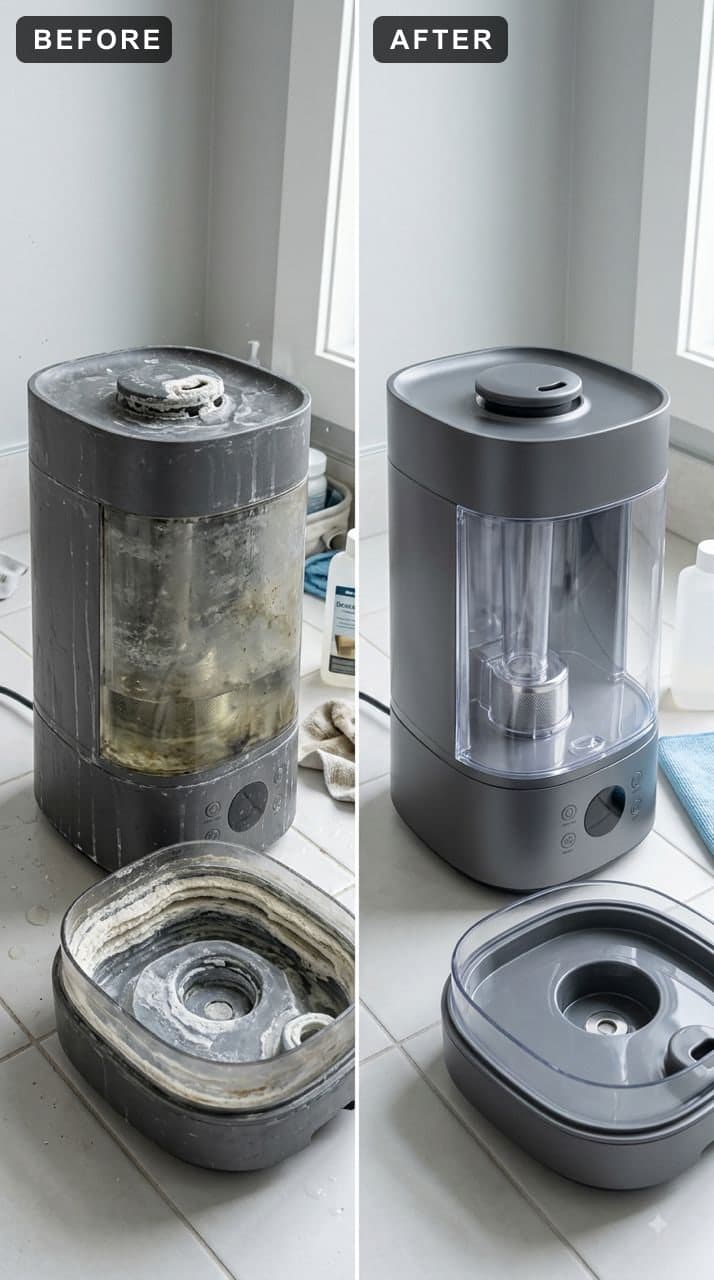
Three separate problems had three separate fixes, and lumping them together was why earlier half-cleanings never fully worked. The white dust on the nightstand only truly stopped when I switched from tap water to distilled water; descaling reduced it temporarily, but as long as I refilled with hard tap water the dust came back within days, because the dust is the mineral content of the water itself. The pink slime ring at the waterline was killed by the hydrogen peroxide step specifically, vinegar descaling made the tank look clean but the slime regrew until I added the ten-minute peroxide disinfection. The musty smell in the mist turned out to be two sources: the slime in the tank, which the peroxide handled, and a saturated wick filter that no amount of tank cleaning could fix, replacing the wick removed the last of the smell. The habit that kept all three gone was emptying and drying the unit during the day instead of leaving warm water standing in it. If you do only one thing, switch to distilled water and dry it out daily; together those two changes prevent most of the trouble.
Mistakes that ruin the unit or keep the problems coming back
Mistake one: scrubbing or soaping the wick filter. The wick is designed to be rinsed gently or replaced, and cleaning it with soap, vinegar, or a brush destroys it and drives minerals deeper in, which is why the musty smell persists even after a spotless tank clean. Mistake two: using bleach or strong scented cleaners. A humidifier aerosolizes whatever is inside it, so bleach residue and fragrance oils get sprayed into the air you breathe; stick to vinegar for descaling and hydrogen peroxide for disinfecting, both of which rinse clean. Mistake three: scraping the ultrasonic disc with anything metal or abrasive. That tiny disc is the part that creates the mist, and scratching it permanently cuts the humidifier's output. Use only a soft swab. Mistake four: leaving standing water in the tank between uses. Warm standing water is precisely what grows the pink slime and the smell, so empty and dry it daily rather than topping it up. Mistake five: mixing vinegar and hydrogen peroxide together in the tank, which forms peracetic acid. Always use them in separate steps with a rinse in between.
What the difference looks like
Pro Tips
- ✓Use distilled water instead of tap water to stop white dust permanently. The dust is dissolved minerals from hard water, and no amount of cleaning changes what you pour in.
- ✓Disinfect with 3% hydrogen peroxide after descaling with vinegar, in separate steps with a rinse between. Vinegar removes scale but peroxide is what actually kills the pink slime and mold.
- ✓Empty and dry the humidifier during the day rather than reusing standing water. Warm water sitting in the tank is exactly what grows the slime and the musty smell.
Frequently Asked Questions
What is the white dust from my humidifier and how do I stop it?
The white dust is the dissolved minerals from hard tap water, which an ultrasonic humidifier atomizes along with the water and deposits as a fine powder on nearby surfaces. The only reliable fix is to fill the humidifier with distilled or demineralized water, which has had those minerals removed. Cleaning and descaling reduce the dust temporarily, but as long as you refill with hard tap water it comes back, because the dust is the mineral content of the water itself. In hard-water homes, an evaporative wick-type humidifier is an alternative that does not produce white dust.
What is the pink slime in my humidifier?
The pink or orange slimy ring at the waterline is Serratia marcescens, a common airborne bacterium that thrives in standing water. A black or green slime is mold instead. Both grow whenever water sits in the tank between uses. Vinegar descaling makes the tank look clean but does not reliably kill them, so after descaling, disinfect with 3% hydrogen peroxide for ten minutes, which kills the bacteria and mold and then breaks down into water and oxygen. Emptying and drying the tank daily prevents it from returning.
How often should I clean my humidifier?
Rinse and dry the tank and base daily if you use it every day, emptying any leftover water rather than reusing it. Do a full vinegar descale and hydrogen peroxide disinfection at least once a week during heavy use, twice a week with hard water. Check and rinse or replace the wick or cartridge weekly. A humidifier is a warm, wet device running for hours, so it needs far more frequent cleaning than most appliances, otherwise it sprays bacterial and mold growth into the air while you sleep.
Can I use bleach to clean my humidifier?
It is not recommended. A humidifier aerosolizes whatever is inside it, so bleach residue gets sprayed into the air you breathe and is difficult to rinse out completely. Use white vinegar to dissolve mineral scale and 3% hydrogen peroxide to disinfect, both in separate steps with a thorough rinse in between, because both rinse clean and break down safely. Never mix vinegar and hydrogen peroxide together in the tank, as they form peracetic acid when combined in a closed container.
How this guide was made
This deep clean guide was researched, written, edited, and published by Fredler Pierre-Louis. The 10 steps below are built around White vinegar, 3% hydrogen peroxide and Soft bottle brush, and the quantities and dwell times come from published cleaning-chemistry and manufacturer guidance for those materials, not from a controlled trial we ran ourselves. Where a popular version of this hack does not work, or is risky on a particular surface, this 10 min guide says so.
- Checked against manufacturer and materials guidance for the surfaces named.
- Reviewed by a person for chemical safety and surface compatibility before publication.
- Written to explain why a method works, not just to list steps.
- Corrected whenever a reader reports an error or an edge case we missed.
Read our full editorial policy or learn more about the team behind TryCleaningHacks.
Related Cleaning Guides
Safety Notes
- ⚠Always unplug the humidifier and keep water away from the base unit's electrical housing, fan, and ultrasonic components before cleaning.
- ⚠Never mix vinegar and hydrogen peroxide together in the tank. Combined in a closed container they form peracetic acid. Use them in separate steps with a thorough rinse in between.
- ⚠Do not run bleach or fragrance oils through a humidifier. It aerosolizes whatever is inside it, so any residue gets sprayed directly into the air you breathe.
You might also like
7 Deep Cleaning Tricks That Save Hours Every Week
Most of the time spent cleaning a bathroom is spent waiting or backtracking, not scrubbing. Spraying one surface, waiting for it, wiping it, then starting the next one means you pay every dwell time separately. Batching those dwell times so every cleaner works at once is the single change that cuts the job roughly in half. None of this involves a gadget or a miracle spray, just the order you work in and where you stop wasting motion.
How to Deep Clean a Shower (10 Proven Methods)
I deep cleaned the same shower twice in one week once with my old routine and once with these ten methods applied in the right sequence. The difference wasn't even close. Here's what changed and the daily habit that eliminated most of my scrubbing for good.
30 Cleaning Myths You Need to Stop Believing
I believed most of these myths for years, and two of them left permanent marks on surfaces in my own house. This is the honest version of what I got wrong, why the popular advice fails, and the two safety myths that actually send people to the emergency room. I have kept the failures in here on purpose, because the mistakes taught me more than the wins did, and a myth is only dangerous while you still trust it.