

How to Clean a Washing Machine (Top-Loader and Front-Loader)
My front-loader had a musty smell I'd been masking with scented detergent for almost a year. One Saturday morning I finally pulled back the rubber gasket and was genuinely horrified by what I found. Here's the exact two-cycle method that eliminated the smell in a single afternoon, the parts most people never clean, and how the steps differ between top-loaders and front-loaders.
Jump to a section
- What you'll need
- Step-by-step
- Why your washing machine smells even though it washes things
- Front-loader vs top-loader: the rules are different
- Clean the rubber door gasket (the single biggest smell source)
- Run a hot empty cycle with two cups of white vinegar
- Run a second hot cycle with one cup of baking soda
- Scrub the detergent drawer (the part nobody ever cleans)
- Pro tips
- FAQ
What You'll Need
Step-by-Step Instructions
Why your washing machine smells even though it washes things
I assumed for years that an appliance that runs hot water and detergent through itself dozens of times a month couldn't possibly be dirty. I was wrong, and the longer I waited the worse it got. Three things build up inside every washing machine and none of them get touched by a normal wash cycle: undissolved detergent and fabric softener residue, which forms a sticky film on the drum and the inside of the door seal; mineral scale from hard water, which collects in hoses and on the heating element; and biofilm, a thin layer of bacteria and mold that grows on any wet surface that never gets a chance to dry completely. The combination produces the musty, slightly sour smell that gradually transfers to your laundry no matter how much detergent you use. Front-loaders are far more prone to this than top-loaders because they hold water in the rubber door gasket between cycles and the drum sits in a permanently damp environment. If you can smell your washing machine when you open the door, this guide is for you. A proper deep clean takes about ninety minutes of mostly hands-off time and the difference in the laundry coming out the next day is immediate.
Front-loader vs top-loader: the rules are different
Read this section before you start, because the wrong method on the wrong machine wastes a cycle. Front-loaders need attention on the rubber door gasket, the detergent drawer, and the drain filter (yes, you have one, more on that in step seven). The smell almost always starts in the gasket and migrates from there. Run cycles with the door propped open afterward so it can dry. Top-loaders need attention on the underside of the lid, the fabric softener and bleach dispensers, and the agitator column if you have one. The smell on top-loaders is usually milder because the drum dries faster between cycles, but the dispenser cups and the area under the lid get genuinely disgusting if no one ever wipes them. High-efficiency (HE) top-loaders without a center agitator behave more like front-loaders and benefit from the gasket-style wipe-down even though they technically don't have a gasket. Use hot water and an empty cycle for both machine types. Never run cleaning cycles with anything in the drum, including the small amount of laundry you might be tempted to add to 'save a load.' The vinegar and baking soda need full contact with the drum surface to do their job.
Clean the rubber door gasket (the single biggest smell source)
On a front-loader, pull the rubber door gasket gently back with a gloved finger and look at the underside of the lip and the channel behind it. If you've never cleaned this before, expect to find black mildew streaks, lint, hair, coins, and possibly the missing sock you've been blaming the dryer for. Mix a spray bottle with one cup of warm water, half a cup of white vinegar, and three drops of dish soap. Spray the gasket generously, working your way around the entire circle, and lift the rubber back at each position to spray underneath. Let it sit for five minutes. Then take an old toothbrush and scrub firmly along the underside of the lip, the channel behind it, and the lower curve where water pools when the door is closed. Wipe everything out with a microfiber cloth, then go around once more with a clean damp cloth. The black streaks that don't come off on the first pass are usually established mold colonies that have grown into the rubber. For those, soak a paper towel in undiluted vinegar, press it against the affected area, and leave it in place for one hour before scrubbing again. Two applications nearly always clear what one does not. Top-loader users can skip the gasket but should wipe the underside of the lid and the rim of the drum opening with the same spray now while you're already set up.
Run a hot empty cycle with two cups of white vinegar
With the drum completely empty, pour two cups of white distilled vinegar directly into the drum (not the detergent drawer). Select the hottest, longest cycle your machine offers, typically called 'Whites,' 'Sanitize,' or 'Clean Washer' depending on the model. Front-loaders with a dedicated 'Tub Clean' or 'Drum Clean' cycle should use that one. Start the cycle and let it run all the way through. The hot water dissolves the vinegar through every internal hose, the drum, the heating element, and the drain pump. Acetic acid breaks down mineral scale, dissolves soap residue, and kills most of the bacterial film that causes the smell. This is the heavy-lift cycle and you should expect a noticeable vinegar smell while it runs (which dissipates within an hour of the cycle ending). Do not add bleach or any other product to this cycle. Vinegar plus bleach produces toxic chlorine gas, and even residual bleach left in the dispenser from previous loads can react. If you've been using bleach regularly, run a quick plain hot rinse cycle first to flush the system before adding vinegar.
Run a second hot cycle with one cup of baking soda
After the vinegar cycle finishes completely, sprinkle one cup of baking soda directly into the empty drum and run a second hot cycle. This second pass does two things the vinegar can't: it neutralizes any residual vinegar smell so your next load of laundry doesn't come out smelling like a salad, and the mild alkaline scrubbing action lifts the loosened residue that the vinegar broke down but didn't fully wash away. Running both cycles is the difference between a machine that smells better for a week and one that smells genuinely clean for months. If you only have time for one cycle, the vinegar cycle is the more important of the two, but both together is the gold standard. Some guides recommend pouring baking soda into the detergent drawer instead of the drum. Don't. Baking soda can clump in the drawer and clog the dispenser channels, especially on machines where the drawer is plastic and narrow. The drum is the right place for it.
Scrub the detergent drawer (the part nobody ever cleans)
While the cycles are running, pull out the detergent drawer. On most front-loaders and HE top-loaders, there's a release tab or button at the back of the drawer that lets you slide it out completely; check your manual if you can't find it. Hold the drawer up to the light and look at the underside and the back of each compartment. The fabric softener compartment is almost always the worst, with a thick pink-brown sludge that's a mix of softener residue, lint, and bacterial growth. Rinse the drawer under hot running water in a sink, then scrub all sides with the same vinegar-soap spray and the toothbrush. Pay particular attention to the small siphon tube in the fabric softener compartment that's a frequent clog point. Now look at the empty cavity in the washing machine where the drawer slides in. The roof of this cavity collects gunk that drips back into the drawer every time water flows through. Use the spray bottle to coat the inside of the cavity, scrub with the toothbrush as far as your hand will reach, and wipe with a damp cloth. Dry the drawer thoroughly before sliding it back in. Top-loaders without removable drawers should focus on the fabric softener and bleach dispenser cups on the agitator or lid scrub them with a toothbrush and the vinegar spray, paying attention to the small overflow holes.
Clean the drain pump filter (front-loaders only, and most people don't know it exists)
Every front-loader has a drain pump filter behind a small access panel at the bottom front of the machine. Its job is to catch coins, hair clips, buttons, and lint before they reach the pump. If you've never cleaned it, the contents are going to be impressive. The exact opening procedure varies by model, but for most machines you pop off the access panel with a flat-head screwdriver or your fingernail, place a shallow tray and a few towels underneath (water will come out), unscrew the filter cap by turning it counterclockwise, and let the trapped water drain completely. Pull out the filter, rinse it under hot running water, and scrub away the hair and gunk caught in the mesh. Use the toothbrush to clean inside the filter cavity itself. Screw the filter back in firmly enough that it doesn't leak, and pop the access panel back on. Do this every three to six months even if you don't notice a problem. A clogged filter slows down drainage, which leaves more water sitting in the drum and gasket between cycles, which feeds the smell problem. Top-loaders generally don't have a user-accessible drain filter, but check your manual to be sure.
Wipe down the exterior, the control panel, and the area underneath
Once both cycles have run and the interior is clean, finish the job with the exterior surfaces. Detergent splashes and dust accumulate on the top of the machine, the control panel, and the door itself. Wipe everything down with a soft damp microfiber cloth and a few drops of dish soap. Avoid spraying any liquid directly onto the control panel; spray the cloth instead. Pull the machine away from the wall if you can and check the floor underneath and the back of the machine. The flexible hoses on the back of the machine can develop slow drips that show up as water stains on the floor or wall plaster, and catching one early is the difference between a wipe-up and a flood. Also check the water inlet hoses for any visible cracks or bulges. Standard rubber inlet hoses are recommended for replacement every five years; braided stainless steel hoses are good for the life of the machine. If yours look old or you can't remember when they were installed, replacing them costs about thirty dollars per hose and is the cheapest insurance policy in the laundry room.
Leave the door and detergent drawer open after every load
This single habit makes more difference than any cleaning product. After every wash cycle, leave the front-loader door propped open at least six inches and pull the detergent drawer out by a few centimeters. This lets the drum and the drawer cavity dry completely between loads, which prevents the moist environment that bacteria and mold need to establish themselves. Top-loader users should leave the lid up after the last load of the day for the same reason. Do not slam the door shut as soon as the cycle ends and assume the next load can wait until tomorrow. Twelve hours of darkness and damp inside a sealed drum is enough to start a new biofilm layer. If you have small children or pets and can't safely leave a front-loader door fully open, prop it just a few inches with a hand towel folded over the rim. That's enough airflow to make a meaningful difference. Combined with the monthly cleaning cycle in the next step, this habit keeps the smell from ever coming back.
Set up a maintenance routine that keeps it clean
Once you've done the full deep clean, prevent regrowth with a much smaller monthly routine: one hot empty cycle with two cups of vinegar in the drum, no scrubbing required. Run it on the first Saturday of every month and the smell never gets a foothold. Every three to six months, repeat the full process: vinegar cycle, baking soda cycle, gasket scrub, drawer scrub, and drain filter clean. Add a quick weekly habit of wiping the door gasket dry with an old hand towel after the last load of the week takes about thirty seconds and removes the standing water that biofilm needs to grow. Finally, look at your detergent dosing. Most people use far more detergent than the load actually needs, and the excess is what builds up inside the machine. HE machines specifically require HE-formula detergent at the lower dose printed on the bottle (usually one to two tablespoons, not a full cap). Switching to the correct dose alone cuts internal residue buildup roughly in half.
What actually worked best in my own machine
The single biggest change was the gasket scrub. The vinegar cycle gets credit for reaching parts I couldn't, but the visible mildew on the gasket was the smell source I'd been ignoring for a year, and removing it was the moment my laundry actually started smelling like nothing instead of like 'less musty than before.' The drain pump filter was a close second more for the satisfaction of finally cleaning something I didn't know existed than for the smell impact, but it had collected about a year's worth of hair and lint and was definitely slowing drainage. The baking soda cycle on its own would not have done much, but as the rinse step after the vinegar it cleared the lingering acidic smell and left the drum genuinely neutral. The monthly maintenance cycle has been the easiest habit to keep up since one cycle a month with no scrubbing and the problem stays solved. If you only do one thing from this guide, scrub the gasket. If you do two, add the vinegar cycle. Three and you've covered ninety percent of the value.
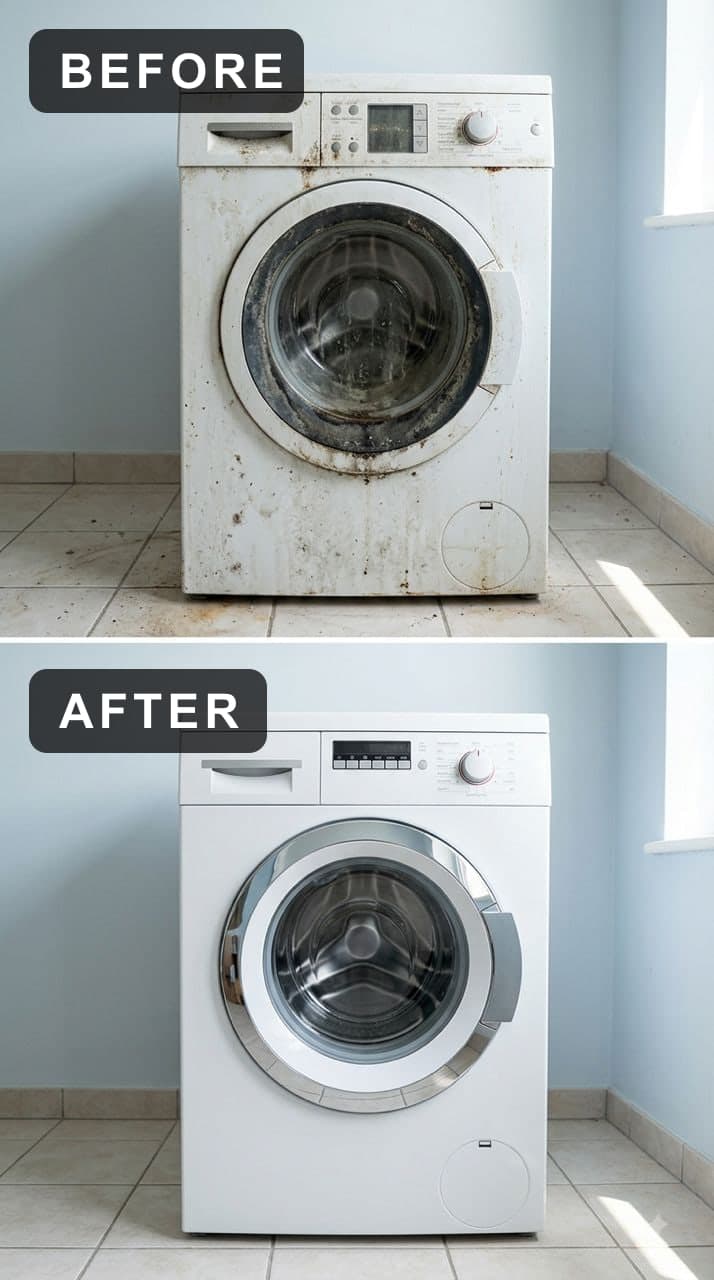
What the difference looks like
Pro Tips
- Set a recurring monthly reminder for the hot vinegar maintenance cycle one cycle is enough to prevent smell from coming back.
- Use HE detergent at the dose printed on the bottle, not a full cap most people overdose, which is the main source of internal residue.
- Keep an old hand towel folded over the open door after every load it absorbs gasket moisture without you having to wipe.
- Any appliance that holds standing water grows scale and mold, not just your washer. The same descaling logic applies to your morning brew, here is how to clean and descale a coffee maker for drip and Keurig machines.
Frequently Asked Questions
How often should I clean my washing machine?
Run a hot empty cycle with two cups of white vinegar once a month as routine maintenance. Do the full deep clean (vinegar cycle, baking soda cycle, gasket scrub, detergent drawer, and drain filter) every three to six months. Front-loaders need the gasket wiped dry weekly to prevent mold from establishing in the rubber folds. Top-loaders need slightly less attention because the drum dries faster between cycles.
Can I use bleach instead of vinegar to clean my washing machine?
You can, but vinegar is generally a better first choice because it dissolves mineral scale that bleach does not, and it does not damage the rubber gasket over time the way bleach can. If you choose bleach, use one cup of liquid chlorine bleach in the drum on a hot empty cycle, never combined with vinegar or any other product. Wait at least two full rinse cycles before adding any other cleaning agent. For machines that already smell strongly, vinegar is the more effective starting point because the smell is usually biofilm and mineral residue rather than something bleach can simply oxidize away.
Why does my washing machine still smell after I clean it?
Three reasons. First, the rubber gasket folds were not scrubbed deep enough most cleaning cycles do not reach the underside of the gasket lip where the worst mold lives. Pull the gasket back and scrub directly. Second, the drain pump filter has never been cleaned and the trapped lint and hair are holding the smell. Open the access panel at the bottom front of a front-loader and clean the filter. Third, the door is being closed immediately after every cycle, sealing in the damp environment biofilm needs. Leave the door propped open at least six inches after every load. Fix all three and the smell does not come back.
Is it safe to use vinegar in a high-efficiency (HE) washing machine?
Yes, used occasionally for cleaning. Two cups of white distilled vinegar in the drum once a month on a hot empty cycle is safe for all HE machines, both front-loader and top-loader designs. Avoid using vinegar in every regular wash load some manufacturers note that frequent acidic exposure can degrade rubber seals over many years. Once-monthly cleaning use is fine. Do not add vinegar to the detergent drawer or fabric softener dispenser, which can corrode plastic components with repeated use. The drum is the correct place.
Should I clean a new washing machine?
Yes, run one hot empty cycle with two cups of vinegar before the first real load. New machines often have shipping residue, manufacturing oils, and trace particulates inside the drum and hoses that you do not want transferring to your first load of clothes. After that initial cycle, the monthly maintenance routine starts the new machine off on the right schedule and prevents smell problems from ever developing.
How this guide was made
This Laundry & Kitchen guide was researched, written, edited, and published by Fredler Pierre-Louis. The 11 steps below are built around White distilled vinegar (2 cups), Baking soda (1 cup) and Old toothbrush or detail brush, and the quantities and dwell times come from published cleaning-chemistry and manufacturer guidance for those materials, not from a controlled trial we ran ourselves. Where a popular version of this hack does not work, or is risky on a particular surface, this 11 min guide says so.
- Checked against manufacturer and materials guidance for the surfaces named.
- Reviewed by a person for chemical safety and surface compatibility before publication.
- Written to explain why a method works, not just to list steps.
- Corrected whenever a reader reports an error or an edge case we missed.
Read our full editorial policy or learn more about the team behind TryCleaningHacks.
Related Cleaning Guides
Safety Notes
- Never combine vinegar and chlorine bleach in the same cycle. The mix releases toxic chlorine gas. Run a plain hot rinse first if you have used bleach recently.
- Unplug the machine before opening the drain pump filter access panel, especially if the floor under the machine may have any standing water.
- Do not leave a front-loader door propped open if small children or pets in the home can climb inside. Use a folded towel to leave just a few inches of airflow instead.
You might also like
How to Get Rid of Kitchen Sink Odor (10 Easy Fixes)
My kitchen sink smelled no matter how often I cleaned it until I figured out what I was actually missing. The fix wasn't a new product; it was addressing three different sources at once. Here's what finally worked and the one mistake that kept the smell coming back.
How to Clean a Microwave Inside and Out (12 Methods)
Almost nobody needs to scrub a microwave. Dried food is mostly water that has left, and steam puts enough of it back that the mess wipes away with a cloth, which is why the order of operations matters more than the product. There is also a part of the inside you should never scrub, a filter on over the range models that most owners have never removed, and a ceiling that looks fine until you point a flashlight at it. Here are twelve methods for the inside, the outside and the smell, with what each one is actually for and where it falls short.
How to Clean Stainless Steel Appliances Without Streaks (9 Methods)
Stainless steel appliances streak for one reason that almost every cleaning attempt gets wrong, and it has nothing to do with which product you buy. Stainless has a directional grain, and wiping across it drags residue into the grooves instead of out of them. Here are nine methods ranked for built-up fingerprints and kitchen grease, and the technique that decides whether any of them work.