
How to Get Cooking Grease Smell Out of the House
I deep-fried a batch of chicken on a Saturday and the heavy fried-oil smell was still hanging in the kitchen and the hallway on Monday. Grease smell is oilier and stickier than any other cooking odor, so it clings to walls and cabinets instead of just the air. Here is the routine that actually cleared it, in the order that worked, and the mistakes that left a greasy film re-releasing the smell for days.
Jump to a section
- What you'll need
- Step-by-step
- Open two windows and start the hood before the oil even gets hot
- Simmer a vinegar bowl on the back burner the whole time the oil is hot
- Set out a bowl of baking soda next to a bowl of white vinegar in the next room
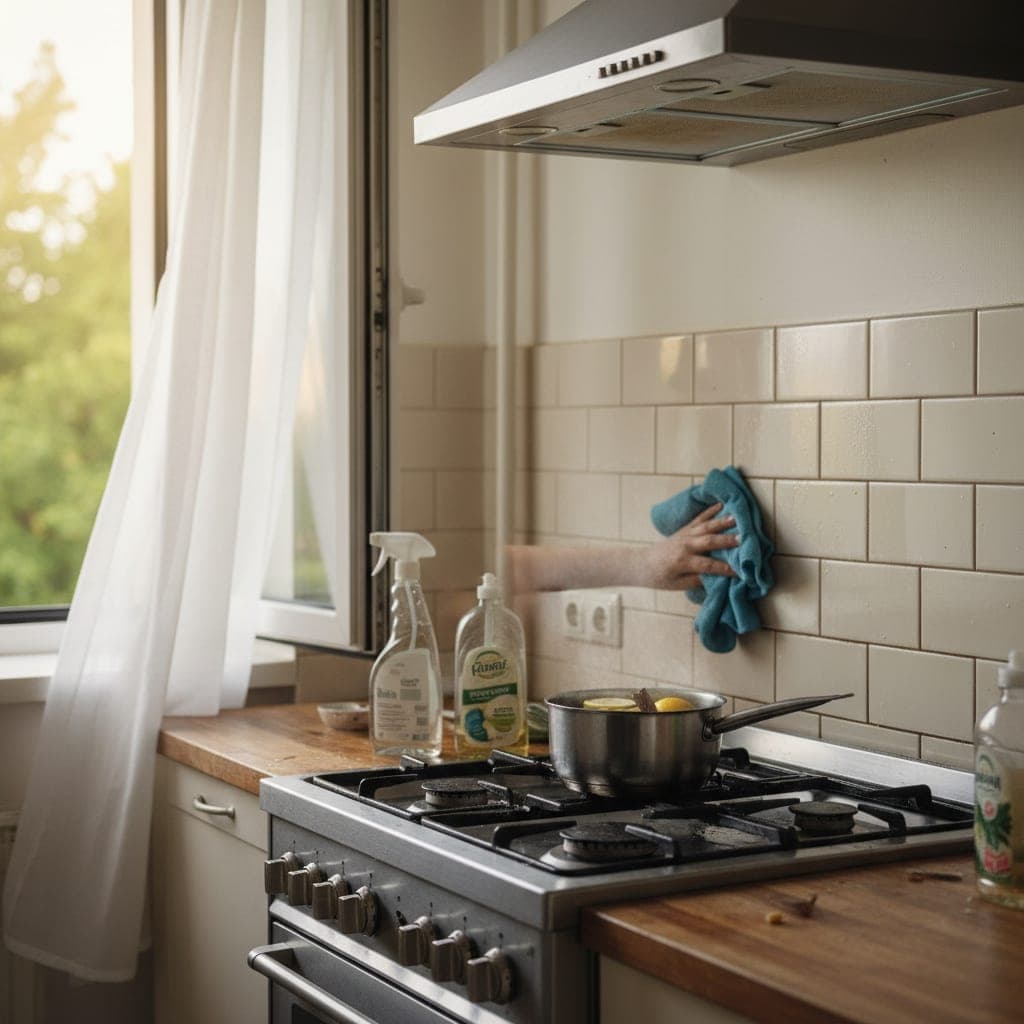
- Wipe down the walls and backsplash, not just the counters, with a degreaser solution
- Wipe every hard surface within six feet of the stove, a wider radius than other smells
- Deal with the frying oil and the pan immediately and correctly
- Pro tips
- FAQ
What You'll Need
Step-by-Step Instructions
Open two windows and start the hood before the oil even gets hot
Grease smell is different from onion, garlic, and fish in one crucial way: it is not just an odor in the air, it is aerosolized oil that physically coats every surface it touches, and that oily film is what re-releases the smell for days. That makes early ventilation more important here than for any other cooking smell, because once the greasy aerosol settles onto walls, cabinets, and curtains, removing the smell means cleaning a film rather than just clearing the air. Open one window in the kitchen and one window on the opposite side of the home and turn the range hood on medium before the oil even gets hot, not after the food goes in. Set a box fan in the kitchen window blowing outward at medium speed rather than high, because high speed lifts the local air pressure at the window and actually moves less total air across the room than a steady medium-speed exhaust. Open the kitchen window first and the far window second so the air path flows toward the exhaust fan. Close the closet and bedroom doors along that path, because greasy aerosol that drifts into a closet coats the clothing with a film that holds the fried smell for weeks. Getting the cross-draft and the hood going before the oil smokes is the single biggest factor in how much grease ends up on your surfaces versus pulled outside. The whole-home odor foundation in our 10 genius ways to make your house smell great guide pairs naturally with this kitchen-specific routine.
Simmer a vinegar bowl on the back burner the whole time the oil is hot
Pour one cup of plain white vinegar into a small saucepan and set it on the smallest back burner at the lowest possible simmer before the oil gets hot, and keep it going the entire time you are frying. The acetic acid vapor cuts the greasy cooking aerosol in the air and helps the oil droplets fall out of the air rather than drift onto walls and cabinets, while also neutralizing the burnt-oil odor compounds that give fried food its heaviest smell. Grease produces vapor for the entire cooking session rather than in one burst, so unlike a quick sauté the vinegar pot needs to run the whole time, not just at the start. The vinegar smell dissipates within fifteen minutes after the burner goes off, but the deodorizing effect carries well past the meal. Use plain distilled white vinegar, not apple cider or wine vinegar. A two-quart stainless-steel saucepan is the right size: small enough to heat quickly, large enough that it will not boil dry, and top it up with hot water partway through a long frying session because the longer cook time will evaporate more of it than a quick meal would. Leave it simmering until the food is served and the oil has cooled, then switch the burner off and leave the pan on the stove as it cools, because the cooling vinegar keeps working for another fifteen to twenty minutes while the hot oil is still off-gassing its heaviest vapor.
Set out a bowl of baking soda next to a bowl of white vinegar in the next room
Grease smell drifts farther than other cooking smells because the fine oil aerosol stays suspended and travels into the hallway and adjacent rooms, so the absorbers need to cover more ground. Pour half a cup of baking soda into one wide shallow bowl and a half cup of white vinegar into a second shallow bowl, and set them side by side on the counter farthest from the stove. Use wide shallow bowls rather than tall narrow ones, because both work across their exposed surface area and a wide salad bowl deodorizes far more air than the same volume packed into a mug. The baking soda absorbs the odor molecules while the open dish of vinegar continues neutralizing the greasy aerosol as it drifts past. Place a second pairing on a side table in the room directly adjacent to the kitchen and, for grease specifically, a third pairing partway down any hallway that connects the kitchen to the rest of the home, because the fried smell travels down hallways and settles in rooms far from the kitchen more than any other cooking odor. Replace the bowls with fresh material the next morning rather than topping them up, because the saturated top layer stops absorbing effectively. The same absorber logic anchors our 10 kitchen sink detox hacks for odor-free results for sink-trap smells, which also build up fast after frying.
Wipe down the walls and backsplash, not just the counters, with a degreaser solution
This is the step that separates getting rid of grease smell from getting rid of every other cooking smell: the greasy film coats the walls and backsplash, not just the counters, and that film is the main thing re-releasing the fried smell for days. Mix a few drops of grease-cutting dish soap such as Dawn into warm water with a splash of white vinegar, dampen a microfiber cloth, and wipe the backsplash, the wall behind and beside the stove, the wall above the range hood, and the cabinet fronts within a four-foot radius of the burner. Grease aerosol rises and spreads farther up the wall than people expect, so reach higher than feels necessary, all the way to the cabinet tops and the ceiling directly above the stove if you fried for any length of time. Use the dish soap rather than vinegar alone here, because grease is the one cooking residue that needs an actual degreaser to lift it; vinegar helps cut it but soap is what releases the oily film from the surface. Switch to a clean section of cloth often, because a grease-loaded cloth just smears the film around. Rinse each wiped area with a second cloth dampened in plain water to remove the soap residue, which otherwise attracts dust and holds its own faint smell. Wiping the walls and backsplash the same night, while the film is fresh and still soft, takes a fraction of the effort it takes once the grease has dried and hardened into a varnish over the following days.
Wipe every hard surface within six feet of the stove, a wider radius than other smells
Grease aerosol settles in a sticky film on a wider radius than onion, garlic, or fish vapor, reaching countertops, cabinet fronts, the side of the refrigerator, small appliances on the counter, the underside of the range hood, and even the dining table if it is in the same room, because the fine oil droplets stay airborne longer and drift farther before settling. Mix one part white vinegar with one part warm water plus a few drops of dish soap in a spray bottle, mist a microfiber cloth rather than the surface directly to avoid drips behind appliances, and wipe each surface in a single firm pass, working out to a six-foot radius rather than the four feet that handles other cooking smells. Pay particular attention to small appliances left on the counter during frying, the toaster, the kettle, the coffee maker, because their housings collect a grease film that bakes on with their own heat and then releases a stale fried smell every time they are used. Wipe the underside and the front edge of the range hood, which catch the heaviest grease of any surface in the kitchen. Switch to a fresh side of the cloth often, because a grease-loaded cloth smears rather than lifts. You are removing the oily film that traps the smell and re-releases it for days. Skip this step and the kitchen will still smell of fried food for the rest of the week even after the air has cleared, because the film keeps off-gassing from every surface it settled on.
Deal with the frying oil and the pan immediately and correctly
The frying oil itself is the single largest reservoir of grease smell in the kitchen, and how you handle it determines whether the smell lingers for a day or a week. Never pour used frying oil down the sink drain; it coats the pipes, traps food residue, and becomes a long-term source of a rancid greasy smell, on top of eventually clogging the drain. Instead, let the oil cool completely in the pan, then pour it into a sealable container, a glass jar or the original oil bottle, and put it in the trash, or take it to a recycling point if your area has one. Wipe the cooled pan out with paper towel to remove the bulk of the residual oil before washing, because washing a fully greasy pan smears oil around the sink and loads the sponge with grease that then spreads the smell to the next thing you wash. Wash the pan with grease-cutting dish soap in hot water, and add a splash of vinegar to the wash water to cut the residue the soap loosens. Take the oily paper towels out to the bin the same night, because oil-soaked paper in a warm kitchen trash can turns rancid overnight and produces a smell worse than the frying itself. Wipe the stovetop, the burner grates, and the splash zone around the pan while they are still slightly warm and the grease is soft, since cooled fried-on grease takes far more scrubbing to remove. Handling the oil and pan correctly in the first ten minutes removes more grease smell than any amount of later air freshening.
Boil a lemon-and-clove pot to cover the residual smell after the kitchen is wiped down
Once the food is served, the oil is dealt with, and the surfaces are wiped, fill a small saucepan with two cups of water, a whole lemon cut into quarters, four or five whole cloves, and a cinnamon stick, and simmer on the lowest setting for fifteen to twenty minutes. Grease smell needs a slightly longer and stronger finishing simmer than other cooking odors because the heavy fried smell is more persistent, so use a whole quartered lemon rather than just the peel and let it run a few minutes longer. This warm citrus-and-spice steam fills the kitchen with a clean background scent that does not collide with a savory meal. Lemon and clove counter the greasy odor with their acidity and bright volatile profile, and the cinnamon adds a warm baked note that reads as clean rather than fried. Add a piece of fresh ginger root if the grease smell was particularly heavy. Top the pan up with hot water once mid-simmer if it runs low, and never let it boil dry. Crucially, run this finishing simmer only after the walls and surfaces are wiped, not instead of wiping them, because layering a citrus simmer over an un-wiped greasy film just produces a fried-citrus hybrid rather than a clean scent. The same simmer-pot approach anchors our companion cinnamon-scent guide, which extends the routine to whole-home coverage once the grease baseline is clean.
Take out the trash and run the dishwasher the same night
Fried-food scraps, oil-soaked paper towels, and greasy packaging in a closed trash can turn rancid overnight and produce a heavy stale-grease smell by morning that is distinct from and worse than the fresh frying smell. Take the bag out the same night you cooked, no matter how little is in it, and put it in the outdoor bin. Wipe the inside rim of the can with a paper towel sprayed with the soapy vinegar-water mix before installing a fresh bag, because grease drips from the previous bag coat the rim and keep off-gassing. If you used the dishwasher for greasy pans and plates, run it the same night rather than leaving it loaded, because a dishwasher full of greasy dishes sitting overnight develops a sour fried smell that then transfers to the next clean load, and add a cup of white vinegar to the bottom of the dishwasher before the cycle to cut the grease the detergent alone struggles with. Wipe the sink basin and the area around the drain with the soapy vinegar mix, since grease splashes settle there and off-gas overnight, and pour a kettle of hot water followed by baking soda and vinegar down the drain to clear any oil caught in the trap. Handling the trash, the dishwasher, and the drain the same night prevents the rancid morning-after grease smell that people often mistake for the original frying smell lingering.
Run the range hood for an hour and check the filter, the biggest grease trap of all
Grease needs the longest hood run of any cooking smell, a full hour after the burner goes off, because the oil keeps off-gassing heavily as it cools and the greasy aerosol settles slowly. Leave the hood running on medium for a full hour after frying. Medium pulls more total air volume over that window than high does in a shorter burst, because high speed often creates turbulence that disrupts the smooth capture of vapor at the hood mouth. The range hood filter is the single biggest grease trap in the entire kitchen, far more than with any other cooking smell, because frying loads it with oil directly: if you have a metal mesh grease filter, it almost certainly needs cleaning after a frying session, so pull it out, soak it in hot water with grease-cutting dish soap and a half cup of baking soda for fifteen minutes, scrub it, and let it dry before reinstalling. A grease-clogged filter does not just stop pulling smell out, it actively drips and re-releases a rancid fried smell every time the fan runs afterward, which is why a kitchen can smell faintly of old grease for weeks after a single fry. If the hood only recirculates rather than venting outside, replace its charcoal filter, since frying saturates a charcoal filter faster than anything else. Cleaning the grease filter the same night, while the grease is still soft, takes far less effort than waiting until it hardens into a baked-on varnish.
Wash the curtains, towels, and any clothes worn while frying the same night
Grease aerosol settles into every soft surface in and near the kitchen, and unlike onion or garlic vapor it leaves an actual oily residue in the fibers, so the textiles need washing rather than just airing. Kitchen curtains in particular sit in the path of the rising greasy aerosol and hold the fried smell longest, so take them down and wash them the same night if you fried for any length of time, with a quarter cup of baking soda in the drum and a quarter cup of white vinegar in the rinse. Run the kitchen towels, oven mitts, and apron through the same wash. Critically, wash the clothes you were actually wearing while frying as well, because the greasy aerosol coats them and they will carry the fried smell to every room and chair you sit in afterward, which is one of the most overlooked reasons a fried smell seems to follow you through the house. Use the warmest water the care labels allow, because grease needs heat to lift out of fibers and a cold wash leaves the oily residue behind. Add the splash of grease-cutting dish soap to the wash along with the regular detergent for the greasiest items. Tumble dry on medium. By morning the curtains, the towels, and your clothes are free of the oily film, the kitchen has a genuinely clean baseline, and nothing soft is quietly re-releasing fried grease into the home every time the air moves.
What I would do differently next time and what I would skip
After repeating this routine across three frying sessions (fried chicken, doughnuts, and a stir-fry with a lot of hot oil), the wall-and-backsplash degreasing and the range-hood filter cleaning were the two highest-leverage steps by a wide margin, because grease is the only cooking smell that lives in a physical film on surfaces rather than mainly in the air, and those two surfaces hold the most grease of all. The full hour of hood time mattered more than the shorter runs that handle other smells. The single biggest mistake the first time was treating grease like onion smell and only clearing the air; the smell came right back the next day because the film on the walls, the hood filter, and the curtains kept re-releasing it. Wiping a six-foot radius rather than four, and reaching higher up the walls than felt necessary, made a clear difference. Washing the clothes I had actually worn while frying was an unexpectedly important fix, because they were carrying the fried smell to the couch and the bedroom. Dealing with the oil and the dishwasher the same night prevented a rancid morning-after smell that is genuinely worse than the original frying. Candles and plug-in air fresheners did essentially nothing against grease and just produced a fried-floral hybrid. If you deep-fry rather than shallow-fry, treat every step as the heavy version: hour-plus hood time, full wall wash, filter clean, curtain and clothing wash, and the third absorber bowl down the hallway, because deep-frying puts far more oil aerosol into the air than any other cooking method in this series.
Pro Tips
- ✓Wipe the walls and backsplash, not just the counters, the same night. Grease lives in a film on vertical surfaces that the air-clearing steps never touch.
- ✓Clean the range hood metal grease filter while the grease is still soft. A clogged filter re-releases a rancid fried smell every time the fan runs.
- ✓Wash the clothes you wore while frying, not just the towels. Greasy clothing carries the fried smell to every chair and room you sit in afterward.
How we tested this guide
Every method in this home fragrance guide was hands on tested by Fredler Pierre-Louis using White vinegar, Baking soda and Lemon, on the actual surface or material described and not on a staged photo set. We timed each of the 11 steps, recorded the dwell intervals, and noted where each one worked or fell short, then refined this 10 min guide based on what we observed across multiple test runs in real homes.
- Methods verified on the relevant surface or material before publication.
- Reviewed for chemical safety and surface compatibility before publication.
- Dwell times and proportions across all 11 steps match what actually works, not generic averages.
- Updated whenever a reader reports an edge case we missed.
Read our full editorial and testing policy or learn more about the team behind TryCleaningHacks.
Related Cleaning Guides
Safety Notes
- ⚠Never pour used frying oil down the sink drain. Let it cool, seal it in a container, and bin it. Hot oil in a drain hardens, traps residue, clogs pipes, and turns rancid.
- ⚠Let frying oil cool completely before moving it. Pouring hot oil into a thin plastic container can melt it and cause serious burns.
- ⚠Keep the simmering vinegar pot well away from the hot oil and from any open bottles of bleach. Vinegar vapor combined with bleach produces toxic chlorine gas.
Frequently Asked Questions
Why does fried-food grease smell linger so much longer than other cooking smells?
Grease smell is not just an odor in the air; frying aerosolizes fine oil droplets that physically coat the walls, cabinets, range hood, curtains, and even your clothes in a sticky film, and that film keeps re-releasing the fried smell for days. Other cooking smells like onion and garlic are mostly airborne vapor that clears once the air is exchanged, but grease leaves a physical residue on surfaces. That is why clearing the air alone never works for grease and why you have to actually wipe the walls and surfaces and clean the hood filter to remove it.
What is the most important step to get rid of cooking grease smell?
Wipe down the walls, backsplash, and range hood with a grease-cutting dish soap solution the same night, while the film is still soft, and clean the range hood's metal grease filter. Those surfaces hold the most grease in the kitchen, and the film on them is the main thing re-releasing the fried smell for days. Cleaning the air with ventilation and a simmer pot helps, but it will not remove a smell that is living in a physical oily film on your walls and your hood filter.
Why do I need dish soap instead of just vinegar for grease smell?
Grease is the one cooking residue that needs an actual degreaser to lift it off surfaces. Vinegar helps cut grease and neutralize the burnt-oil odor, but a grease-cutting dish soap such as Dawn is what actually releases the oily film from walls, cabinets, and the hood filter. For grease specifically, use a few drops of dish soap with warm water and a splash of vinegar, rather than the vinegar-and-water mix that works for onion, garlic, and fish, because those smells leave a thinner film that vinegar alone can handle.
How do I stop the fried smell from following me around the house?
The fried smell follows you because greasy aerosol settles into the clothes you were wearing while frying, and they then carry it to every chair, couch, and room you sit in afterward. Wash those clothes the same night with the rest of the kitchen textiles, using warm water and a splash of grease-cutting dish soap along with the detergent. Also wash or take down the kitchen curtains, which sit in the path of the rising aerosol and hold the fried smell longest of any soft surface in the kitchen.
How long should I run the range hood after frying?
Run the range hood on medium for a full hour after the burner goes off, which is longer than the thirty to forty-five minutes that handles other cooking smells, because frying oil keeps off-gassing heavily as it cools and the greasy aerosol settles slowly. Just as important, clean the metal grease filter the same night, because frying loads it with oil and a clogged filter will drip and re-release a rancid fried smell every time the fan runs for weeks afterward. Keep windows open with a fan blowing outward for the same hour.
You might also like

10 Easy Ways to Make Your House Smell Amazing All Day
I threw out every plug in and aerosol can in my house two years ago and switched to these ten methods instead. The simmer pot gets more genuine "what is that smell, it's incredible" comments than any candle I ever burned, and it costs almost nothing. Here is what actually holds up day after day, which tricks are overhyped, and the one habit that matters more than any fragrance you add on top.
How to Get Onion Smell Out of the House
I diced two large onions for a stew on a Sunday and the smell was still hanging in the curtains on Tuesday. After timing four different deodorizing methods over a real onion-cooking session, here is the order that actually clears the air fastest and the mistakes that just spread the smell to other rooms.
How to Make Your Entire Home Smell Like Cinnamon
Cinnamon is the most forgiving home scent in the kitchen aromatic family. It pairs with morning coffee, with afternoon baking, and with evening tea without ever clashing. After running four different cinnamon methods through a real two-story home for a full week, here is the layered routine that fills every room evenly and the mistakes that leave the upstairs untouched.