

How to Get Onion Smell Out of the House
I diced two large onions for a stew on a Sunday and the smell was still hanging in the curtains on Tuesday. After timing four different deodorizing methods over a real onion-cooking session, here is the order that actually clears the air fastest and the mistakes that just spread the smell to other rooms.
Jump to a section
- What you'll need
- Step-by-step
- Open two windows on opposite walls before you start cooking, not after
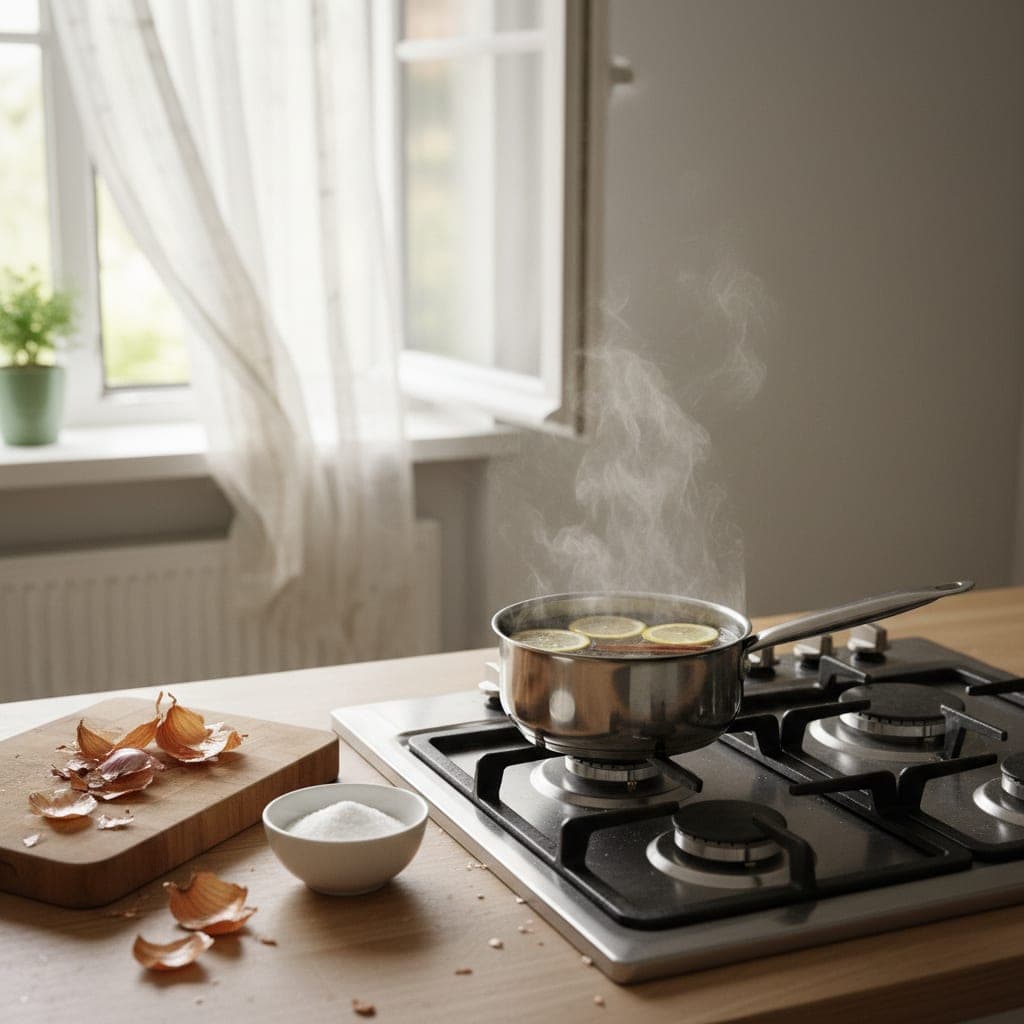
- Simmer a vinegar bowl on the back burner while the onions cook
- Set out two open bowls of baking soda in the kitchen and the room next to it
- Cut a lemon in half and rub the cut side over the cutting board immediately
- Wipe down every hard surface within four feet of the stove with the vinegar-water mix
- Simmer cinnamon sticks and lemon peel for fifteen minutes after the meal
- Pro tips
- FAQ
What You'll Need
Step-by-Step Instructions
Open two windows on opposite walls before you start cooking, not after
The single biggest mistake people make with onion smell is reacting to the smell after it has already saturated the curtains, the rug, and the upholstered chair in the next room. Open one window in the kitchen and one window on the opposite side of the home before you ever pick up the knife. Place a box fan in the kitchen window blowing outward at medium speed, not high. High speed creates a noisy turbulent air column that actually pulls less total volume of air across the room than a steady medium-speed exhaust because it lifts the local air pressure right at the window before the rest of the room can equalize. Medium gives you a stronger sustained cross-draft. The cross-draft pulls cooking air through the kitchen and out, instead of letting it settle into fabrics in the living room and the bedroom hallway. If you wait until the smell is already noticeable, you are now removing molecules that have bonded to fibers, which takes hours instead of minutes. Open the kitchen window first and the far window second so the air path moves toward the exhaust fan rather than fighting against an opposing draft. Close any closet doors and bedroom doors along the path between the two open windows so the airflow does not deposit onion vapor inside closed clothing storage where it will linger for days. For a deeper foundation on whole-home odor strategy, the steps in our 10 genius ways to make your house smell great guide pair well with this kitchen-specific routine.
Simmer a vinegar bowl on the back burner while the onions cook
Pour one cup of plain white vinegar into a small saucepan and set it on the smallest back burner at the lowest possible simmer the moment you start sautéing onions. Vinegar vapor neutralizes sulfur compounds in the air through a basic acid-base reaction. The acetic acid molecules bond with the alkaline sulfur compounds released from the onion and fall out of the air rather than depositing on curtains and upholstery. The vinegar smell itself fully dissipates within fifteen minutes after the burner goes off, but the deodorizing effect lasts well past the meal. Use plain distilled white vinegar, not apple cider vinegar or wine vinegar. The flavored varieties contain sugars and additional volatile compounds that compete with the deodorizing effect and can leave a sticky film on the saucepan that takes effort to clean. A two-quart stainless-steel saucepan is the ideal size: small enough to heat quickly, large enough that the simmer does not boil dry within thirty minutes. Leave the saucepan simmering until you serve the food, then turn the burner off and leave the saucepan on the stove until it cools. The cooling vinegar continues to release vapor for another fifteen to twenty minutes, which is exactly when the cooked-onion vapor is at its highest point in the room because the food is being plated and served. The continued passive deodorizing during the meal is the difference between a kitchen that smells fresh by dessert and one that still smells like onion at bedtime.
Set out two open bowls of baking soda in the kitchen and the room next to it
Pour half a cup of baking soda into a shallow bowl and set one on the kitchen counter farthest from the stove and one on a side table in the room directly adjacent to the kitchen. Use a wide shallow bowl rather than a tall narrow one. Baking soda absorbs odor molecules from the air across its exposed surface area, so a wide salad bowl deodorizes significantly more air than the same volume of powder packed into a tall mug. Baking soda absorbs odor molecules from the air over six to eight hours rather than masking them, working through a slow surface reaction with the airborne compounds rather than through scent. The two-bowl placement is important: a single bowl deodorizes only its immediate area, while the paired bowls intercept the air that drifts from the kitchen into the next room and dramatically reduce the next-day onion ghost in soft furnishings. For an extra-strong onion night, place a third bowl on top of the refrigerator. The fridge top is one of the highest air-circulation paths in any kitchen because warm air rises off the compressor coils and drives convection currents directly through any open bowl placed there. Replace the bowls with fresh baking soda the next morning rather than topping up the existing powder, because the saturated top layer no longer absorbs effectively even if more powder is added underneath. The same trick is the foundation of our 10 kitchen sink detox hacks for odor-free results, which target sink-trap smells the same way.
Cut a lemon in half and rub the cut side over the cutting board immediately
Onion smell binds to plastic and wood cutting boards through sulfur compounds that cling to porous surfaces and into knife scoring marks. The fastest fix is to halve a lemon and rub the cut side firmly across the entire surface of the board, including the edges, the juice grooves, and especially the deepest knife marks where the highest concentration of onion residue is trapped. Apply enough pressure that the lemon flesh actually breaks down into the surface rather than just sliding across the top. The citric acid in the lemon dissolves the sulfur compounds chemically while the lemon flesh works as a mild abrasive. Sprinkle a tablespoon of coarse salt onto the board before you start rubbing if the board has been used for raw meat in the past or has stubborn knife scoring; the salt acts as a non-scratching scrub that reaches into the deep grain in a way the lemon flesh alone cannot. Rinse with cold water, not hot, because hot water drives the onion compounds deeper into the wood grain and partially cooks any residual oils into a film that becomes very difficult to remove. Dry the board completely with a clean towel and stand it on its edge to air-dry the rest of the way for at least two hours before storing flat. A lemon-scrubbed board kept in rotation will shed onion odor in under a minute, where soaking in soap and water often takes ten minutes and still leaves residue. Keep one lemon in the fridge dedicated to cutting-board duty so onion prep is never delayed by hunting for a fresh one.
Wipe down every hard surface within four feet of the stove with the vinegar-water mix
Onion vapor settles in a fine invisible film on countertops, the front of cabinet doors, the side of the refrigerator, and the lower edge of the range hood. The film is composed of cooking oil aerosolized by the heat of sautéing combined with sulfur compounds dissolved into that oil. The combination is sticky and sits on every flat surface within a four-foot radius of the burner. Mix one part white vinegar with one part water in a spray bottle, mist a microfiber cloth (not the surface directly, to avoid drips behind appliances), and wipe each of those surfaces in a single firm pass. Use a fresh side of the cloth for the cabinet doors, because the cabinet fronts collect the most film and you want to lift it rather than smear it across the upper cabinets you have not cleaned yet. Pay specific attention to the side of the refrigerator that faces the stove, the front of the dishwasher, and the cabinet handles that get touched while cooking. The handles in particular re-release onion smell every time they are touched the next day. You are not looking for visible grime; you are removing the oily film that traps the smell on the surface and re-releases it for the next twelve hours through every interaction with the surface. Skip this step and the kitchen will still smell faintly of onion the next morning even after a full air-out, and the smell will keep returning every time someone opens a cabinet door or pulls open the dishwasher.
Simmer cinnamon sticks and lemon peel for fifteen minutes after the meal
Once the food is plated and the burners are off except for one, fill a small saucepan with two cups of water, three cinnamon sticks, the peel of the lemon you used on the cutting board, and one teaspoon of vanilla extract if you want a softer finish. Simmer at the lowest setting for fifteen minutes. This warm-spice steam fills the kitchen with a clean, food-friendly background scent that does not collide with the meal you just made the way most candles do. Cinnamon and lemon are also two of the few aromatics that mask onion specifically because they share volatile compound families with the sulfur compounds, so they actively cover instead of layering on top, which is the reason a citrus-cinnamon simmer pot will neutralize an onion smell while a lavender candle will simply add a second odor. Add a piece of fresh ginger root or a few whole cloves if the onion smell was particularly strong because both are even more aggressive at masking sulfur compounds than cinnamon alone. Top the saucepan up with hot water once mid-simmer if it starts to run low. Never let it boil dry. The same simmer pot is the entire premise of our companion cinnamon-scent guide, which expands the routine to whole-home coverage for an entire day of warm baked-goods scent.
Empty the trash before bed, not the next morning
Onion peels and onion-skin scraps in a closed trash can ferment overnight and release significantly stronger sulfur smells by morning than they did at the moment of cutting. The closed dark warm interior of a kitchen trash can is essentially a small fermentation chamber, and onion is one of the highest-sulfur foods regularly thrown into it. Take the bag out the same night you cooked, even if the bag is only half full. The cost of one extra trash bag is trivial compared to the next morning's lingering onion smell. Wipe the inside rim of the can with a paper towel sprayed with the vinegar-water mix before installing a fresh bag, because liquid drips from the previous bag accumulate on the rim and continue to off-gas even after the bag is removed. Sprinkle a tablespoon of baking soda into the bottom of the new bag before dropping it into the can. The baking soda layer absorbs liquid from the next round of food scraps before that liquid can ferment. If your trash can has a swing-top or a foot-pedal lid, wipe the underside of the lid as well, because that is the surface most directly exposed to rising sulfur vapor for the entire day. This single nightly habit prevents the next-day onion smell that most people blame on the curtains.
Run the range hood for thirty minutes after the burner goes off
Most people turn off the range hood the moment they turn off the stove. The actual peak of cooking-vapor release happens during the cool-down phase, when residual heat in the pan and on the burner continues to off-gas oils and smell molecules into the kitchen air for a full twenty to thirty minutes after the flame is out. Leave the hood running on its medium setting for a full thirty minutes after the burner is off. Medium speed pulls more total volume of air over thirty minutes than high speed does over ten because high speed often creates turbulence that disrupts the smooth capture of vapor at the hood mouth. If your hood vents to the outside, this single change removes more onion smell than any deodorizing trick on this list, because every cubic foot of vapor pulled out through the duct is a cubic foot that does not get a chance to bond to upholstery. If the hood only recirculates rather than venting outdoors, replace its charcoal filter every six months for the recirculation to actually work. A clogged or expired charcoal filter is one of the most overlooked sources of stale kitchen smell in any home, because the saturated carbon stops absorbing odors and starts re-releasing them every time the fan turns on. Check the filter the next time you run this routine. If it has not been replaced in the last year, replace it before the next onion-heavy meal.
Wash the kitchen towels and apron the same night
Cotton kitchen towels and an apron worn during onion prep absorb onion smell directly into the fibers. They will reintroduce the smell to the kitchen every time they are touched the next day, which is why some kitchens still smell faintly of onion two days later even after the surfaces are clean and the trash has been emptied. The towels are the hidden secondary source most people miss. Run them through the washer the same night with a normal detergent dose and a quarter cup of baking soda added directly to the drum (not the detergent dispenser, which dilutes the effect). Use the warmest water the fabric care label allows, because the onion compounds bond more tightly to cotton than most food smells and a cold wash leaves them partially intact. Add a quarter cup of plain white vinegar to the fabric softener dispenser instead of softener for this load. The vinegar neutralizes any residual sulfur compounds during the rinse cycle and also rinses away detergent residue that traps smells in fibers over time. Tumble dry with a clean dryer sheet on medium heat. By morning the textiles are neutral, the kitchen actually has a clean baseline, and the apron is ready for the next round of cooking instead of carrying yesterday's onion forward into tomorrow's breakfast.
Vacuum the rug or sweep the floor in the next room before going to bed
Onion vapor settles into rug fibers and into dust along baseboards in the room adjacent to the kitchen, often a living room or dining room with carpeting that has more total fabric surface area than every cushion in the home combined. Vacuum the rug or sweep the floor before bed so the deposited oils are physically removed instead of being walked into the fibers overnight by household traffic. Run the vacuum at its slowest practical speed and do at least two overlapping passes over the highest-traffic path between the kitchen and the next room. A single fast pass leaves most of the deposited oil in the rug; a slow double pass actually pulls it up. For the rug, a light sprinkle of baking soda left for fifteen minutes before vacuuming pulls additional odor molecules out of the pile. Stir the baking soda gently into the carpet pile with a soft-bristle brush before letting it sit so the powder makes contact deeper than the surface. Empty the vacuum canister or change the bag immediately after, outside the home, because vacuumed onion residue continues to off-gas inside a stored vacuum and will spread the smell to the storage closet within twenty-four hours. The whole step takes under five minutes and is the difference between waking up to a clean-smelling home and waking up to a faint cooking ghost that everyone in the household notices but no one can pinpoint.
What I would do differently next time and what I would skip
After repeating this routine three weekends in a row with different onion-heavy recipes (a French onion soup, a curry with three onions, and a pot roast with six onions), the simmering vinegar pot during cooking and the thirty-minute range-hood run after cooking are the two highest-leverage steps by a wide margin. Skip either one and the smell lingers into the next day no matter what else is done. The lemon-cinnamon simmer is genuinely effective but works as a finisher, not a substitute for the vinegar pot, and produces only minor improvement when used alone without the upstream vapor neutralization. Candles and plug-in air fresheners did almost nothing on a real onion night and in two cases actually combined with the cooking smell into something muddier and more headache-inducing than the onion alone. If a meal is going to involve more than two large onions, double the baking-soda bowls and put a third bowl on top of the refrigerator, which is one of the highest air-circulation paths in most kitchens because of the rising warm air from the compressor coils. The other change worth making for high-onion meals: open the windows ninety minutes after the burner goes off rather than the standard forty-five, because the higher onion volume saturates the air more deeply and the residual vapor takes longer to clear. Doing the towel wash and the rug vacuum the same night, not the next morning, is the difference between a kitchen that smells truly neutral by breakfast and one that smells faintly of onion until lunch.
Pro Tips
- Start the vinegar simmer pot before the first onion is cut, not after the food smells start.
- Pair the kitchen baking-soda bowl with one in the next room. Single-room deodorizing leaks.
- Keep one lemon in the fridge dedicated to cutting-board duty so onion prep is never bottlenecked.
Frequently Asked Questions
Why does onion smell linger in the house for so long?
Raw and cooked onions release sulfur-based volatile compounds that bond easily to porous surfaces such as curtains, upholstered cushions, rugs, wood cutting boards, and even painted drywall. Once those compounds settle into fibers they re-release into the air slowly over the next twenty-four to forty-eight hours, which is why the kitchen often smells stronger of onion the morning after cooking than during cooking. The fix is to neutralize the vapor while it is still airborne by simmering vinegar and running the range hood, then to physically remove the residue from cutting boards, towels, and counters before it has time to bond.
Does boiling vinegar really get rid of onion smell?
Yes, but the vinegar should be simmered at the lowest possible setting rather than rolling-boiled. A gentle simmer releases acetic acid vapor at a steady rate for thirty to sixty minutes, which neutralizes the alkaline sulfur compounds released from cooking onions in a simple acid-base reaction. Rolling-boiling burns through the cup of vinegar in under ten minutes and leaves a sharp vinegar smell of its own. A low simmer for the duration of the meal is the most effective version.
What is the fastest way to get onion smell off my hands and out of the cutting board?
For hands, rub them on the inside of a stainless-steel sink basin or against a stainless-steel spoon under cold running water for thirty seconds. The sulfur compounds bond to the steel and rinse away. For the cutting board, halve a fresh lemon and scrub the cut side firmly across the entire surface, then rinse in cold water and air-dry. Hot water drives the onion compounds deeper into the wood grain rather than removing them.
Can I just use scented candles instead of all this?
No. Scented candles mask odor for the immediate area around the candle but do not neutralize sulfur compounds in the air or remove them from fabrics, and many candle fragrances actually combine with cooking sulfur compounds into a worse composite smell. Use the vinegar simmer and range hood to remove the source first, then a cinnamon-and-lemon simmer pot or a lightly scented candle as a finishing layer once the underlying smell has cleared.
How long should I keep the windows open after cooking with onions?
A minimum of forty-five minutes after the burner goes off, with a fan blowing outward in one window and a window cracked on the opposite side of the home. If the cooking session involved more than two large onions or if the home is fully carpeted, extend the cross-ventilation to ninety minutes. Closing the windows too early traps the residual vapor in the home where it bonds to soft surfaces and re-releases for the next two days.
How this guide was made
This Home Fragrance guide was researched, written, edited, and published by Fredler Pierre-Louis. The 11 steps below are built around White vinegar, Baking soda and Lemon, and the quantities and dwell times come from published cleaning-chemistry and manufacturer guidance for those materials, not from a controlled trial we ran ourselves. Where a popular version of this hack does not work, or is risky on a particular surface, this 9 min guide says so.
- Checked against manufacturer and materials guidance for the surfaces named.
- Reviewed by a person for chemical safety and surface compatibility before publication.
- Written to explain why a method works, not just to list steps.
- Corrected whenever a reader reports an error or an edge case we missed.
Read our full editorial policy or learn more about the team behind TryCleaningHacks.
Related Cleaning Guides
Safety Notes
- Do not leave the simmering vinegar pot unattended. The water can boil off in under twenty minutes on a low burner if the pot is small.
- Keep the vinegar simmer pot well away from any open bottles of bleach. Vinegar vapor combined with bleach produces toxic chlorine gas.
- Do not pour boiling water directly on a wood cutting board to deodorize it. The grain will warp and the board will be permanently damaged.
You might also like

10 Easy Ways to Make Your House Smell Amazing All Day
I threw out every plug in and aerosol can in my house two years ago and switched to these ten methods instead. The simmer pot gets more genuine "what is that smell, it's incredible" comments than any candle I ever burned, and it costs almost nothing. Here is what actually holds up day after day, which tricks are overhyped, and the one habit that matters more than any fragrance you add on top.

How to Make Your Entire Home Smell Like Cinnamon
Cinnamon is the most forgiving home scent in the kitchen aromatic family. It pairs with morning coffee, with afternoon baking, and with evening tea without ever clashing. After running four different cinnamon methods through a real two-story home for a full week, here is the layered routine that fills every room evenly and the mistakes that leave the upstairs untouched.

How to Get Garlic Smell Out of the House
I roasted three whole heads of garlic for a Sunday pasta and the smell was still clinging to the dish towels two days later. After timing the methods that actually cleared the air against the ones that only spread the smell, here is the order that worked fastest and the mistakes that kept the garlic ghost hanging around until midweek.