

How to Deep Clean a Cast Iron Skillet
I rescued a thrift store cast iron skillet that looked beyond saving and ran the same restoration process on a neglected family pan that had not been deep cleaned in two years. Both came back to a smooth jet black cooking surface in under an hour. Here is the exact sequence that strips the burnt buildup, reseasons the pan correctly, and the mistakes that ruin a cast iron skillet permanently.
Jump to a section
What You'll Need
Step-by-Step Instructions
Assess the pan before you choose a method
Cast iron deep cleaning is not one technique. The right method depends on what you are looking at. Inspect the pan in good light and identify which of three problems you have. Sticky tacky black film across the cooking surface is excess oil that polymerized incorrectly during seasoning and never hardened. It feels gummy when you run a fingernail across it. Hard ridged black or brown buildup that flakes when scraped is carbonized food and burnt oil layered over years of cooking. Orange or reddish patches that feel rough are surface rust from the pan being stored damp or washed without drying immediately. Each issue needs a different approach and using the wrong one wastes time or damages the pan. The quick test for which problem dominates is to rub a folded paper towel firmly across the cooking surface. If the towel comes away coated with black residue the pan has the sticky polymer issue. If the surface feels gritty under the towel and shows scratched ridges the pan has carbonized buildup. If the towel snags on rough patches and shows orange staining the pan has rust. A pan can have all three issues at once. Treat them in the order described in the next steps.
Strip carbonized buildup with the salt scrub method
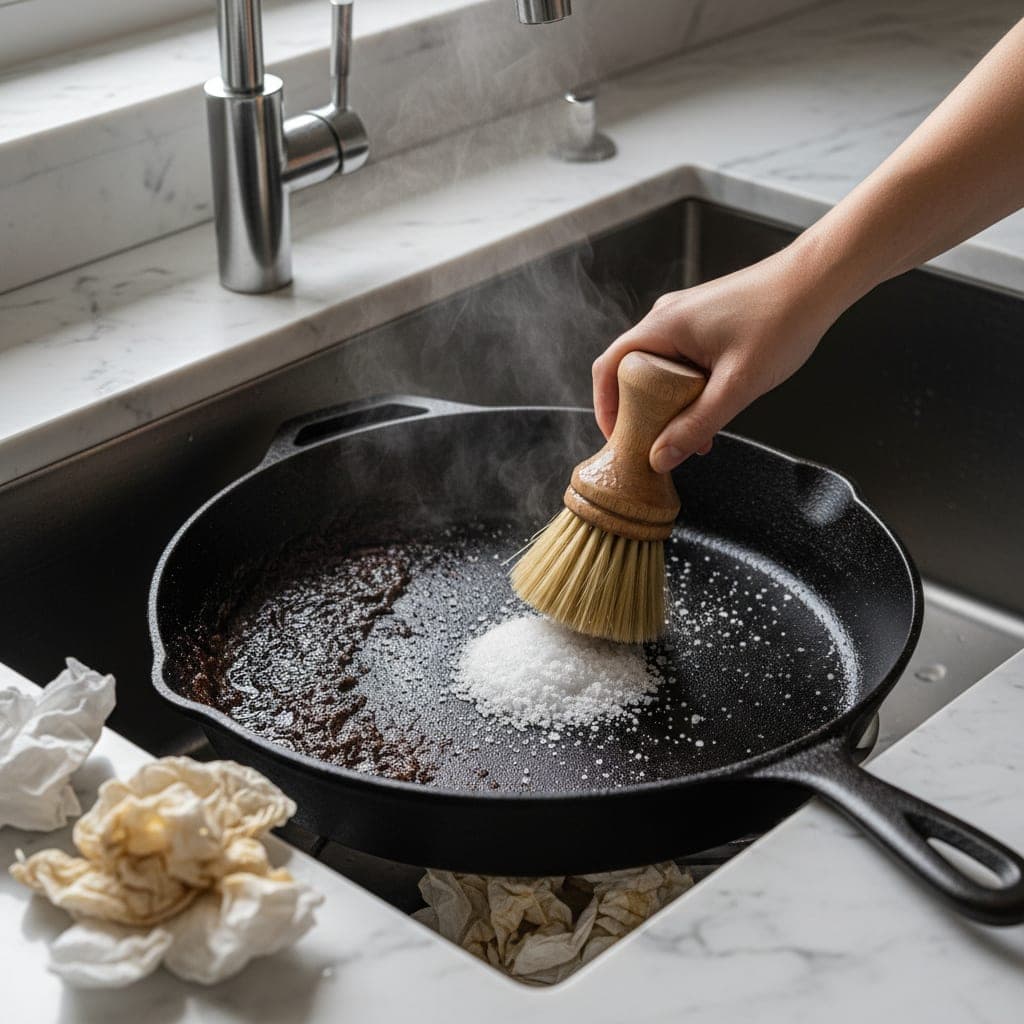
For hard burnt on layers, the salt scrub is the safest method that does not strip seasoning underneath. Set the pan on a cool burner and pour a quarter cup of coarse kosher salt directly onto the cooking surface. Cut a potato in half across the width or fold a stack of paper towels into a thick pad. Use the cut potato or the paper towel pad to scrub the salt across the surface in firm circles for two to three minutes. The salt acts as a non scratching abrasive while the moisture from the potato or the warm pan loosens the carbonized layer. Scrape any persistent crusty patches with a plastic pan scraper held at a low angle. Tip the salt and lifted residue into the trash, wipe the pan with a dry paper towel, and rinse briefly under hot running water. Dry immediately on a low burner for one minute. The salt scrub removes most kitchen grade carbonization in a single pass while leaving the polymerized seasoning underneath intact and that is the goal. The fine salt particles slide between the buildup and the seasoning the way snow slides off a roof, lifting the unwanted layer cleanly without cutting into the protective coat below. This is also the only deep cleaning method that is gentle enough to use on a regularly cooked pan during routine maintenance, since it does not require any reseasoning afterward.
Remove sticky tacky polymer with high heat
If the cooking surface is gummy and tacky, the issue is excess oil that did not fully polymerize. Heat fixes this. Place the pan upside down on the middle rack of an oven preheated to 500 degrees Fahrenheit with a sheet of foil on the rack below to catch any drips. Bake for one hour. The high heat converts the sticky residue into hardened polymer or burns it off entirely. Turn the oven off and let the pan cool inside until it reaches room temperature. Do not pull a hot cast iron pan out of a 500 degree oven and put it on a cool surface, because the thermal shock can crack the metal. Once the pan is fully cool, wipe the cooking surface with a paper towel. The towel should come away nearly clean. If patches of stickiness remain, the polymer is now hardened and the salt scrub method from the previous step will lift the rest. The high heat method is also the only fix for pans that have developed the cloudy uneven seasoning called crocodile skin where the surface looks scaly and lifts away from the metal in patches. The hour of high heat resets the chemistry so a fresh seasoning layer can bond evenly.
Treat rust with the steel wool and oil scrub
Surface rust on cast iron is fully reversible. Soak a fine steel wool pad in a small amount of neutral cooking oil and scrub the rust spots in firm circular motions until the orange or reddish color disappears and you see bare gray metal underneath. Heavy rust may need three to five minutes of scrubbing per spot. Rinse the pan briefly under hot water, dry immediately on a low burner for one minute, and proceed to the reseasoning step in the next section. Steel wool removes the rust along with whatever seasoning was in the rusted area, so reseasoning is mandatory after this treatment, not optional. Avoid using a wire brush or aggressive sandpaper, which can scratch the cast iron base and create texture that future seasoning will not bond to evenly. Steel wool grade 0000 is fine enough to remove rust without leaving visible scratches and that is the right tool for this job. For deeply rusted pans where the rust has pitted the surface, soak the pan in a fifty fifty white vinegar and water solution for one hour only, then immediately scrub with steel wool. Do not exceed one hour because vinegar will eat the cast iron itself once the rust is gone, and overnight vinegar soaks have ruined more cast iron pans than any other deep cleaning mistake.
Wash thoroughly and dry completely
After any of the three deep cleaning methods, the pan needs a final wash before reseasoning to remove any loosened debris and any remaining oil residue. Use warm water and a small amount of mild dish soap with a stiff brush or chainmail scrubber. The myth that soap destroys cast iron seasoning is wrong for modern dish soaps, which are gentle detergents that remove oil residue without harming polymerized seasoning. The original myth came from when soap contained lye, which actually did strip the metal. That has not been true in over fifty years. Scrub the pan inside and out, rinse thoroughly under hot water, and dry the pan immediately by setting it on a low burner for two to three minutes until every drop of water is evaporated. Cast iron rusts within hours when stored damp, so the on burner dry step is the most important moment for preventing the rust you just removed from coming back.
Reseason the pan in three thin layers
Reseasoning replaces the protective layer that the deep clean removed and creates the smooth jet black non stick surface that makes cast iron worth using. Pour about half a teaspoon of neutral oil into the warm dry pan and rub it into every interior surface with a folded paper towel, including the sides and the underside of the rim. Then take a clean paper towel and wipe the pan down thoroughly until it looks almost dry. The single most important rule for seasoning is that the oil layer must be wiped down so thin it is nearly invisible. Thick oil layers will not polymerize correctly and produce the sticky tacky issue you may have just spent time fixing. Place the pan upside down on the middle rack of an oven preheated to 450 degrees Fahrenheit with foil on the rack below. Bake for one hour, then turn the oven off and let the pan cool inside completely. Repeat this oil and bake cycle two more times for a total of three thin layers. Each layer adds a hard polymerized coat that bonds molecularly to the iron and to the layer below it, building the durable black seasoning that lasts for years of cooking. Flaxseed oil produces the hardest finish but cracks in heavy use. Grapeseed oil and canola oil produce slightly softer finishes that flex with the pan and last longer in real use. For everyday cooking pans, use grapeseed or canola oil. Save flaxseed for display or rarely used cookware where appearance matters more than durability.
Establish a maintenance routine that prevents the next deep clean
A properly maintained cast iron skillet should not need a full deep clean more than once every two to three years and many never need one again after the initial restoration. The maintenance routine takes thirty seconds after each use and is the entire reason the pan stays in good condition. While the pan is still warm from cooking, rinse it under hot running water and scrub any stuck food with a stiff brush or chainmail scrubber. Use a small amount of mild dish soap if the pan held strong flavored food. Dry the pan immediately on a low burner for one minute. Once dry, drop in a quarter teaspoon of cooking oil and rub it across the cooking surface with a paper towel until the surface looks satin and not wet. The pan is now ready to store. The thirty second oil rub at the end of every cleaning is what builds and protects the seasoning over time. Pans that get this treatment after every use stay smooth and black indefinitely. Pans that get rinsed and stored without oiling are the ones that develop the sticky polymer, the carbonized buildup, and the rust that requires the deep clean restoration in the first place. Skip the routine for a few months and the deep clean becomes inevitable.
Which approach to reach for, and when
On the thrift store skillet with thick carbonized buildup across the entire cooking surface, the high heat oven method followed by salt scrub produced the cleanest result. The hour at 500 degrees burned off the worst of the buildup and reduced the rest to flaky residue that came off in two passes with the salt scrub. Total time including cooling was approximately three hours, of which fifteen minutes was active work. On the family pan with sticky polymer issues from incorrect seasoning, the high heat oven method alone solved the problem. The hour at 500 degrees converted the tacky residue into hard polymer that wiped clean with a paper towel. No salt scrub was needed. Total active time was under five minutes. On a separately tested pan with surface rust, the steel wool with oil method removed the rust in under five minutes and the pan reseasoned to a perfect black finish in the three layer reseasoning sequence. Total time was about three and a half hours of which twenty minutes was active work. The biggest single insight from the testing is that the high heat oven method is the most powerful tool in cast iron restoration and the most underused. Most people scrub harder and longer when they should just put the pan in the oven for an hour and let temperature do the work.
Mistakes that ruin a cast iron skillet permanently
Mistake one: putting cast iron in the dishwasher. The harsh detergents and prolonged hot water exposure strip seasoning completely and start surface rust within hours. A single dishwasher cycle can undo years of building seasoning. Always hand wash. Mistake two: soaking the pan in water for any length of time. Water sitting against bare or weakly seasoned cast iron rusts the metal within four to six hours. Wash the pan immediately after use and dry it on a burner. Never leave it in the sink. Mistake three: using the vinegar soak for rust longer than one hour. Vinegar dissolves rust quickly, but once the rust is gone the acid begins eating the cast iron itself. Pans left in vinegar overnight develop pitted craters in the cooking surface that cannot be repaired. Set a timer and remove the pan promptly. Mistake four: applying thick oil layers during reseasoning. The single biggest seasoning failure is excess oil. Wipe the pan with oil and then wipe it again with a clean towel until it looks almost dry. Thick oil produces the sticky polymer that requires another deep clean to remove. Mistake five: pulling a hot pan out of a 500 degree oven and setting it on a cold counter or running cold water over a hot pan. The thermal shock can crack the cast iron, and a cracked pan cannot be repaired. Always let the pan cool inside the turned off oven, and never run cold water over hot cast iron. Mistake six: storing the pan with the lid on. Trapped moisture between the pan and lid is the most common source of rust on otherwise well maintained cast iron. Store the lid separately or place a folded paper towel between the pan and the lid to absorb any humidity.
Pro Tips
- ✓Use the high heat oven method as your first move for any sticky polymer or unknown buildup. One hour at 500 degrees Fahrenheit upside down on the middle rack does the work that hours of scrubbing cannot.
- ✓Always wipe the seasoning oil layer down until the pan looks almost dry before baking. Thick oil layers polymerize incorrectly and produce the sticky tacky surface that forces you to repeat the entire process.
- ✓Dry the pan immediately on a low burner for one to two minutes after every wash. Cast iron rusts within hours when stored damp, and the on burner dry step is the single most important habit for keeping the pan in good condition.
Frequently Asked Questions
Can you use soap on a cast iron skillet?
Yes, modern dish soap is safe for cast iron. The myth that soap strips seasoning came from when soap contained lye, which actually did damage the metal. Modern dish soaps are gentle detergents that remove oil residue without harming polymerized seasoning. Use a small amount of mild dish soap with a stiff brush whenever the pan needs more than a hot water rinse, particularly after cooking strong flavored or oily foods.
How do you remove rust from a cast iron skillet?
Soak a fine steel wool pad in a small amount of neutral cooking oil and scrub the rust spots in firm circular motions until the orange color disappears and you see bare gray metal underneath. For deeply rusted pans, soak the pan in a fifty fifty white vinegar and water solution for one hour only, then scrub with steel wool. Never exceed one hour in vinegar because the acid will damage the cast iron itself. Rinse, dry on a burner, and reseason in three thin layers of oil.
How often should you reseason a cast iron skillet?
A properly maintained skillet rarely needs a full reseasoning. The thirty second oil rub after each wash continuously builds and refreshes the seasoning layer over time. Plan a full three layer reseasoning only after a deep clean, after rust treatment, or if the cooking surface develops uneven cloudy patches called crocodile skin. Most home cooks reseason once every one to three years if at all.
What oil is best for seasoning cast iron?
Grapeseed oil and canola oil produce the most durable everyday seasoning that flexes with the pan and lasts the longest in real cooking use. Flaxseed oil produces the hardest and most attractive finish but cracks under heavy use, so it is best reserved for display pieces or rarely used pans. Avoid olive oil and butter for the seasoning layer because they polymerize unevenly and produce the sticky tacky surface that forces another deep cleaning.
How this guide was made
This deep clean guide was researched, written, edited, and published by Fredler Pierre-Louis. The 9 steps below are built around Coarse kosher salt, Stiff scrub brush or chainmail scrubber and Hot water, and the quantities and dwell times come from published cleaning-chemistry and manufacturer guidance for those materials, not from a controlled trial we ran ourselves. Where a popular version of this hack does not work, or is risky on a particular surface, this 11 min guide says so.
- Checked against manufacturer and materials guidance for the surfaces named.
- Reviewed by a person for chemical safety and surface compatibility before publication.
- Written to explain why a method works, not just to list steps.
- Corrected whenever a reader reports an error or an edge case we missed.
Read our full editorial policy or learn more about the team behind TryCleaningHacks.
Related Cleaning Guides
Safety Notes
- ⚠Always use oven mitts when removing a cast iron pan from a hot oven. The pan retains heat for thirty minutes or longer after the oven is turned off, and the handle is just as hot as the cooking surface even on cooled pans.
- ⚠Never run cold water over a hot cast iron pan. The thermal shock can crack the metal permanently. Let the pan cool to room temperature inside the turned off oven before any water contact.
- ⚠Do not use the vinegar soak method for rust removal for longer than one hour. Vinegar dissolves rust quickly, but once the rust is gone the acid begins to eat the cast iron itself and creates permanent pitting in the cooking surface.
You might also like

7 Deep Cleaning Tricks That Save Hours Every Week
Most of the time spent cleaning a bathroom is spent waiting or backtracking, not scrubbing. Spraying one surface, waiting for it, wiping it, then starting the next one means you pay every dwell time separately. Batching those dwell times so every cleaner works at once is the single change that cuts the job roughly in half. None of this involves a gadget or a miracle spray, just the order you work in and where you stop wasting motion.
How to Deep Clean a Shower (10 Proven Methods)
I deep cleaned the same shower twice in one week once with my old routine and once with these ten methods applied in the right sequence. The difference wasn't even close. Here's what changed and the daily habit that eliminated most of my scrubbing for good.
30 Cleaning Myths You Need to Stop Believing
I believed most of these myths for years, and two of them left permanent marks on surfaces in my own house. This is the honest version of what I got wrong, why the popular advice fails, and the two safety myths that actually send people to the emergency room. I have kept the failures in here on purpose, because the mistakes taught me more than the wins did, and a myth is only dangerous while you still trust it.