

How to Clean With Ketchup
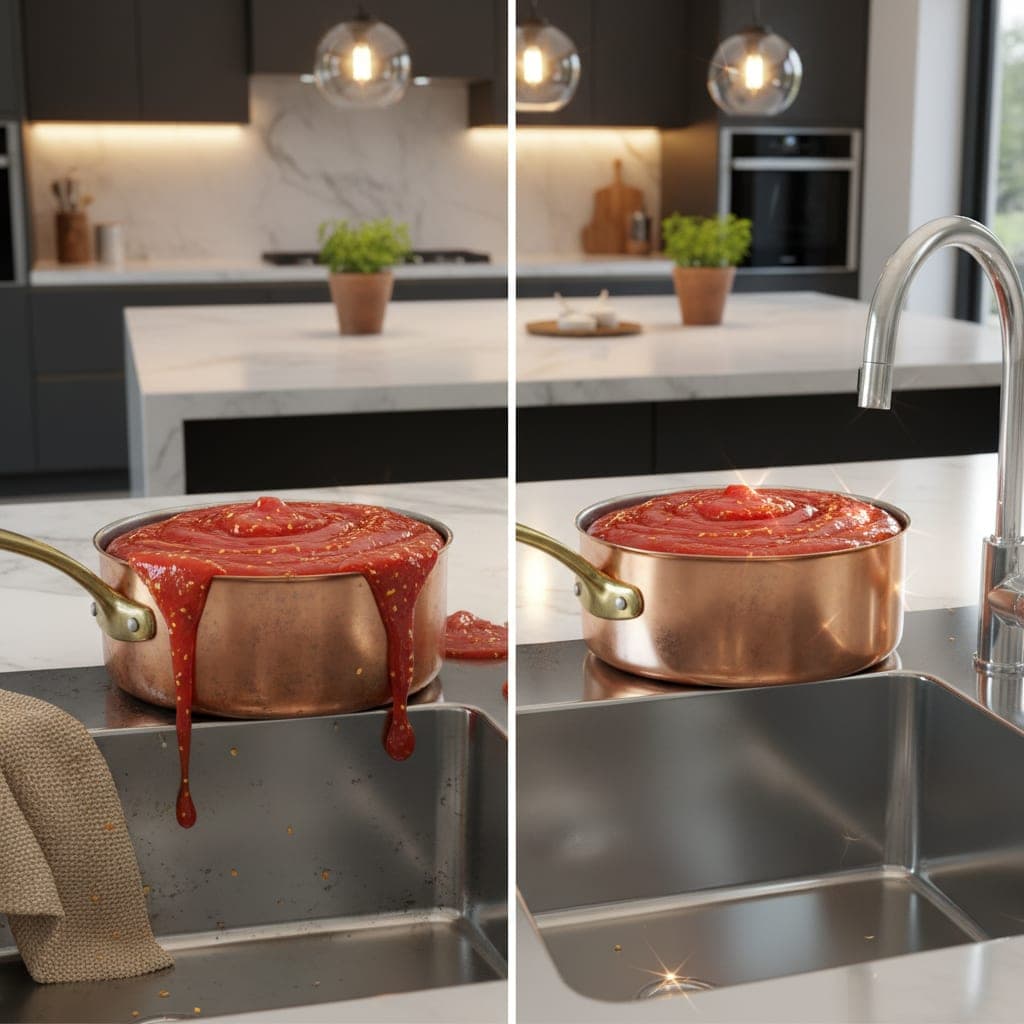
The ketchup-on-copper trick sounds like nonsense and is actually straightforward chemistry: the acetic and citric acid in tomato dissolve copper oxide, and the tomato solids give just enough abrasion to lift it away. That explains why it is startling on copper and brass, useful on cast iron, and outright damaging on several other surfaces. Here is what ketchup cleans well, the surfaces it ruins, and the technique that gets a showroom shine in under five minutes.
Jump to a section
- What you'll need
- Step-by-step
- Why ketchup actually cleans tarnished metal
- Polish tarnished copper pots and pans
- Shine brass hardware door knobs and lamps
- Clean a cast iron pan without stripping seasoning
- Restore stainless steel pots with rainbow heat stains
- Polish faded chrome on bicycles and old appliances
- Pro tips
- FAQ
What You'll Need
Step-by-Step Instructions
Why ketchup actually cleans tarnished metal
Ketchup is not a gimmick on copper and brass. The cleaning power comes from three ingredients working at the same time. The acetic acid from the vinegar and the citric acid from the tomatoes both dissolve the dark copper oxide layer that tarnish is made of. The natural sugars and salt act as a very gentle abrasive that physically lifts the loosened oxide off the metal. The thick paste consistency holds all of these against the surface long enough for the chemistry to finish, which is why a thin liquid acid like straight vinegar runs off and gives a less even result. Use plain regular ketchup with no added mustard, no chunky tomato pieces, no spicy varieties. The fancy versions have particles that scratch soft metals like copper. A basic store brand bottle works just as well as a name brand for cleaning.
Polish tarnished copper pots and pans
Squeeze a generous tablespoon of plain ketchup directly onto the tarnished area of a copper pan. Use a soft microfiber cloth to spread it into a thin even layer covering every dark spot. Let the ketchup sit on the metal for five minutes. You will see the dark tarnish begin to lift visibly underneath the red coating as the acids work. After the dwell time, wipe the ketchup off in firm circular motions with the same cloth. The tarnish comes off with the ketchup and the copper underneath is bright pink and clean. Rinse the pan thoroughly under warm running water to remove every trace of ketchup, then dry it immediately with a clean towel and buff with a second dry microfiber cloth to bring up the high shine. Any ketchup left on the surface will dry into a sticky film that traps new tarnish, so the rinse and dry step is not optional.
Shine brass hardware door knobs and lamps
Brass tarnishes for the same reason copper does and ketchup works on it for the same chemistry. For door knobs, drawer pulls, and small brass lamp bases, apply ketchup with an old soft toothbrush so you can work it into engraved patterns and the recessed areas around screws. Cover the entire piece with a thin coat and let it sit for ten minutes brass usually has a thicker oxide layer than copper and needs a longer dwell. Scrub gently with the toothbrush in the direction of any grain or pattern, then wipe off with a damp cloth and rinse if the piece is removable. For brass that is permanently mounted on a door, wipe with a clean damp cloth several times to remove every ketchup trace and dry immediately. Confirm before treating that the brass is solid and not lacquered or plated. Lacquered brass has a clear protective coating that the ketchup acid will eat through and ruin permanently. The test is simple. If a magnet sticks weakly to the piece it is plated and you should not use ketchup on it.
Clean a cast iron pan without stripping seasoning
Cast iron has a stuck on residue problem that water and dish soap cannot always handle. A spoonful of ketchup spread thin across the cooking surface and left for three minutes will lift carbon deposits and stuck on food without the harsh scrubbing that strips the polymerized oil seasoning. Wipe the ketchup and the lifted residue off with a paper towel, then rinse the pan briefly under warm water. Dry the pan immediately on a low burner for one minute to evaporate any remaining moisture and prevent rust. Rub a thin coat of cooking oil into the surface with a clean cloth before storing. The acids in ketchup are mild enough that a single short treatment does not noticeably degrade the seasoning the way prolonged vinegar soaking does. Do not leave ketchup on cast iron for longer than three or four minutes, and do not use this method on a pan that already has weak or patchy seasoning since the acid will reach the bare iron underneath.
Restore stainless steel pots with rainbow heat stains
The blue, purple, and gold rainbow stains that appear on stainless steel after high heat cooking are oxidation patterns the same way copper tarnish is. Ketchup removes them in under a minute. Apply a thin layer to the stained area with a soft cloth, rub in firm circles for thirty seconds, and wipe clean with a damp cloth. The rainbow color disappears and the steel returns to its original silver finish. This works on the inside and outside of pots, on stainless steel kettles that have heat marks around the base, and on the burner trim ring of stainless cooktops. Always wipe with the grain of the steel during the final buff to avoid leaving visible swirl marks under kitchen lighting. Rinse thoroughly when finished because dried ketchup on stainless leaves a faint pink stain that requires scrubbing to remove if you forget the rinse step.
Polish faded chrome on bicycles and old appliances
Chrome that has lost its mirror finish to road grime, water spots, or light rust responds well to a five minute ketchup treatment. Apply a layer to the chrome surface, let it sit for five minutes, and rub in tight circles with a soft cloth. The acids dissolve the surface oxidation while the salt and tomato pulp provide gentle mechanical action that lifts the loosened grime. Wipe completely clean with a damp cloth and dry immediately to prevent water spots forming again. This is particularly good on bicycle handlebars and rims, old toaster bodies, and the chrome trim on vintage kitchen appliances. Skip this method on chrome that has visible bubbling or peeling, since the chrome plating has already failed underneath and any acid contact will accelerate the lifting of the finish.
Remove tarnish from costume jewelry that is not silver
Costume jewelry made from copper alloys, brass, or unplated metals tarnishes faster than fine jewelry and a brief ketchup soak revives it. Place small pieces in a shallow bowl, cover with ketchup, and let them sit for two minutes only. Lift the pieces out with a soft toothbrush, scrub gently to clear the recessed areas, and rinse in cool water. Dry immediately with a soft cloth. This does not work on sterling silver because silver tarnish is silver sulfide rather than oxide, and ketchup chemistry targets oxides. It also will damage real pearls, opals, turquoise, and any porous gemstone, so confirm before treating that the piece is plain metal without set stones. Avoid this method on anything plated or vintage with sentimental value because the acid will strip plated finishes within minutes.
Clean copper sinks and copper bathroom fixtures
Living finish copper sinks and copper bathroom faucets develop dark patches over time from water minerals and soap residue. Spread ketchup over the affected areas with a soft cloth, work it into corners and around the drain with a soft toothbrush, and let it sit for three minutes. Wipe off with a damp cloth and rinse the entire fixture thoroughly with warm water. Dry with a microfiber cloth and buff to a shine. Note that some copper sinks are intentionally finished with a deep patina that the manufacturer wants you to keep. Read the care guide before treating one, since ketchup will strip the patina down to bright copper and force the slow patina to redevelop over weeks. For unfinished mill copper sinks the brightening effect is the goal and ketchup is one of the fastest ways to restore the shine without using harsh commercial polishes.
What ketchup beat the commercial polishes on and what it lost to
On heavily tarnished copper bottoms of kitchen pots, ketchup matched a name brand copper cream polish on shine and beat it on speed. The ketchup result took five minutes including rinse time. The commercial cream took three rounds of application and twelve minutes total to reach the same finish. On brass door hardware the result was nearly identical to the cream polish but ketchup was easier to apply because the thicker consistency stayed put on vertical surfaces while the cream ran. On rainbow stains on stainless steel cookware ketchup beat both a stainless steel cleaner spray and a non scratch scouring pad it removed the heat oxidation in under a minute where the spray needed several wipes and the scouring pad left visible micro scratches that the ketchup approach avoided entirely. Where ketchup lost: on real silver. The commercial silver polish removed silver sulfide tarnish that ketchup did not touch. Use the right tool for the metal. Ketchup is for copper, brass, bronze, and oxidation on stainless steel. Use dedicated silver polish for sterling pieces.
Mistakes that ruin the surface instead of cleaning it
Mistake one: leaving ketchup on the metal too long. Five minutes is the standard. Twenty minutes will etch and pit copper and brass surfaces, leaving permanent shadows where the acid went too deep. Set a timer and stick to it. Mistake two: using ketchup on lacquered or sealed metal finishes. Many decorative brass items, hardware sold as polished and sealed, and most plated jewelry have a clear protective coating. The acid in ketchup eats through that coating and creates a cloudy haze that cannot be reversed without professional refinishing. Always test in a hidden spot first if you are not certain the metal is solid and unsealed. Mistake three: skipping the rinse and dry. Ketchup residue dries into a sticky pink film that attracts dust, accelerates new tarnish formation, and leaves visible streaks under direct light. A thorough warm water rinse followed by an immediate dry buff with a microfiber cloth is what produces the showroom finish. Mistake four: using flavored, spicy, or chunky ketchup varieties. Garlic ketchup, curry ketchup, and gourmet versions with tomato pulp pieces contain particles that scratch soft metals like copper. Plain regular ketchup only. Mistake five: applying ketchup to silver, gold, or pearl jewelry. The chemistry that removes copper oxide does not touch silver sulfide and the acid will damage soft gold alloys and porous gemstones. Match the cleaner to the metal.
Pro Tips
- ✓Always use plain regular ketchup with no spicy or chunky varieties. The added particles in gourmet ketchup scratch soft metals like copper and brass.
- ✓Set a five minute timer for any ketchup treatment on copper or brass. Longer dwell times etch and pit the surface permanently.
- ✓Rinse thoroughly with warm water and buff dry immediately with a microfiber cloth. Any ketchup residue left on the metal traps new tarnish and undoes the cleaning.
Frequently Asked Questions
Does ketchup actually clean copper?
Yes. The acetic acid from vinegar and citric acid from tomatoes in ketchup both dissolve the copper oxide layer that creates tarnish. The salt and natural sugars provide a gentle physical scrubbing action and the thick paste consistency keeps the cleaner in contact with the metal long enough to work. A five minute ketchup treatment followed by a rinse and buff produces a shine that matches a commercial copper cream polish at a tiny fraction of the cost.
How long should you leave ketchup on tarnished metal?
Five minutes is the standard dwell time for copper, brass, and stainless steel rainbow heat stains. Use ten minutes for heavily tarnished brass with thick oxide buildup. Never leave ketchup on metal longer than fifteen minutes because the acid will begin to etch and pit the surface permanently. Set a timer and rinse promptly when the time is up.
Can ketchup damage metal surfaces?
Yes if used incorrectly. Ketchup will eat through clear lacquer coatings on sealed brass and decorative metalware, strip plated finishes from costume jewelry within minutes, and pit solid copper and brass if left on for more than fifteen minutes. It will not effectively clean sterling silver because silver tarnish is a different chemical compound that ketchup does not target. Always confirm the metal is solid, unsealed, and not silver before applying ketchup.
What kind of ketchup works best for cleaning?
Plain regular tomato ketchup with no added flavors, no chunky pieces, and no spicy varieties. A basic store brand works just as well as a name brand because the active cleaning ingredients of vinegar, citric acid, salt, and sugar are present in roughly equal amounts in both. Avoid garlic ketchup, curry ketchup, and gourmet versions with tomato pulp pieces because the added particles scratch soft metals like copper and brass.
How this guide was made
This deep clean guide was researched, written, edited, and published by Fredler Pierre-Louis. The 10 steps below are built around Plain ketchup, Soft microfiber cloths and Old soft toothbrush, and the quantities and dwell times come from published cleaning-chemistry and manufacturer guidance for those materials, not from a controlled trial we ran ourselves. Where a popular version of this hack does not work, or is risky on a particular surface, this 10 min guide says so.
- Checked against manufacturer and materials guidance for the surfaces named.
- Reviewed by a person for chemical safety and surface compatibility before publication.
- Written to explain why a method works, not just to list steps.
- Corrected whenever a reader reports an error or an edge case we missed.
Read our full editorial policy or learn more about the team behind TryCleaningHacks.
Related Cleaning Guides
Safety Notes
- ⚠Wear rubber gloves when working ketchup into tarnished metal for an extended cleaning session. The acid in ketchup can cause minor irritation on cuts and on sensitive skin during repeated contact.
- ⚠Do not use ketchup to clean any item that comes into contact with food before rinsing thoroughly. The combination of tomato sugars and salt residue can encourage bacterial growth on cookware if left unrinsed.
- ⚠Confirm that brass and copper pieces are solid and unsealed before treatment. Lacquered finishes and plated metals will be permanently damaged by the acids in ketchup.
You might also like
7 Deep Cleaning Tricks That Save Hours Every Week
Most of the time spent cleaning a bathroom is spent waiting or backtracking, not scrubbing. Spraying one surface, waiting for it, wiping it, then starting the next one means you pay every dwell time separately. Batching those dwell times so every cleaner works at once is the single change that cuts the job roughly in half. None of this involves a gadget or a miracle spray, just the order you work in and where you stop wasting motion.
How to Deep Clean a Shower (10 Proven Methods)
I deep cleaned the same shower twice in one week once with my old routine and once with these ten methods applied in the right sequence. The difference wasn't even close. Here's what changed and the daily habit that eliminated most of my scrubbing for good.
30 Cleaning Myths You Need to Stop Believing
I believed most of these myths for years, and two of them left permanent marks on surfaces in my own house. This is the honest version of what I got wrong, why the popular advice fails, and the two safety myths that actually send people to the emergency room. I have kept the failures in here on purpose, because the mistakes taught me more than the wins did, and a myth is only dangerous while you still trust it.