

How To Clean A Glass Stovetop Without Scratching It
I burned something onto my glass stovetop badly enough that I genuinely considered just leaving it there forever. After going through every method I could find, one of them worked so well I actually texted my sister about it. Here's what removed the worst baked-on black carbon without a single scratch, why most advice about this gets it wrong, and the one tool almost nobody uses that makes the biggest difference.
Jump to a section
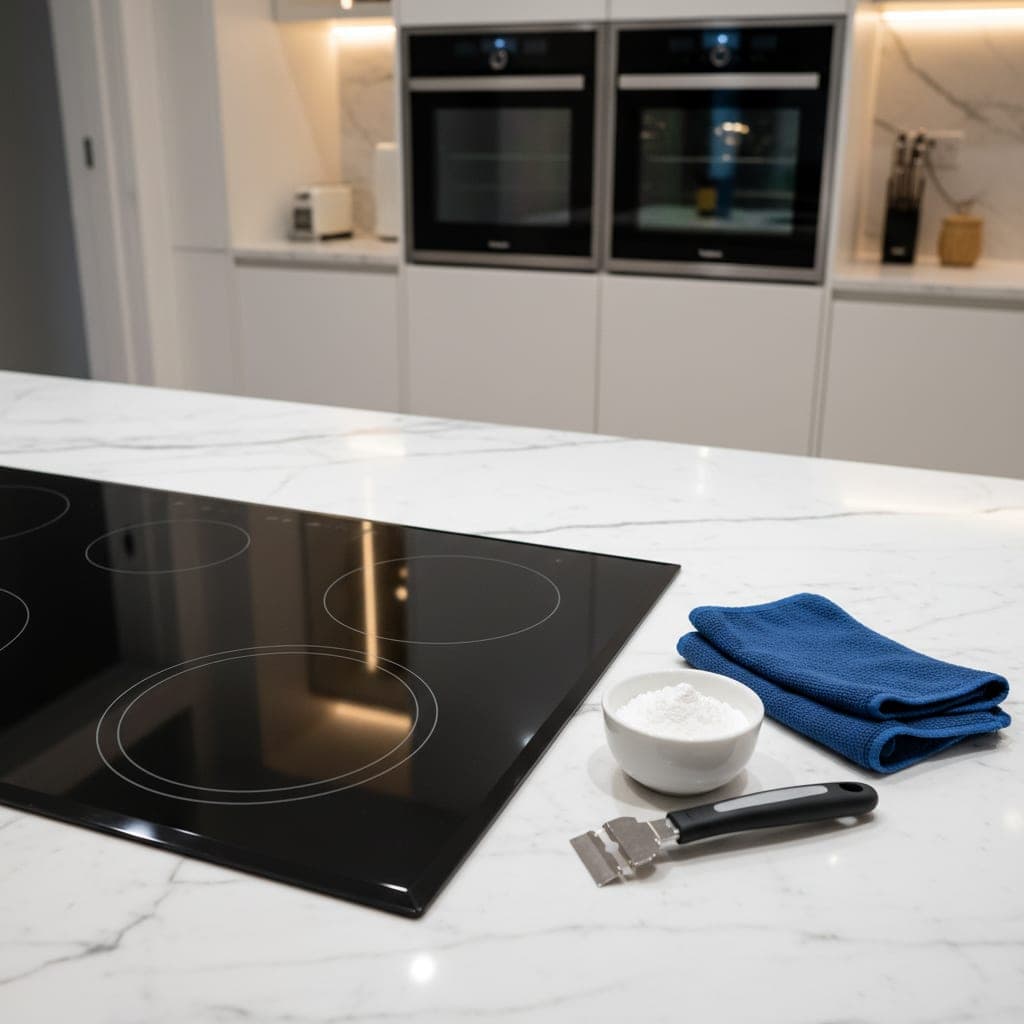
- What you'll need
- Step-by-step
- Why I kept scratching mine and what I was doing wrong
- The daily wipe that prevents buildup from ever forming
- The baking soda paste method for everyday grease and light residue
- How to use a razor blade scraper safely for baked-on carbon
- Remove cloudy haze and mineral film with vinegar
- Deal with melted plastic or foil on the surface
- Pro tips
- FAQ
What You'll Need
Photos
Step-by-Step Instructions
Why I kept scratching mine and what I was doing wrong
I scratched my first glass stovetop with a scouring pad the first week I owned it. The second one I scratched with a rough sponge. By the third stovetop I finally understood the problem. Glass-ceramic (sold under brand names like Ceran, Schott, and Vitroceramic) is made from a tempered composite that looks smooth but is microscopically porous. The scratches people blame on cleaning products are almost always caused by abrasive tools steel wool, rough sponge backs, and even grains of baking soda dragged dry across the surface without lubrication. The glass itself is hard enough to resist most cleaning chemicals, but softer than most particles dragged across it under pressure. Understanding this changes everything about technique: the goal is always to lift residue off the surface using chemistry and moisture, never to scrape it off using friction. Every method in this guide applies cleaner, waits for it to work, and wipes gently rather than scrubbing. The one exception is a single-edge razor blade scraper held at the correct angle, which is the only mechanical tool safe for glass stovetop use and the correct solution for genuinely baked-on carbon residue.
The daily wipe that prevents buildup from ever forming
After every use, once the stovetop has cooled enough to touch safely, spray it lightly with a 50/50 vinegar and water solution and wipe with a dry microfiber cloth. This 30-second routine removes fresh food splatter, grease mist, and sugar spills before they bond to the glass surface under heat. Sugar spills are the most urgent sugar caramelizes onto glass-ceramic at high temperature and becomes progressively harder to remove the longer it sits. A warm (not hot) splash of water on a fresh sugar spill before wiping prevents the caramel bond from fully forming. Boiling water spills and starchy pasta water are the second most destructive common spill once dried and reheated, they etch a cloudy mineral film onto the surface that requires the baking soda method below to remove. Catching both while they are still fresh requires under a minute and prevents 90% of the difficult cleaning situations that people find their stovetop in.
The baking soda paste method for everyday grease and light residue
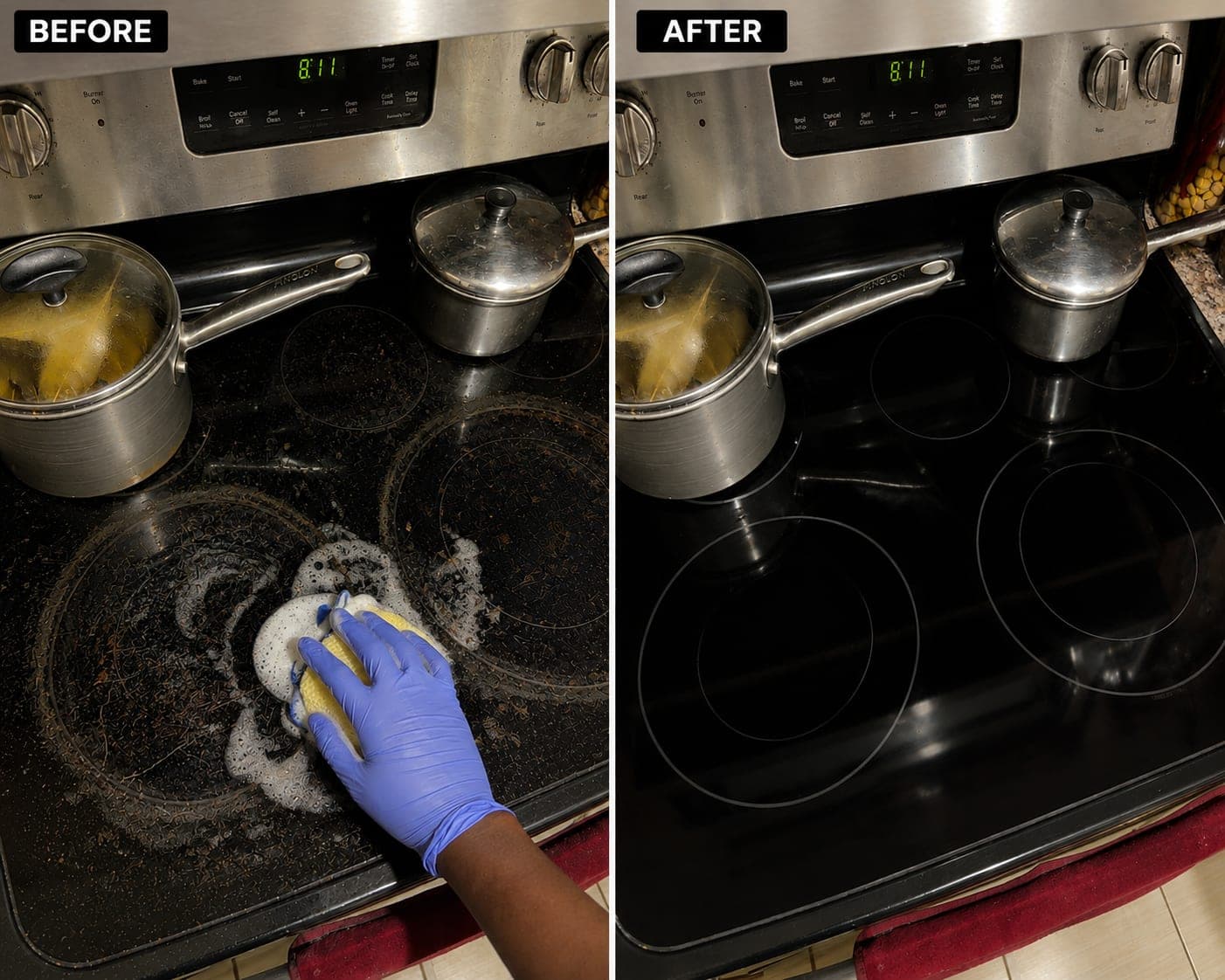
Make a thick paste by mixing three tablespoons of baking soda with just enough dish soap and warm water to form a spreadable consistency about one teaspoon of dish soap and two teaspoons of water. Spread this paste over the surface of the stovetop using a damp cloth, covering all stained areas generously. Lay a hot damp towel over the entire surface wet it under the hottest tap water and wring it almost dry and leave it for 15 minutes. The steam from the warm towel softens the baked-on food while the baking soda gently lifts grease without abrasion. After 15 minutes, use a clean damp microfiber cloth to wipe the paste away in smooth sweeping motions without scrubbing. The residue should release cleanly. Rinse the cloth frequently so you are always wiping with a clean surface rather than dragging loosened grime across the glass. Finish by spraying with vinegar and buffing to a streak-free shine with a dry cloth.
How to use a razor blade scraper safely for baked-on carbon
For the burned-black residue that survived the baking soda method typically from boiled-over food that cooked directly onto the heating element a single-edge razor blade scraper is the correct tool. The critical technique: hold the blade at a 30 to 45 degree angle to the glass surface, never perpendicular. Perpendicular scraping gouges the glass. A low angle lets the blade slide under the residue like a spatula, lifting it rather than digging. Always wet the surface with soapy water before scraping never use the blade on a dry surface, as dry micro-particles between blade and glass cause the scratches that other guides warn about. Apply light forward pressure with slow, short strokes. The residue should flake off cleanly. Wipe debris away from the blade path with a wet cloth between strokes. Replace the blade when it no longer feels smooth a slightly dulled edge drags and requires more pressure, increasing scratch risk.
Remove cloudy haze and mineral film with vinegar
The cloudy white or gray film that develops on glass stovetops in hard-water areas particularly around the burner rings is mineral scale from water boiling over and evaporating. Acidic vinegar dissolves mineral deposits the way no other household cleaner can. Saturate a microfiber cloth with undiluted white vinegar and lay it flat over the cloudy area. Leave it for 10 minutes to allow the acid to dissolve the calcium and mineral compounds. Wipe away the cloud should clear significantly. For persistent mineral haze that has built up over months, use a paste of two tablespoons of cream of tartar and enough vinegar to form a thick consistency. Apply it to the haze and leave for 20 minutes before wiping. Cream of tartar's tartaric acid is more concentrated than vinegar and specifically effective on the calcium carbonate deposits that form white haze on glass-ceramic surfaces. This combination removes mineral cloudiness that has defeated standard cleaning in a single application.
Deal with melted plastic or foil on the surface
Melted plastic packaging, aluminum foil, or the underside of a pot that left a metallic transfer mark are among the most alarming things to find on a glass stovetop they look permanent and people often assume they are. They are not. For melted plastic: while the stovetop is still slightly warm (not hot), use a single-edge blade at a low angle to carefully lift the softened plastic in thin sections. Work around the edges inward rather than from the centre. Finish with the baking soda paste method to clear any remaining residue. For metallic silvery pot marks: these are aluminum oxide or stainless steel transfer marks from pots sitting on an overheated element. Apply a stovetop cleaner like Bar Keepers Friend made into a paste with water, leave for five minutes, and wipe with a damp cloth. The oxalic acid in Bar Keepers Friend specifically dissolves metal oxide transfers without scratching glass-ceramic. A small amount of regular toothpaste (not gel) applied and rubbed in small circles with a soft cloth also works on light metal transfer marks through the same mild abrasive-acid combination.
What to absolutely never use on a glass stovetop
Steel wool and green scouring pad backs leave deep parallel scratches that catch every subsequent food spill and make the surface look permanently dirty there is no repair short of replacement. Never use them. Regular baking soda paste is safe only when thoroughly wet and wiped gently dry baking soda granules dragged across dry glass create the same micro-scratches as a scouring pad. Bleach-based cleaners and oven cleaners are too alkaline for the glass-ceramic compound and can cloud the surface permanently. Window cleaner (ammonia-based) leaves a film that burns to a permanent haze the next time the stovetop is used. Never spray any cleaner onto a hot or warm surface thermal shock from cold liquid on a hot glass-ceramic top can crack the surface clean through. Cooled completely before every cleaning session is a non-negotiable rule rather than a suggestion.
What actually worked and the routine I still use
The hot-towel baking soda soak was the biggest upgrade I made. I used to spray, wait two minutes, and scrub. Switching to laying a damp hot towel over the paste for 15 minutes and then wiping without scrubbing cut my cleaning time in half and left zero scratches. Being able to leave the paste under a steam-damp towel for 15 minutes and then wipe without scrubbing is not a shortcut it consistently outperforms five minutes of hard scrubbing in terms of residue removal and leaves the surface completely scratch-free. For genuinely carbonized black spots that survived the paste method, the razor blade at a 30-degree angle on a wet surface removed them in under two minutes each time I used it. The key is the low angle and the wet surface I had always avoided the razor out of fear of scratching until I understood that the angle is everything. My current routine: 30-second vinegar wipe after every cook. Monthly baking soda paste treat. Razor blade reserved for anything that survives the paste. My stovetop has looked cleaner in the six weeks since I started this routine than it did in the previous two years.
How to restore shine after cleaning
After any deep clean, a light coat of stovetop conditioner or a drop of baby oil buffed gently onto the surface with a dry cloth creates a thin protective layer that makes future cleaning significantly easier food and grease bead on the conditioned surface rather than bonding to bare glass. Apply only to a completely cool, clean surface and use a minimal amount too much creates a haze that attracts dust. Brand-name stovetop conditioners like Cerama Bryte are formulated specifically for glass-ceramic and are the most effective. In the absence of these, a small amount of coconut oil or mineral oil applied and immediately buffed to a barely-there sheen provides the same non-stick protective effect. Reapply this conditioning step after every deep clean. On a conditioned surface, the daily 30-second vinegar wipe removes everything that lands on it without any residue building up over weeks.
Pro Tips
- Wipe food spills while the surface is still warm (not hot) they release in seconds versus minutes once fully cooled and hardened.
- Use white microfiber cloths so you can immediately see what is coming off the surface on each wipe pass.
- Keep a single-edge razor blade scraper in your kitchen drawer used correctly at a low angle on a wet surface, it is the fastest and safest tool for carbon residue.
Frequently Asked Questions
Can baking soda scratch a glass stovetop?
Only if used incorrectly. Dry baking soda granules dragged across dry glass will micro-scratch the surface over time. Always mix baking soda into a wet paste and apply it to a damp surface, then wipe gently rather than scrubbing. Used as a wet paste with light-pressure wiping, baking soda is safe and effective on glass-ceramic.
Is it safe to use a razor blade on a glass stovetop?
Yes when used correctly. Hold the blade at a 30 to 45 degree low angle to the surface (never perpendicular), always on a wet soapy surface, with light forward pressure. The blade slides under residue like a spatula at this angle. Never use a blade on a dry surface or hold it perpendicular both cause scratches. Replace the blade when it feels less than perfectly smooth.
Why does my glass stovetop look cloudy after cleaning?
Cloudiness after cleaning is almost always a mineral film from hard-water evaporation combined with soap residue baked onto the surface during cooking. White vinegar dissolves mineral scale lay a vinegar-soaked cloth over the cloudy area for 10 minutes, then wipe. For persistent cloudiness, a cream of tartar and vinegar paste left for 20 minutes removes deeper mineral deposits. Never use ammonia-based window cleaner on a stovetop as it bakes onto the surface.
How this guide was made
This Deep Clean guide was researched, written, edited, and published by Fredler Pierre-Louis. The 9 steps below are built around Baking soda, White vinegar and Dish soap, and the quantities and dwell times come from published cleaning-chemistry and manufacturer guidance for those materials, not from a controlled trial we ran ourselves. Where a popular version of this hack does not work, or is risky on a particular surface, this 10 min guide says so.
- Checked against manufacturer and materials guidance for the surfaces named.
- Reviewed by a person for chemical safety and surface compatibility before publication.
- Written to explain why a method works, not just to list steps.
- Corrected whenever a reader reports an error or an edge case we missed.
Read our full editorial policy or learn more about the team behind TryCleaningHacks.
Related Cleaning Guides
Safety Notes
- Never use a razor blade scraper on a hot or warm stovetop wait until completely cool to avoid thermal shock cracking the glass-ceramic.
- Keep razor blade scrapers out of reach of children and dispose of used blades safely in a puncture-resistant container before binning.
- Do not apply any liquid cleaner to a hot stovetop surface cold liquid on hot glass-ceramic can cause the surface to crack or shatter.
You might also like
7 Deep Cleaning Tricks That Save Hours Every Week
Most of the time spent cleaning a bathroom is spent waiting or backtracking, not scrubbing. Spraying one surface, waiting for it, wiping it, then starting the next one means you pay every dwell time separately. Batching those dwell times so every cleaner works at once is the single change that cuts the job roughly in half. None of this involves a gadget or a miracle spray, just the order you work in and where you stop wasting motion.
How to Deep Clean a Shower (10 Proven Methods)
I deep cleaned the same shower twice in one week once with my old routine and once with these ten methods applied in the right sequence. The difference wasn't even close. Here's what changed and the daily habit that eliminated most of my scrubbing for good.
30 Cleaning Myths You Need to Stop Believing
I believed most of these myths for years, and two of them left permanent marks on surfaces in my own house. This is the honest version of what I got wrong, why the popular advice fails, and the two safety myths that actually send people to the emergency room. I have kept the failures in here on purpose, because the mistakes taught me more than the wins did, and a myth is only dangerous while you still trust it.