

How to Clean a Dishwasher So It Actually Works Like New Again
My dishwasher smelled like a wet dog and left a white film on every glass. After testing every method I could find over a single weekend, one approach eliminated the odor completely and two others turned out to be myths that wasted my time. Here is the full breakdown of what actually restored mine to factory-clean performance.
Jump to a section
- What you'll need
- Step-by-step
- Why your dishwasher needs cleaning in the first place
- Start by cleaning the filter because everything else depends on it
- Clean the spray arms so water reaches every dish
- Scrub the door gasket where mold hides
- Clean the door edges and the hidden gap at the bottom
- Run a vinegar cycle to dissolve mineral deposits and deodorize
- Pro tips
- FAQ
What You'll Need
Step-by-Step Instructions
Why your dishwasher needs cleaning in the first place
It seems counterintuitive that a machine designed to clean things needs to be cleaned itself, but the reality is that food particles, grease, soap scum, and mineral deposits accumulate inside your dishwasher every single cycle. The warm, moist environment between uses creates a perfect breeding ground for bacteria and mold, which is exactly what produces that musty, wet-dog smell when you open the door. Over time, this buildup clogs the spray arms, reduces water pressure, and leaves a white film or gritty residue on your dishes and glasses. If your dishwasher has been running for months without a deep clean, it is essentially recirculating dirty water over your plates. The filter at the bottom traps food debris to prevent it from recirculating, but if that filter is never cleaned, it becomes a compressed mass of decomposing food that smells terrible and reduces drainage performance. Most dishwasher manufacturers recommend cleaning the filter every two to four weeks, but a survey of everyone I know suggests that almost nobody does this until the smell becomes impossible to ignore.
Start by cleaning the filter because everything else depends on it
The dishwasher filter is the single most neglected component and the number one cause of bad smells and poor cleaning performance. On most modern dishwashers, the filter is a cylindrical mesh piece located at the bottom center of the tub, usually underneath the lower spray arm. Twist it counterclockwise and lift it out. If you have never cleaned it before, prepare yourself because it will likely be coated in a gray, slimy layer of decomposed food particles and grease. Rinse it under hot running water and use an old toothbrush to scrub every crevice of the mesh. For filters with heavy buildup, soak in a bowl of warm water with a tablespoon of dish soap for ten minutes before scrubbing. Hold it up to the light after cleaning and make sure you can see through every section of the mesh. Any blocked section means reduced water flow and food particles recirculating onto your dishes. While the filter is out, check the filter housing at the bottom of the tub. Food debris, broken glass, seeds, and small bones often collect in this well. Use a paper towel to wipe it completely clean. This single step often eliminates the dishwasher smell entirely because the trapped food in the filter is usually the primary odor source.
Clean the spray arms so water reaches every dish
The spray arms are the rotating bars that shoot water onto your dishes during a cycle. Each arm has multiple small holes, and over time those holes get clogged with mineral deposits, food particles, and grease. When holes are blocked, certain areas of the dishwasher receive little to no water, which is why you sometimes find dishes that come out still dirty while others next to them are perfectly clean. Remove both the upper and lower spray arms. Most detach by unscrewing a cap or pressing a release clip. Hold each arm under running water and inspect every hole. Use a toothpick or wooden skewer to clear any blocked openings. You will be surprised at what comes out of these tiny holes, especially if you have hard water. For heavily calcified spray arms, soak them in a basin of white vinegar for 30 minutes before clearing the holes. This dissolves the mineral buildup and makes the deposits much easier to push through. After cleaning, spin each arm by hand to make sure it rotates freely. A spray arm that cannot spin is as useless as one with blocked holes. Reinstall them and confirm they spin without catching on anything.
Scrub the door gasket where mold hides
The rubber gasket that seals the dishwasher door is one of the places most people never think to clean, and it is one of the most disgusting spots in the entire machine. Pull back the rubber seal and look at the inner fold. You will likely find a dark layer of mold, mildew, and trapped food particles that have been sitting in moisture for months. This gasket runs the entire perimeter of the door, so work your way around the full rectangle. Dip an old toothbrush in a paste of baking soda and a few drops of water and scrub the inside of the gasket fold thoroughly. For black mold that resists scrubbing, dampen a cloth with white vinegar and press it into the gasket fold for five minutes before scrubbing again. The vinegar breaks down the mold structure and makes it much easier to remove. Pay special attention to the bottom corners of the door gasket because water pools there between cycles and the mold growth is always heaviest at the lowest points. Wipe the entire gasket with a clean damp microfiber cloth when finished. This step alone often eliminates the mildew smell that hits you when you open the dishwasher door.
Run a vinegar cycle to dissolve mineral deposits and deodorize
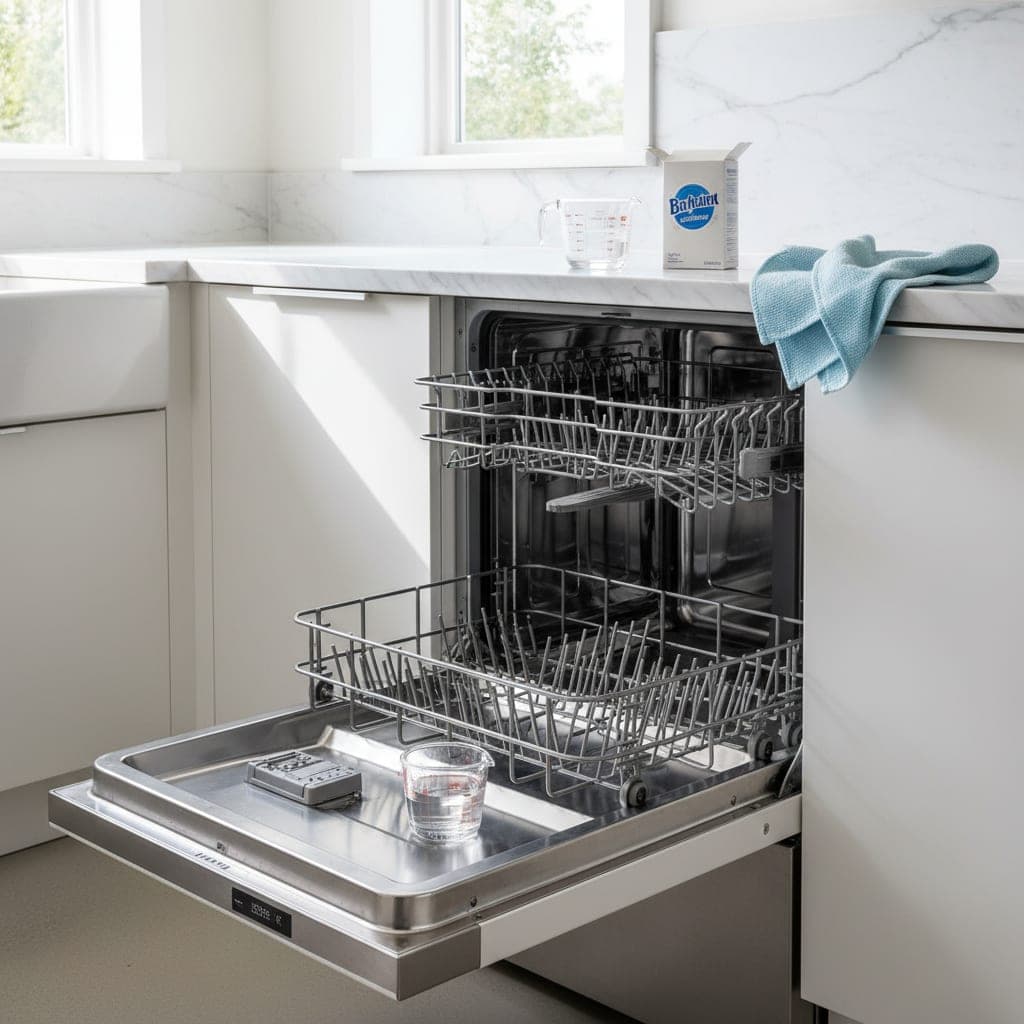
After cleaning all the physical components, it is time to run a cleaning cycle that addresses the interior surfaces you cannot reach by hand. Place a dishwasher-safe cup or bowl on the top rack filled with two cups of plain white vinegar. Make sure the dishwasher is completely empty otherwise. Run the hottest cycle available, usually called sanitize or heavy wash. The vinegar steam fills the entire interior and dissolves mineral scale, grease film, and soap scum from every surface including the interior walls, the heating element, the drain hose, and the inside of the spray arms. The acetic acid in vinegar is strong enough to break down calcium and lime deposits from hard water but gentle enough not to damage rubber seals or stainless steel interiors. You will notice a strong vinegar smell during the cycle. This is normal and it dissipates completely once the cycle finishes. Do not add any detergent to this cycle. The vinegar works best on its own without interference from soap. If your dishwasher has significant hard water scaling that looks like a white chalky film on the interior walls, you may need to run two vinegar cycles back to back for full removal.
Follow with a baking soda freshening cycle
After the vinegar cycle completes, sprinkle one cup of baking soda across the bottom of the empty dishwasher. Run a short hot water cycle. The baking soda provides a gentle abrasive scrub on the interior surfaces during the wash action, brightens any staining on the tub floor, and neutralizes any remaining odors that the vinegar did not fully address. Together the vinegar cycle and the baking soda cycle work as a two-step system: the vinegar dissolves deposits and the baking soda polishes and deodorizes. Never combine vinegar and baking soda in the same cycle because the acid and base neutralize each other and you lose the cleaning benefit of both. Running them as separate consecutive cycles gives you the full power of each. After the baking soda cycle finishes, open the door and let the dishwasher air dry completely. The interior should look visibly cleaner and the smell should be completely neutral.
Clean the exterior and the control panel
While the interior is drying, clean the exterior of the dishwasher. For stainless steel fronts, spray a stainless steel cleaner or a mix of equal parts water and vinegar onto a microfiber cloth and wipe in the direction of the grain. Never spray directly onto the control panel because liquid can seep behind the buttons and damage the electronics. Instead, dampen a cloth lightly and wipe the panel gently. For fingerprint-resistant finishes, plain warm water and a microfiber cloth is usually all you need. Clean the handle, which accumulates hand oils and grime from daily use. If your dishwasher has a visible vent on the front, wipe that clean as well because steam passes through it during drying cycles and it collects residue over time.
How to keep your dishwasher clean permanently with minimal effort
Maintaining a clean dishwasher does not require a full deep clean every week. A simple monthly routine keeps everything running perfectly. Clean the filter once every two weeks by pulling it out and rinsing it under hot water for 30 seconds. Run a vinegar cycle once a month by placing a cup of vinegar on the top rack and running the hottest cycle. Wipe the door gasket with a damp cloth once a week when you load the dishwasher. Leave the door slightly cracked open after every cycle to let moisture escape and prevent mold growth. Scrape food off dishes before loading but do not pre-rinse them completely because modern dishwasher detergent is designed to work on light food residue and needs something to cling to for proper activation. Run the kitchen sink hot water tap for 30 seconds before starting a dishwasher cycle so the initial fill water is already hot rather than cold from sitting in the pipes. This small habit dramatically improves cleaning performance on the first wash pass.
What actually made the biggest difference and what was a waste of time
Cleaning the filter was the single most impactful step. My dishwasher had been smelling progressively worse for about three months, and the filter was the entire reason. It was coated in a thick gray sludge that I genuinely did not expect. The smell disappeared completely after the filter cleaning alone before I even ran the vinegar cycle. The spray arm cleaning solved the mystery of why certain spots in the upper rack always came out dirty. Two holes on the upper arm were completely blocked and once cleared, the clean coverage became even across both racks. The door gasket cleaning was the most visually disturbing step. The amount of black mold hidden in the rubber fold was genuinely alarming given that I eat off dishes washed in this machine. As for what did not work: I initially tried cleaning tablets sold specifically for dishwashers and they made almost no difference compared to the vinegar and baking soda method, despite costing significantly more. The tablets are essentially compressed citric acid and baking soda, which is less effective than liquid vinegar for dissolving mineral scale because the vinegar steam reaches surfaces the tablets cannot contact.
Mistakes that damage your dishwasher or make the problem worse
Mistake one: using bleach in a stainless steel interior dishwasher. Bleach corrodes stainless steel and damages rubber gaskets over time. If you have a stainless steel tub, never use bleach inside it. Vinegar is the safe alternative. Bleach is only safe in dishwashers with a plastic interior tub. Mistake two: running the dishwasher with both vinegar and baking soda at the same time thinking more cleaning agents means more cleaning power. They neutralize each other and you end up with slightly salty water that does nothing. Always run them as separate cycles. Mistake three: neglecting the bottom of the door where it meets the tub. This area never gets sprayed during a wash cycle and builds up a hidden layer of grime that contributes to odor. Check it monthly. Mistake four: keeping the dishwasher door tightly closed between uses. The sealed moist environment promotes mold and bacterial growth. Leave the door cracked at least an inch after every cycle so air circulates and moisture can escape.
Pro Tips
- Run your kitchen sink hot water tap for 30 seconds before starting a dishwasher cycle so the initial fill water is already hot and improves first-pass cleaning.
- Clean the filter every two weeks and run a vinegar cycle once a month. These two habits alone prevent 90% of dishwasher odor and performance issues.
- Leave the dishwasher door cracked open an inch after every cycle to prevent mold and mildew growth in the moist interior.
- One thing that should never go in your freshly cleaned dishwasher is wood, the heat and water warp and crack it. Instead, here is how to clean a wooden cutting board and sanitize it safely by hand.
Frequently Asked Questions
How often should you clean a dishwasher?
Clean the filter every two weeks, wipe the door gasket weekly, and run a full vinegar cleaning cycle once a month. A deep clean of the spray arms, gasket fold, and door edges should be done every three to four months or whenever you notice odor or reduced cleaning performance.
Why does my dishwasher smell bad even after running a cycle?
The most common cause is a dirty filter packed with decomposing food debris. The second is mold growing inside the rubber door gasket fold. Both of these are not reached by normal wash cycles. Pull out the filter and scrub it, then clean the gasket with a baking soda paste. The smell should disappear immediately.
Can you use vinegar and baking soda together in a dishwasher?
Not in the same cycle. Vinegar is an acid and baking soda is a base. When combined they neutralize each other into essentially salt water with no cleaning power. Run a vinegar cycle first to dissolve mineral deposits, then follow with a separate baking soda cycle to deodorize and brighten.
Why are my glasses coming out cloudy from the dishwasher?
Cloudy glasses are caused by hard water mineral deposits or etching. If the cloudiness wipes off with vinegar, it is mineral buildup and a vinegar cleaning cycle plus a rinse aid will fix it. If the cloudiness does not wipe off, the glass is etched which is permanent damage caused by too-hot water, too much detergent, or soft water dissolving the glass surface.
Is it safe to put vinegar in a dishwasher?
Yes. White distilled vinegar is safe for all dishwasher interiors including stainless steel and plastic tubs. It dissolves mineral deposits, cuts grease, and kills bacteria without damaging seals, gaskets, or the heating element. Place it in a cup on the top rack and run the hottest cycle with nothing else inside.
How this guide was made
This Deep Clean guide was researched, written, edited, and published by Fredler Pierre-Louis. The 11 steps below are built around White vinegar, Baking soda and Dish soap (Dawn), and the quantities and dwell times come from published cleaning-chemistry and manufacturer guidance for those materials, not from a controlled trial we ran ourselves. Where a popular version of this hack does not work, or is risky on a particular surface, this 13 min guide says so.
- Checked against manufacturer and materials guidance for the surfaces named.
- Reviewed by a person for chemical safety and surface compatibility before publication.
- Written to explain why a method works, not just to list steps.
- Corrected whenever a reader reports an error or an edge case we missed.
Read our full editorial policy or learn more about the team behind TryCleaningHacks.
Related Cleaning Guides
Safety Notes
- Never use bleach inside a stainless steel dishwasher tub. Bleach corrodes stainless steel and degrades rubber gaskets. Use white vinegar instead for safe and effective cleaning.
- Do not spray liquid cleaners directly onto the dishwasher control panel. Liquid can seep behind buttons and damage the electronics. Dampen a cloth and wipe gently instead.
- When cleaning the filter and drain area, watch for broken glass or sharp food debris like bones that may have accumulated. Wear rubber gloves to protect your hands.
You might also like
7 Deep Cleaning Tricks That Save Hours Every Week
Most of the time spent cleaning a bathroom is spent waiting or backtracking, not scrubbing. Spraying one surface, waiting for it, wiping it, then starting the next one means you pay every dwell time separately. Batching those dwell times so every cleaner works at once is the single change that cuts the job roughly in half. None of this involves a gadget or a miracle spray, just the order you work in and where you stop wasting motion.
How to Deep Clean a Shower (10 Proven Methods)
I deep cleaned the same shower twice in one week once with my old routine and once with these ten methods applied in the right sequence. The difference wasn't even close. Here's what changed and the daily habit that eliminated most of my scrubbing for good.
30 Cleaning Myths You Need to Stop Believing
I believed most of these myths for years, and two of them left permanent marks on surfaces in my own house. This is the honest version of what I got wrong, why the popular advice fails, and the two safety myths that actually send people to the emergency room. I have kept the failures in here on purpose, because the mistakes taught me more than the wins did, and a myth is only dangerous while you still trust it.