

How to Remove Yellow Armpit Stains From Shirts (5 Methods Tested)
I ruined three good white shirts trying the wrong treatments before I understood what yellow armpit stains actually are and why they come back after washing. Here are 5 tested methods ranked by effectiveness, including the overnight trick that saved shirts I thought were permanently destroyed.
Jump to a section
- What you'll need
- Step-by-step
- Method 1: Baking soda + hydrogen peroxide paste (best overall for white shirts)
- Method 2: White vinegar pre-soak (best for colored and synthetic fabrics)
- Method 3: OxiClean soak (best for old, heat-set stains that have been through the dryer)
- Method 4: Baking soda + salt + dish soap scrub (safest for delicate fabrics)
- Method 5: Aspirin + cream of tartar paste (for stubborn set-in stains on white shirts only)
- Ranked: Which method won and what I learned testing them all
- Pro tips
- FAQ
What You'll Need
Step-by-Step Instructions
Method 1: Baking soda + hydrogen peroxide paste (best overall for white shirts)
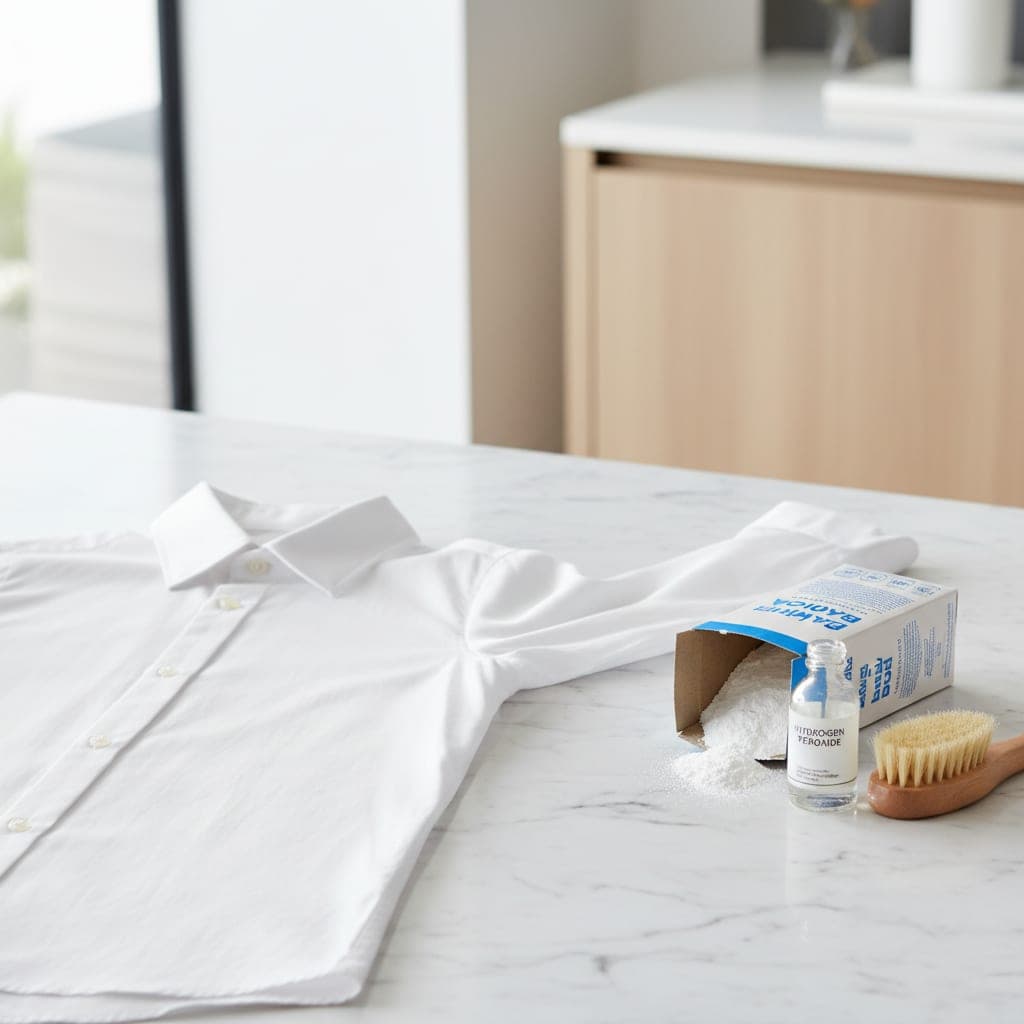
This is the most reliably effective method for yellow armpit stains on white and light-colored shirts, and the one most cleaning experts reach for first. The chemistry is straightforward: hydrogen peroxide oxidizes the yellowed aluminum-sweat compound (actually a metallic salt buildup from antiperspirant) and baking soda acts as a mild abrasive to physically lift the loosened residue from fabric fibers. Mix 2 tablespoons of baking soda with 1 tablespoon of hydrogen peroxide and a small squeeze of dish soap (about ½ teaspoon) until a thick paste forms. Apply the paste directly to the stain with a spoon or your gloved fingertip in a generous layer. Use a soft-bristled scrub brush or old toothbrush to work the paste gently into the fabric using small circular strokes this opens the weave and lets the peroxide penetrate the stain rather than just sitting on top. Let the paste sit for 30 to 60 minutes in direct sunlight if possible UV light amplifies the oxidizing action of peroxide and dramatically improves results on stubborn or old stains. Rinse with cold water, then launder as normal. Do not use this method on dark-colored shirts hydrogen peroxide will bleach the dye. A small patch test on an inside seam is always worthwhile before treating a visible area.
Method 2: White vinegar pre-soak (best for colored and synthetic fabrics)
White vinegar works through acid action: the acetic acid breaks down the alkaline aluminum compounds in antiperspirant residue. This method is slower than the peroxide paste but safer for colored fabrics and synthetic blends. Fill a basin with cold water and add ½ cup of white vinegar. Submerge the stained garment and let it soak for 30 to 60 minutes. For fresh or mild stains, this alone is often enough launder after soaking and the stain will be significantly reduced or gone. For more set-in stains, after soaking, pour undiluted white vinegar directly onto the affected area and scrub lightly with a soft brush before laundering. The vinegar smell fully dissipates in the wash cycle. This method works best as a preventive step: soaking shirts in a diluted vinegar bath before the stain has a chance to fully set is more effective than using vinegar on established yellow stains. Never use vinegar on shirts with acetate or rayon components the acid can damage these fibers.
Method 3: OxiClean soak (best for old, heat-set stains that have been through the dryer)
For yellow armpit stains that have been washed and dried multiple times and have essentially fused to the fabric an oxygen booster like OxiClean is the most effective option. Heat-setting through multiple dryer cycles makes stains significantly harder to remove, but oxygen releasers can still break them down with adequate dwell time. Dissolve one scoop of OxiClean powder in a gallon of the warmest water safe for your fabric (check the garment label). Submerge the shirt and let it soak for 4 to 6 hours or overnight for truly stubborn stains. The oxygen-releasing compounds in the formula continuously work against the stain throughout the soak. Do not wring or scrub the fabric during the soak; let the chemistry do the work. After soaking, remove the shirt and launder normally. For cotton and cotton-poly blend shirts, this is consistently the most effective method for old stains. Check the stain before putting the shirt in the dryer if residue remains, repeat the OxiClean soak before heat-setting the remaining stain further.
Method 4: Baking soda + salt + dish soap scrub (safest for delicate fabrics)
This is the recommended method for delicate fabrics or shirts where you can't use hydrogen peroxide or OxiClean. The combination of baking soda and salt provides gentle physical abrasion, while dish soap cuts through the greasy component of sweat and deodorant buildup. Mix 2 tablespoons of baking soda, 1 tablespoon of table salt, and 1 tablespoon of dish soap with just enough water to form a thick, spreadable paste. Apply to the stain and spread evenly. Use a soft brush to massage the paste into the fabric with light circular strokes for 3 to 5 minutes this is the active scrubbing phase, not just application. Let the paste sit on the fabric for 20 to 30 minutes. Rinse with cold water, checking whether the stain has lifted. For mild and recent stains, this usually removes the yellow completely. For moderate stains, a second application with a slightly longer dwell time is often needed. This method is color-safe and works on most fabrics including linen, modal, and cotton blends, making it a reliable fallback when stronger oxidizing agents aren't appropriate. For stains that have partially responded to this method but not fully cleared, apply a fresh paste and hold the fabric in direct sunlight for the 20-30 minute dwell time. UV light activates the baking soda reaction similarly to how it boosts hydrogen peroxide, and the combination produces noticeably better results on resistant stains than indoor application alone.
Method 5: Aspirin + cream of tartar paste (for stubborn set-in stains on white shirts only)
This lesser-known method comes from old-school laundry techniques and works through the combined mild acid action of salicylic acid (aspirin) and tartaric acid (cream of tartar), which together dissolve the aluminum salt compounds responsible for yellowing more aggressively than either ingredient alone. Crush 5 uncoated white aspirin tablets to a fine powder using the back of a spoon. Mix with 2 tablespoons of cream of tartar and enough warm water to form a thick paste approximately 2 tablespoons. Apply the paste generously to the yellow stained area and spread evenly. Allow to sit for 30 to 45 minutes. This method is specifically for white cotton and cotton-blend shirts both aspirin and cream of tartar can potentially alter the tone of dyed fabrics. For white shirts with severe, long-standing yellow stains, this is often the treatment that finally works after other methods have reduced but not eliminated the stain. After the dwell time, rinse in cold water and launder immediately. A second cold rinse before washing prevents any white paste residue from remaining.
Ranked: Which method won and what I learned testing them all
Match the method to the fabric and to how old the stain is, because that is what determines which of these can work at all. For fresh to moderate stains on white cotton, the baking soda and hydrogen peroxide paste is the first choice: peroxide oxidizes the protein and sebum compounds behind the yellowing, it works in one 30 to 60 minute session, and it costs almost nothing. For colored or synthetic fabrics, the white vinegar presoak is the genuinely safe option, since peroxide and oxygen bleach will lift dye out of colors. It is slower and suits lighter staining. For stains that have been through the dryer more than once, an overnight oxygen bleach soak is realistically the only thing left, because heat has cross linked the stain compounds into the fibers and short treatments cannot reach them; give it eight hours at the warmest temperature the care label allows. The aspirin and cream of tartar paste is a last resort for whites that have resisted everything else, and it is worth trying before you write a shirt off. Expect fresh stains treated immediately to need 30 to 60 minutes and one wash cycle, and old heat set stains to need two or three treatments over several days. Air dry anything that still shows a mark, because the dryer will set whatever is left.
Critical mistakes that permanently set armpit stains
Mistake one and by far the most damaging: putting a stained shirt in the dryer before the stain is fully gone. Every pass through the dryer heat-bonds the aluminum-sweat compound more deeply into the fibers. After three or four dryer cycles, even aggressive treatments struggle to reverse the staining. Always inspect the stain after washing and before drying. If it's still visible, air dry and treat again. Mistake two: using hot water on the stain. Hot water does to these protein-based stains what cooking does to an egg it solidifies them into the fabric. Always use cold water for washing and rinsing during the treatment phase. Mistake three: scrubbing too aggressively. Yellow armpit stains are deeply embedded in the weave of the fabric, and hard scrubbing doesn't dislodge them it just damages the fibers and makes the fabric look worn. Firm but gentle circular strokes with a soft brush are enough to work the cleaning paste in. Aggressive scrubbing is counterproductive. Mistake four: using bleach as a first attempt on white shirts. This is the tempting one, and I understand the logic the shirt is white, bleach is for whites. But chlorine bleach reacts with the protein compound in the stain and can actually deepen the yellow discoloration rather than removing it. Oxygen bleach (OxiClean) does not have this problem. The long-term prevention answer, if you're serious about protecting good shirts: switch to an aluminum-free deodorant. The chemical reaction that creates these stains requires the aluminum compounds found in antiperspirant. Eliminate aluminum from the equation and the staining essentially stops.
Pro Tips
- The single best way to prevent yellow armpit stains: switch from an antiperspirant to an aluminum-free deodorant. Most yellow staining is caused by aluminum compounds reacting with sweat protein, not by sweat alone.
- Always check the stain before putting the shirt in the dryer. Dryer heat permanently heat-sets any remaining stain. If the stain is still visible after washing, air dry and treat again before using the dryer.
- For shirts already damaged through repeated dryer heat, try two consecutive overnight OxiClean soaks in the warmest water the fabric allows this is the most effective rescue approach for heat-set yellowing.
Frequently Asked Questions
What causes yellow armpit stains?
Yellow armpit stains are not primarily caused by sweat they're caused by a chemical reaction between the aluminum compounds in antiperspirants and the proteins and salts in perspiration. The reaction creates a yellow-brown metallic salt compound that embeds in fabric fibers. This is why switching to an aluminum-free deodorant is the most effective long-term prevention strategy.
Does washing armpit-stained shirts make the staining worse?
Yes, it can especially heat drying. Hot water and dryer heat cause the aluminum-sweat compound to bond more permanently with the fabric fibers, which is called heat-setting. Always wash stained shirts in cold water and air dry until the stain has been fully removed. Inspect the shirt after washing and before drying each time.
Will OxiClean remove old yellow armpit stains that have been through the dryer?
OxiClean can still remove heat-set stains in many cases, but it requires a significantly longer soak 6 hours to overnight rather than 1 to 2 hours. The key is using the warmest water the fabric can handle and allowing full dwell time without disturbing the soak. For very heavy heat-set staining, two consecutive overnight soaks often work when a single soak doesn't.
Are these methods safe for synthetic fabrics like nylon and polyester?
Method 2 (vinegar soak) and Method 4 (baking soda/salt/dish soap) are safest for synthetics. Avoid peroxide on nylon, which can yellow or degrade under oxidizing agents. OxiClean is generally safe for most synthetics at lower water temperatures. Always check the garment care label and test on an inside seam before treating synthetic fabrics.
How do I prevent yellow armpit stains from forming in the first place?
Use an aluminum-free deodorant rather than an antiperspirant. Allow deodorant to fully dry before dressing (2 to 3 minutes). Wear an undershirt as a barrier. Launder shirts after each wear. Wash with cold water and air dry dryer heat is the biggest factor in stain permanence. These steps together essentially eliminate recurring yellowing.
How this guide was made
This Laundry & Kitchen guide was researched, written, edited, and published by Fredler Pierre-Louis. The 7 steps below are built around Baking soda, 3% hydrogen peroxide and Dish soap (Dawn or similar), and the quantities and dwell times come from published cleaning-chemistry and manufacturer guidance for those materials, not from a controlled trial we ran ourselves. Where a popular version of this hack does not work, or is risky on a particular surface, this 10 min guide says so.
- Checked against manufacturer and materials guidance for the surfaces named.
- Reviewed by a person for chemical safety and surface compatibility before publication.
- Written to explain why a method works, not just to list steps.
- Corrected whenever a reader reports an error or an edge case we missed.
Read our full editorial policy or learn more about the team behind TryCleaningHacks.
Related Cleaning Guides
Safety Notes
- Hydrogen peroxide (3%) will bleach colored and dark fabrics. It is safe for white and very light-colored garments only. Always perform a patch test on an inside seam before using peroxide on any colored fabric.
- Do not mix hydrogen peroxide and vinegar directly in the same application combined they form peracetic acid, which is corrosive and can irritate skin. If using both methods sequentially, rinse the shirt thoroughly with water between treatments.
- Wear rubber gloves when working with hydrogen peroxide paste, especially if you have sensitive skin.
You might also like
How to Get Rid of Kitchen Sink Odor (10 Easy Fixes)
My kitchen sink smelled no matter how often I cleaned it until I figured out what I was actually missing. The fix wasn't a new product; it was addressing three different sources at once. Here's what finally worked and the one mistake that kept the smell coming back.
How to Clean a Microwave Inside and Out (12 Methods)
Almost nobody needs to scrub a microwave. Dried food is mostly water that has left, and steam puts enough of it back that the mess wipes away with a cloth, which is why the order of operations matters more than the product. There is also a part of the inside you should never scrub, a filter on over the range models that most owners have never removed, and a ceiling that looks fine until you point a flashlight at it. Here are twelve methods for the inside, the outside and the smell, with what each one is actually for and where it falls short.
How to Clean Stainless Steel Appliances Without Streaks (9 Methods)
Stainless steel appliances streak for one reason that almost every cleaning attempt gets wrong, and it has nothing to do with which product you buy. Stainless has a directional grain, and wiping across it drags residue into the grooves instead of out of them. Here are nine methods ranked for built-up fingerprints and kitchen grease, and the technique that decides whether any of them work.