

How to Clean Leather Mold Safely (5 Methods That Protect the Surface)
White mold blooms on stored leather are a humidity problem rather than a dirt problem, and the usual instinct, scrubbing with soap and water, drives the spores deeper into the hide and strips its oils. Here is what removes the mold completely without damaging the leather, in what order, and the conditioning and storage step that stops it coming back.
Jump to a section
- What you'll need
- Step-by-step
- Understand what causes mold on leather surfaces
- Method 1 Rubbing alcohol spot treatment for surface mold
- Method 2 White vinegar solution for established mold
- Method 3 Saddle soap deep clean for established mold
- Method 4 Baking soda powder for absorbing moisture and odor
- Method 5 Tea tree oil antifungal spray for prevention and light mold
- Pro tips
- FAQ
What You'll Need
Step-by-Step Instructions
Understand what causes mold on leather surfaces
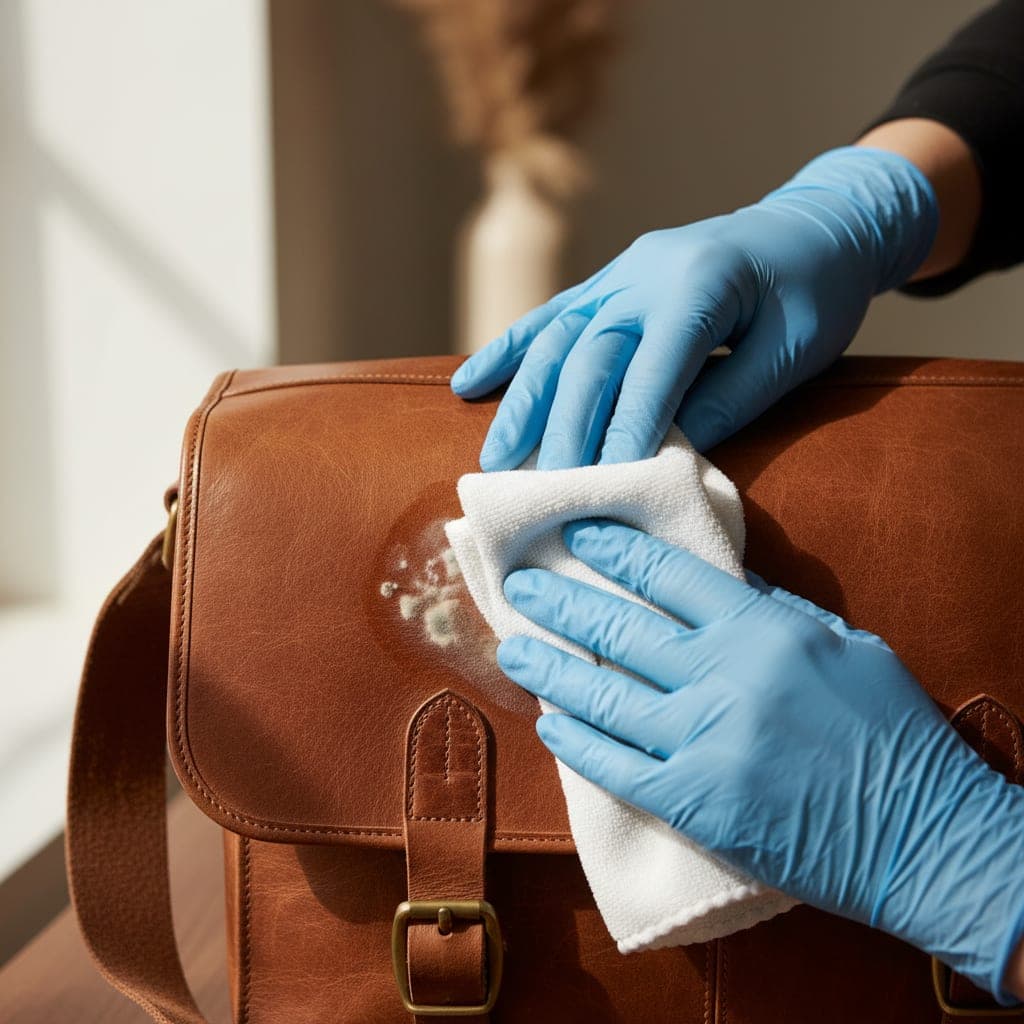
Leather develops mold for a specific set of reasons that are all related to moisture and air circulation. Leather is an organic material with a porous surface that absorbs and releases moisture slowly, making it vulnerable to mold growth when stored in environments with humidity above 60 percent. Mold spores are always present in household air and settle on all surfaces, but they only germinate and grow when the surface provides both moisture and an organic food source. Leather provides both: it absorbs ambient moisture and contains the natural oils and tanning compounds that mold species use for nutrition. The most common scenario is leather stored in a closet, storage unit, or bag during a humid season without airflow. Mold typically appears first in seams, under straps, and in creased areas where moisture concentrates and air movement is lowest. The white or gray fuzzy growth that appears is an active mold colony producing spores, and it must be removed carefully to avoid spreading live spores to other surfaces in the area.
Method 1 Rubbing alcohol spot treatment for surface mold
Rubbing alcohol at 70 percent concentration is the fastest and most immediately effective treatment for surface mold on leather. It kills mold spores on contact without requiring extended dwell time and evaporates quickly enough that it does not saturate or damage the leather surface the way water-based cleaners can. Dampen a soft microfiber cloth lightly with 70 percent isopropyl alcohol. Do not soak the cloth. Wipe the moldy area with light, even pressure following a single direction rather than scrubbing back and forth. The mold will transfer onto the cloth. Fold the cloth to a clean section after each wipe to avoid redistributing spores back onto the leather. Let the surface air dry for five minutes. Check whether mold remains and repeat if necessary. Always test on a small hidden area first because alcohol can slightly darken or dry certain leather finishes, particularly on very light or natural-tan leather. After treatment, condition the leather to restore the oils that the alcohol may have slightly depleted. This method is best for fresh, light surface mold that has not penetrated into the leather grain.
Method 2 White vinegar solution for established mold
White vinegar kills approximately 82 percent of mold species through its acetic acid content and is gentler on leather finish than many commercial antifungal products. Mix equal parts white vinegar and water in a small bowl. Dampen a soft cloth with the diluted vinegar solution and wipe the entire moldy surface, including areas surrounding the visible mold where spores may have settled but not yet formed visible colonies. Let the solution sit on the leather surface for five minutes. The acid works to kill the mold during this dwell period. Wipe clean with a fresh damp cloth and then immediately dry the surface with a dry microfiber cloth to prevent moisture from sitting on the leather. The vinegar smell dissipates fully as the leather dries. For leather with a matte or natural finish, the diluted vinegar is very safe. For high-gloss patent leather, test first as acid-based solutions can dull very high-gloss coatings. Follow immediately with a leather conditioner after the vinegar treatment because the acid removes some surface oils along with the mold. Skipping this conditioning step leaves the leather feeling dry and more susceptible to cracking at the mold treatment site.
Method 3 Saddle soap deep clean for established mold
For mold that has been growing for several weeks or has penetrated into the texture of the leather surface, saddle soap provides the most thorough cleaning because it is specifically formulated to clean leather without stripping the essential oils that maintain flexibility. Wet a soft-bristled brush or sponge with a small amount of water and work a lather into a small tin or bar of saddle soap. Apply the lather to the moldy area with the brush using circular scrubbing motion on mold-affected zones, paying special attention to seams and textured areas where mold roots most deeply. The soap lifts mold and its root system from the surface layer of the leather. Wipe away the soapy residue with a clean damp cloth. Repeat as needed. Let the leather dry completely in open air before evaluating whether any discoloration or mold remains. Saddle soap leaves a slight conditioning residue in the leather that helps restore suppleness after the stress of mold growth and cleaning. Always follow saddle soap cleaning with a dedicated leather conditioner applied 24 hours after the treatment to fully restore oil content to the leather grain.
Method 4 Baking soda powder for absorbing moisture and odor
Baking soda does not kill mold on leather but it serves a critical supporting role in mold treatment by absorbing the moisture that allowed mold to grow in the first place and neutralizing the musty odor that mold leaves behind even after the visible growth is removed. After cleaning the mold with your preferred removal method, lightly dust the cleaned area with baking soda powder and let it sit for one hour. The baking soda draws out residual moisture from the leather surface and neutralizes the volatile compounds that produce the damp, musty smell associated with mold. Brush off the baking soda with a soft dry brush. The smell should be significantly improved. For leather items stored in enclosed spaces like bags or cases, place an open container of baking soda inside the item during storage to continuously absorb ambient moisture between uses. This is an especially effective technique for leather shoes, which accumulate foot moisture during wearing and release it slowly into the toe box where mold typically starts.
Method 5 Tea tree oil antifungal spray for prevention and light mold
Tea tree oil is a natural antifungal that kills mold spores and inhibits regrowth without the bleaching or surface-stripping effects of harsher chemical alternatives. Mix one teaspoon of tea tree essential oil into one cup of water in a small spray bottle. Shake well before each use since oil and water separate. Mist the solution lightly over the entire leather surface, not just the visibly moldy area, because mold spores settle broadly on the surface and will establish new colonies in adjacent areas even after visible mold is removed. Do not rinse the tea tree solution off. As it dries, it leaves a residual antifungal barrier on the leather surface that continues to inhibit mold germination. The strong medicinal scent of tea tree oil fades over 24 to 48 hours. Apply this spray once a month to leather items stored in humid environments as a preventive treatment. For items in areas with ongoing humidity problems, apply every two weeks during the most humid months of the year. Tea tree oil is safe for most leather types including suede and nubuck, though always spot-test on an inconspicuous area first since the oil can very slightly darken suede and nubuck textures.
Condition and protect leather after every mold treatment
Every mold-cleaning method, including gentle ones like diluted vinegar, removes some of the natural and applied oils from leather that maintain its flexibility and resistance to cracking. Skipping conditioning after mold treatment is the most common mistake that leads to leather drying, cracking, and becoming more susceptible to future mold growth because the dried, cracked surface holds moisture more readily than supple, conditioned leather. Allow the leather to dry completely at room temperature after any mold treatment before applying conditioner. Applying conditioner to damp leather seals in the moisture rather than replacing the oils. Use a dedicated leather conditioner rather than general products like petroleum jelly or olive oil, which sit on the surface and can go rancid or attract dust. Apply a small amount of conditioner to a soft cloth and work it into the leather surface using circular motions. Let it absorb for 15 to 20 minutes, then buff off any excess with a clean dry cloth. The leather should feel noticeably more supple after conditioning. For leather that was severely affected by mold, apply conditioner twice over two consecutive days to fully restore oil content.
Store leather correctly to prevent mold from returning
Preventing mold from returning after treatment requires addressing the conditions that caused it in the first place. Never store leather in plastic bags or airtight containers because trapped air inside these enclosures becomes saturated with the moisture that leather naturally absorbs and releases, creating a perfect mold incubator. Store leather in breathable cotton dust bags or fabric pillowcases that allow air circulation while protecting from dust. Place silica gel packets inside leather bags, shoes, and cases during storage to actively absorb ambient moisture. Replace or recharge silica packets every three to six months as they reach their absorption capacity. Store leather in areas with airflow rather than in tightly packed closets where air cannot move around items. During humid summer months, run a dehumidifier in the area where leather items are stored or remove them to a less humid room. For expensive leather pieces stored for an entire season, condition them before storage and again when taking them out. Leather in good condition with full oil content resists moisture absorption much better than dry leather and is therefore significantly less susceptible to mold growth.
What removed mold completely versus what left discoloration or returned within weeks
Rubbing alcohol was the fastest treatment for fresh surface mold and the most immediately satisfying result, but it was also the method most likely to show residual discoloration on lighter leathers after drying. The alcohol strips some surface dye along with the mold in light-toned leather, leaving a slightly lighter patch that is visible in direct light. Conditioning immediately after treatment reduced but did not fully eliminate this effect. The saddle soap method took longer but left the leather in the best overall condition after treatment, with no discoloration and noticeably better suppleness. It is the correct approach for any leather item where appearance and finish quality matter. Vinegar solution was the most balanced option: effective against established mold, no discoloration risk on most leather types when diluted properly, and the fastest to apply without specialized products. The mold that returned fastest across all methods was on items where I had treated only the visible colony without applying an antifungal spray to the surrounding surface. Adjacent spore deposits that were not visible established new colonies within two weeks. The tea tree spray applied broadly after the primary cleaning was the difference between permanent resolution and returning mold.
Mistakes that damage leather while attempting to clean mold
Mistake one: using undiluted bleach on leather. Bleach destroys leather by breaking down the tanning compounds and protein structure that give leather its strength and flexibility. Even a small amount of undiluted bleach causes immediate and irreversible discoloration and can make the surface crack within days. Never use bleach on any leather surface. Mistake two: scrubbing mold aggressively with a stiff brush. Forceful scrubbing on a moldy leather surface spreads live mold spores across a wider area and drives them deeper into the leather grain rather than removing them. Use light wiping pressure with a soft cloth and fold to a clean section after each pass. Mistake three: using a hair dryer to speed up drying after mold treatment. High heat from a hair dryer causes leather to shrink, crack, and lose its shape. Always dry leather naturally at room temperature in a well-ventilated area. Mistake four: applying wax-based products over a mold-treated area before the leather is fully clean. Wax seals residual mold and moisture into the leather surface, allowing it to continue growing beneath the coating. Clean and condition fully before applying any protective wax or sealant.
Pro Tips
- Always treat the entire leather surface with a tea tree oil spray after removing visible mold, not just the moldy patch. Spores settle broadly and will establish new colonies in untreated adjacent areas.
- Store leather in breathable fabric bags with silica gel packets rather than plastic bags. Plastic traps humidity and creates the exact conditions mold needs to grow.
- Condition leather immediately after every mold treatment to restore the oils that cleaning removes. Dry leather after treatment is more prone to cracking and future mold growth.
Frequently Asked Questions
How do you get mold off leather without damaging it?
Dampen a soft cloth with 70 percent rubbing alcohol or a 50/50 mix of white vinegar and water. Wipe the moldy area with light pressure, folding the cloth to a clean section after each pass to avoid spreading spores. Let the leather air dry completely, then apply a leather conditioner to restore the oils removed during cleaning. Follow with a tea tree oil spray across the full surface to prevent regrowth.
Is white vinegar safe to use on leather?
Yes, diluted white vinegar mixed with equal parts water is safe for most leather types and effectively kills approximately 82 percent of mold species. Always dilute vinegar before using it on leather and wipe it off after five minutes. Follow immediately with a leather conditioner because the acid removes some surface oils along with the mold. Avoid using vinegar on patent or high-gloss leather without testing first.
Why does mold keep coming back on leather?
Mold returns when the underlying conditions that caused it are not addressed. The most common cause is storing leather in a humid, poorly ventilated space. Use breathable fabric bags instead of plastic for storage, add silica gel packets to absorb moisture, and apply a monthly tea tree oil preventive spray. Also treat the entire surface rather than just the visible mold colony, as surrounding spores establish new colonies within weeks if left untreated.
Can you save leather that has been heavily molded?
Yes, most leather can be fully restored from significant mold growth with a thorough saddle soap cleaning followed by conditioning. If the mold has been growing for months, you may need two to three treatment sessions on consecutive days. The exception is leather that has begun to crack or crumble at the mold site, which indicates the structural integrity is compromised and the item may not be restorable to safe use.
How this guide was made
This Deep Clean guide was researched, written, edited, and published by Fredler Pierre-Louis. The 10 steps below are built around Rubbing alcohol (70%), White vinegar and Saddle soap, and the quantities and dwell times come from published cleaning-chemistry and manufacturer guidance for those materials, not from a controlled trial we ran ourselves. Where a popular version of this hack does not work, or is risky on a particular surface, this 9 min guide says so.
- Checked against manufacturer and materials guidance for the surfaces named.
- Reviewed by a person for chemical safety and surface compatibility before publication.
- Written to explain why a method works, not just to list steps.
- Corrected whenever a reader reports an error or an edge case we missed.
Read our full editorial policy or learn more about the team behind TryCleaningHacks.
Related Cleaning Guides
Safety Notes
- Never use undiluted bleach on leather. Bleach breaks down the protein and tanning compounds in leather immediately and causes irreversible discoloration, cracking, and structural damage.
- Wear gloves when handling actively moldy leather. Active mold produces spores that can trigger allergic reactions and respiratory irritation, particularly in people with asthma or mold sensitivities.
- Do not treat leather mold in a closed room. Work near an open window or outdoors so that disturbed mold spores are carried away rather than settling on other surfaces in your living space.
You might also like
7 Deep Cleaning Tricks That Save Hours Every Week
Most of the time spent cleaning a bathroom is spent waiting or backtracking, not scrubbing. Spraying one surface, waiting for it, wiping it, then starting the next one means you pay every dwell time separately. Batching those dwell times so every cleaner works at once is the single change that cuts the job roughly in half. None of this involves a gadget or a miracle spray, just the order you work in and where you stop wasting motion.
How to Deep Clean a Shower (10 Proven Methods)
I deep cleaned the same shower twice in one week once with my old routine and once with these ten methods applied in the right sequence. The difference wasn't even close. Here's what changed and the daily habit that eliminated most of my scrubbing for good.
30 Cleaning Myths You Need to Stop Believing
I believed most of these myths for years, and two of them left permanent marks on surfaces in my own house. This is the honest version of what I got wrong, why the popular advice fails, and the two safety myths that actually send people to the emergency room. I have kept the failures in here on purpose, because the mistakes taught me more than the wins did, and a myth is only dangerous while you still trust it.