
How to Clean Hardwood Floors the Right Way (9 Rules That Prevent Damage)
After my first house's hardwood floors dulled within a year of installation entirely from my cleaning routine, not foot traffic I finally figured out what I was doing wrong. These 9 rules explain exactly what damages hardwood floors and how to clean them properly so they stay beautiful for decades.
Jump to a section
- What you'll need
- Step-by-step
- Rule 1: Vacuum before you mop always
- Rule 2: Never use a soaking-wet mop
- Rule 3: Use a dedicated hardwood floor cleaner not vinegar, not all-purpose spray
- Rule 4: Always mop with the grain of the wood, not against it
- Rule 5: Dry the floor completely before anyone walks on it
- Rule 6: Remove shoes and add felt pads to every piece of furniture
- Pro tips
- FAQ
What You'll Need
Step-by-Step Instructions
Rule 1: Vacuum before you mop always
One of the most common hardwood floor mistakes is going straight to a mop. Any grit, sand, or debris that isn't removed first gets dragged and pressed across the floor by the mop head, acting like sandpaper on the finish. Use a vacuum on its hard floor setting with the beater bar disabled or a dry microfiber dust mop before any wet cleaning. Work in rows starting from the wall farthest from the exit, moving toward the door. Pay attention to edges and corners where dust compacts into grainy deposits. This dry-clean step takes less than five minutes in most rooms and prevents the microscopic scratching that clouds a floor's finish over years of cleaning. If you use a broom, choose one with soft, fine bristles stiff brooms scatter debris instead of collecting it.
Rule 2: Never use a soaking-wet mop
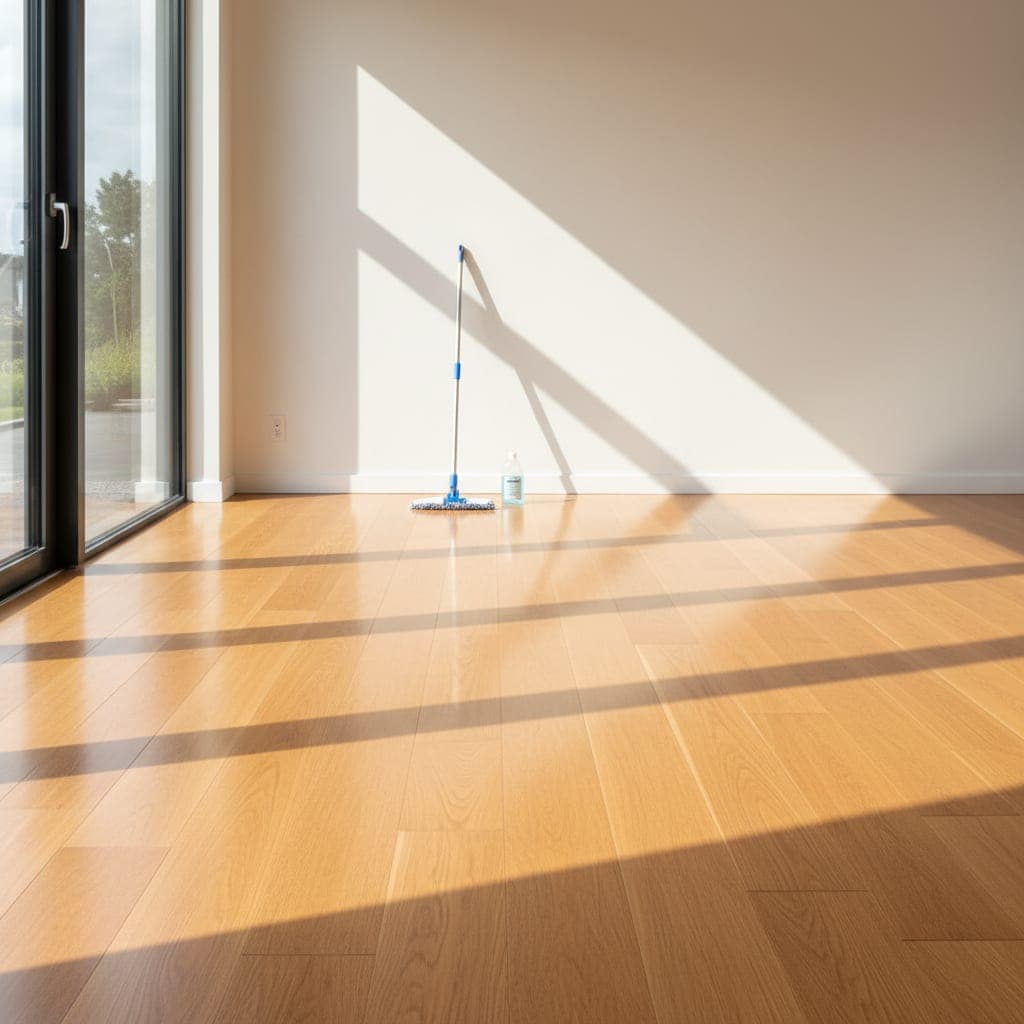
Water is hardwood's primary enemy. Excess moisture seeps between planks, swells the wood, warps boards, and loosens the adhesive holding floating floors in place. The correct technique is a barely-damp mop with no visible drips or standing water a mop damp enough that it evaporates in under a minute after contact with the floor. Wring out mop pads until they feel almost dry before use. Never use a bucket-and-string mop on hardwood; these deposit too much water. Flat microfiber mops with removable, machine-washable pads are the industry standard for wood floors precisely because you can control moisture. If you accidentally over-wet an area, dry it immediately with a clean, dry microfiber cloth don't wait for it to air dry on its own.
Rule 3: Use a dedicated hardwood floor cleaner not vinegar, not all-purpose spray
Vinegar is acidic (pH around 2.5). Wood floor finishes polyurethane, aluminum oxide, oil-based are pH-sensitive. Regular vinegar use gradually dulls and degrades the finish coating, stripping away the layer that protects the wood from moisture, staining, and scratching. Once the finish is etched, it cannot be polished back; the floor needs to be refinished. The same issue applies to most all-purpose household cleaners, which are either alkaline or contain surfactants designed for non-porous surfaces. Use only cleaners specifically formulated for hardwood floors Bona, Method, or comparable pH-neutral formulas. Spray directly on the mop head or on a small floor section, not from a distance this controls the amount of liquid applied. Read the bottle for your specific floor finish type; some oil-finished floors require a different cleaner than polyurethane-finished floors.
Rule 4: Always mop with the grain of the wood, not against it
Wood grain runs along the length of each plank. Mopping across the grain forces moisture and debris into the spaces between plank edges, which is exactly where water causes the most cumulative damage. Mopping with the grain moves the cleaning path along the plank surface, allowing the mop head to cover the maximum surface area while directing debris toward the end of each board rather than into side seams. This applies to dry dusting and vacuuming as well. Developing this direction habit costs nothing and makes a measurable difference over years of regular cleaning. In rooms with diagonal floor installation, mop along the direction the planks run, not the direction of the room.
Rule 5: Dry the floor completely before anyone walks on it
Standing water on hardwood is obvious damage waiting to happen but even the residual moisture from a correctly used barely-damp mop is enough to attract fresh dust and pet hair if people walk on the floor immediately. Let freshly mopped hardwood dry for at least five minutes before foot traffic. In humid conditions or poorly ventilated rooms, this can take slightly longer. Opening windows or running a fan across the surface significantly reduces drying time. If you see any water beading or visible moisture remaining after three minutes, wipe it with a dry microfiber cloth. The goal is a completely dry, streak-free surface before the room is used again. Streak lines left behind by a mop are almost always a sign the mop carried too much liquid.
Rule 6: Remove shoes and add felt pads to every piece of furniture
This isn't a cleaning step it's a damage prevention rule that reduces how often deep cleaning is needed. Shoes, especially heeled footwear, concentrate extraordinary pressure per square inch; a 140-pound person in stiletto heels exerts more floor pressure per square inch than a 6,000-pound elephant. Entry rugs and a no-shoes household rule prevent the majority of grit-related scratching. For furniture, apply self-adhesive felt pads to every leg that contacts the floor. Check and replace these pads annually worn felt pads lose their protective function and can become abrasive themselves as dirt embeds in them. Area rugs in high-traffic corridors and under dining tables protect the floor from the two zones that see the most abrasion.
Rule 7: Spot-clean spills within 60 seconds
Hardwood is not sealed against liquids even polyurethane-finished floors have microscopic seams where liquid can penetrate if left to sit. The 60-second rule exists because most household spills (water, juice, coffee, pet accidents) don't cause damage if wiped up immediately but begin to penetrate the seams when allowed to sit. Keep a clean dry microfiber cloth in the kitchen and dining area within arm's reach. Blot, don't wipe wiping spreads the spill across a larger area. For sticky spills, dampen the cloth lightly with your dedicated hardwood cleaner and blot the residue. For pet urine, which is acidic and highly corrosive to wood finish, respond within 30 seconds if possible. Dried or soaked-in pet urine on hardwood often requires sanding and recoating the affected boards to fully remediate.
Rule 8: Deep clean quarterly with a concentrated hardwood formula
Regular weekly maintenance vacuum plus barely-damp mop handles everyday dust and surface grime. But over months, a film of micro-residue from cleaning products, shoe rubber, cooking oils, and oxidized finish builds up on the floor surface, making it look dull even after mopping. A quarterly deep clean with a concentrated hardwood cleaner (diluted per instructions) addresses this buildup. Apply the cleaner to a small section using a wring-dry mop, work it in with gentle circular motion at the problem areas, then immediately wipe up with a clean dry pad. Do not let even a concentrated cleaner sit on the floor the goal is apply-and-lift, not soak. After the deep clean, the floor should have a noticeably brighter sheen and feel cleaner underfoot. This is also the right time to inspect for areas where the finish is thinning or scratched, which signals time for professional recoating.
Rule 9: Know when the floor needs refinishing, not just cleaning
Every hardwood floor has a finite number of refinishes in its lifetime, determined by the thickness of the solid wood above the tongue-and-groove joint. But most floors go to refinishing much later than needed because owners assume dullness or scratching means more cleaning is required. The signs that cleaning has reached its limit: floors that look dull immediately after mopping, scratches that extend below the finish into the raw wood (check by running your fingernail across if it catches, it's below the finish), graying at plank seams (moisture and dirt below the finish), or soft spots where boards flex underfoot. Spot recoating is far less expensive and disruptive than full refinishing. A flooring professional can recoat just the worn traffic areas with fresh polyurethane in a day. This is the maintenance step that doubles the life of a hardwood floor versus floors that only receive cleaning.
What actually transformed my floors honest results from switching routines
My first house had white oak hardwood in the main living areas. I was proud of those floors and cleaned them diligently weekly with a standard spray mop and whatever all-purpose cleaner smelled good. By the end of year one, the finish had a foggy haze I couldn't polish out. A flooring contractor told me what I'd done: weeks of surfactant residue from an inappropriate cleaner had filled the micro-texture of the polyurethane finish, scattering light instead of reflecting it, making the floor look permanently cloudy. The fix was a professional screen-and-recoat, which cost $600 for the living room alone. The lesson was expensive. After switching to a pH-neutral hardwood cleaner applied through a barely-damp flat mop, those same floors in my second house have been gleaming for four years with zero signs of finish degradation. The most transformative single change, though, was adding felt pads to every piece of furniture immediately after installation. In my first house, I did it 'eventually.' By then, dining chair legs had already left hundreds of fine scratches in the traffic zone between the kitchen and table. Prevention is dramatically cheaper than remediation on hardwood.
The most common hardwood floor mistakes and the one that surprises people most
The obvious mistakes are well-known: too much water, the wrong cleaner, scrubbing with abrasive pads. But the hardwood floor mistake that surprises people the most is the steam mop. Steam mops have become popular because they clean without chemicals on multiple surfaces, and they're genuinely excellent on tile and some other hard flooring. On hardwood, they're deeply destructive. The pressurized steam at temperatures exceeding 200°F forces moisture into every plank seam, swelling the wood edges, loosening the adhesive bond in click-lock systems, and degrading the polyurethane finish from below. The damage doesn't show immediately that's the insidious part. It appears gradually as gapping between planks, warping at seam edges, and a finish that starts peeling in small patches. By the time it's obvious, the damage is structural. If you own a steam mop, use it on tile. Never on hardwood, engineered wood, or laminate. The second mistake worth emphasizing: over-cleaning. Hardwood doesn't benefit from daily wet mopping, even with the right product. The goal is to mop only when the floor is visibly dirty or sticky, and to dry-dust in between. Every unnecessary wet cleaning adds marginal stress to the finish. Weekly dry-dusting plus biweekly damp mopping is the schedule that wood floor manufacturers actually recommend, even though it feels less thorough than daily mopping with water.
Pro Tips
- Schedule hardwood floor mopping for evenings or early morning the 5-minute no-foot-traffic drying window is easiest to guarantee then.
- In winter, use a humidifier to maintain 35 to 55% relative humidity. Dry air causes hardwood planks to contract and develop visible gaps between boards.
- Never use wax on floors with a polyurethane finish it creates a slippery buildup that clouds the finish permanently and is very difficult to remove.
Frequently Asked Questions
How often should you clean hardwood floors?
Dry dusting or vacuuming should happen 1 to 2 times per week in high-traffic homes, weekly in low-traffic spaces. Damp mopping is appropriate every 1 to 2 weeks depending on foot traffic. Quarterly deep cleaning handles the film buildup that weekly mopping doesn't address. Over-cleaning with wet methods causes more long-term damage than under-cleaning.
Can I use Swiffer WetJet on hardwood floors?
Swiffer WetJet is not recommended for unsealed, waxed, or unfinished hardwood. For polyurethane-finished hardwood it can be used sparingly, but the cleaning solution contains surfactants that can dull the finish over time. A dry microfiber mop with an approved hardwood cleaner sprayed directly onto the pad is a safer long-term approach.
What is the best cleaner for hardwood floors?
Bona Hardwood Floor Cleaner is the most widely recommended pH-neutral formula and is approved by most major flooring manufacturers. Method Squirt + Mop is also commonly used. Avoid anything with vinegar, bleach, ammonia, or citrus oil all of these degrade hardwood finishes over time.
Why do my hardwood floors look streaky after mopping?
Streaks after mopping are almost always caused by one of three things: too much water on the mop head, leftover cleaner residue, or a cleaning product not formulated for hardwood. Switch to a barely-damp mop pad, verify you're using a hardwood-specific cleaner, and buff the floor with a dry microfiber pad immediately after mopping for a streak-free result.
Can I mop hardwood with just water?
Plain water is slightly preferable to harsh cleaners, but it still carries the risks of any wet mopping: moisture at the seams and no cleaning action against oil or residue. For basic maintenance between deep cleans, a single pass with a barely-damp water-only mop pad is acceptable. For removing footprints, grime, or residue, use a dedicated hardwood cleaner.
How this guide was made
This Deep Clean guide was researched, written, edited, and published by Fredler Pierre-Louis. The 11 steps below are built around Microfiber dry mop or dust mop, Vacuum with hard floor setting (beater bar disabled) and Dedicated hardwood floor cleaner (Bona or similar pH-neutral formula), and the quantities and dwell times come from published cleaning-chemistry and manufacturer guidance for those materials, not from a controlled trial we ran ourselves. Where a popular version of this hack does not work, or is risky on a particular surface, this 11 min guide says so.
- Checked against manufacturer and materials guidance for the surfaces named.
- Reviewed by a person for chemical safety and surface compatibility before publication.
- Written to explain why a method works, not just to list steps.
- Corrected whenever a reader reports an error or an edge case we missed.
Read our full editorial policy or learn more about the team behind TryCleaningHacks.
Related Cleaning Guides
Safety Notes
- Wet hardwood floors are a slip hazard. Ensure the floor is fully dry before allowing children, elderly household members, or pets to re-enter the room.
- Do not use steam mops on hardwood floors under any circumstances. The combination of high moisture and heat accelerates finish degradation and can cause permanent warping, especially in engineered and laminate wood.
You might also like
7 Deep Cleaning Tricks That Save Hours Every Week
Most of the time spent cleaning a bathroom is spent waiting or backtracking, not scrubbing. Spraying one surface, waiting for it, wiping it, then starting the next one means you pay every dwell time separately. Batching those dwell times so every cleaner works at once is the single change that cuts the job roughly in half. None of this involves a gadget or a miracle spray, just the order you work in and where you stop wasting motion.
How to Deep Clean a Shower (10 Proven Methods)
I deep cleaned the same shower twice in one week once with my old routine and once with these ten methods applied in the right sequence. The difference wasn't even close. Here's what changed and the daily habit that eliminated most of my scrubbing for good.
30 Cleaning Myths You Need to Stop Believing
I believed most of these myths for years, and two of them left permanent marks on surfaces in my own house. This is the honest version of what I got wrong, why the popular advice fails, and the two safety myths that actually send people to the emergency room. I have kept the failures in here on purpose, because the mistakes taught me more than the wins did, and a myth is only dangerous while you still trust it.