

How to Get Cigarette Smell Out of Clothes
Cigarette smell is one of the most stubborn odors fabric can absorb, and most single-step approaches fall short because smoke residue is both particulate and oily. Here is the sequence that actually clears it, why the products most people reach for first make the least difference, and the one mistake that makes the smell nearly permanent.
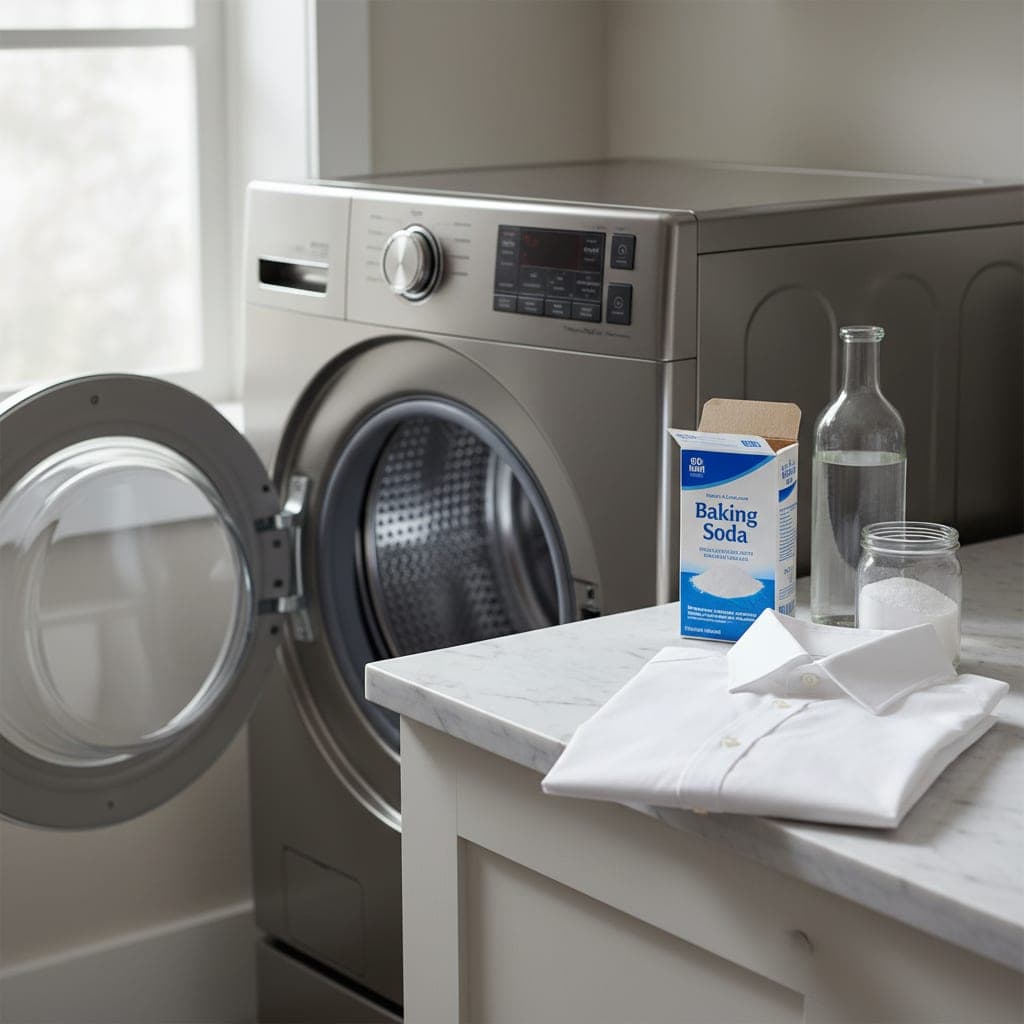
Jump to a section
- What you'll need
- Step-by-step
- Why cigarette smell clings to fabric so stubbornly
- Air the garment outdoors before washing
- The baking soda pre-soak method
- Adding white vinegar to the rinse cycle
- Using an enzyme-based detergent for nicotine residue
- OxiClean boost for white and light-colored fabrics
- Pro tips
- FAQ
What You'll Need
Step-by-Step Instructions
Why cigarette smell clings to fabric so stubbornly
Cigarette smoke contains hundreds of volatile organic compounds, including nicotine, tar, and polycyclic aromatic hydrocarbons, all of which are incredibly small molecules that penetrate deep into fabric fibers rather than sitting on the surface. Regular laundry detergent is formulated to lift water-soluble dirt and body oils, but cigarette compounds are only partially water-soluble and bond chemically with both natural and synthetic fibers. This is why running a smoke-affected shirt through a standard wash cycle often results in a shirt that smells acceptable when wet but returns to its smoky state once dry and warmed by body heat. The heat reactivates the compounds trapped deep in the fiber, releasing them back into the air you breathe. Understanding this bonding process explains why effective smoke odor removal requires multiple agents working in sequence rather than a single wash. You need an alkaline neutralizer to break the chemical bond, an enzyme agent to digest the organic residue, and thorough rinsing to carry everything out of the fabric before drying locks whatever remains back in permanently.
Air the garment outdoors before washing
Before applying any cleaning agent, hang the affected garment outside in fresh air and indirect sunlight for at least two hours. This step alone removes a surprising amount of the surface-level smoke compounds through a combination of UV light and natural airflow. Sunlight breaks down several of the lighter volatile compounds in cigarette smoke through a photochemical reaction, and the airflow carries them away from the fabric rather than letting them settle back in. Shake the garment gently while it hangs to dislodge any particulate matter, which is a small but real component of how smoke attaches to fabric. Direct sunlight is especially effective on white and light-colored fabrics, but UV rays can cause fading in darker garments, so keep dark clothing in shade with good airflow for the same duration. This pre-treatment reduces the total load of smoke compounds that your washing machine and detergent need to handle, making the subsequent wash significantly more effective. Do not skip this step and go straight to washing, because the washing machine will redistribute any loose smoke particles through the water before the detergent has a chance to neutralize them.
The baking soda pre-soak method
Fill a large basin or your washing machine drum with warm water and dissolve a full cup of baking soda in it. Submerge the affected garment and let it soak for a minimum of two hours, or overnight for heavily saturated items. Baking soda is alkaline and works by chemically neutralizing the acidic components of cigarette smoke residue, disrupting the molecular bond between the smoke compounds and the fabric fibers. As the garment soaks, gently agitate it every 30 minutes to expose fresh fabric surface area to the baking soda solution. For garments with particularly thick fabric like denim jackets, hoodies, or wool coats, extend the soak to 8 hours and add an additional half cup of baking soda at the midpoint. After soaking, do not rinse the garment yet. Transfer it directly to the washing machine with the baking soda water included and proceed with your regular wash cycle. The baking soda continues working during the wash, and skipping a pre-rinse means you retain its odor-neutralizing action through the full agitation cycle. Add your enzyme detergent on top of the baking soda water in the machine for maximum combined effect.
Adding white vinegar to the rinse cycle
White distilled vinegar is one of the most effective tools for smoke odor removal from fabric, but its role is in the rinse cycle rather than the main wash. Pour one full cup of white vinegar directly into the fabric softener dispenser or add it manually during the final rinse cycle. The acetic acid in vinegar works as a deodorizing agent that neutralizes the alkaline smoke residue that baking soda did not fully address, and it also acts as a natural fabric softener that helps open the fiber structure so residual compounds can rinse out more easily. Do not worry about your clothes smelling like vinegar afterward. The vinegar odor completely dissipates as the garment dries, leaving behind no recognizable scent. Never add vinegar in the same wash cycle as baking soda because the acid and base neutralize each other, producing carbon dioxide bubbles and losing the cleaning benefit of both. Running them sequentially, baking soda in the wash and vinegar in the rinse, gives you the full odor-neutralizing power of each. This two-agent approach is responsible for the majority of the success in eliminating stubborn cigarette smell from fabric.
Using an enzyme-based detergent for nicotine residue
Standard laundry detergents rely on surfactants to lift dirt and oils from fabric surfaces. Enzyme-based detergents go a step further by containing protease, lipase, and amylase enzymes that break down the specific molecular structures of protein-based and fat-based stains and odors. Nicotine and many of the tar compounds in cigarette smoke are organic molecules that respond well to enzymatic breakdown, making enzyme detergents significantly more effective than conventional detergents for this specific odor. Use an enzyme detergent as your primary wash detergent in the baking soda soak cycle. Add the recommended amount per the package instructions, and if the garment is heavily affected, double the dose. Warm water activates enzymes most effectively, so set your washing machine to the warm or hot setting appropriate for the fabric type. Cold water slows enzymatic activity dramatically and is one of the main reasons that otherwise correct washing methods underperform. Check the garment care label before using hot water, as some synthetic fabrics and wools require cold or gentle cycles. For those fabrics, use the warmest temperature the care label allows and extend the wash cycle time to compensate.
OxiClean boost for white and light-colored fabrics
For white shirts, light cotton blouses, and other washable pale garments, adding a scoop of OxiClean oxygen-based cleaner to the soak phase dramatically boosts smoke odor removal in addition to brightening any yellowing from smoke exposure. OxiClean releases active oxygen when dissolved in water, and those oxygen molecules chemically oxidize and break apart many of the same volatile compounds in cigarette smoke that cause the persistent odor. Dissolve one scoop in a basin of warm water, submerge the garment, and soak for two hours before washing normally with enzyme detergent. For colored fabrics, perform a small patch test in an inconspicuous area before using OxiClean, as oxygen bleaching agents can fade certain dyes. Do not use OxiClean on delicate fabrics like silk or wool because the oxidizing process can damage natural protein fibers. OxiClean is also particularly useful when dealing with older smoke smells that have been baked into fabric through repeated wearing without washing, as the oxidation breaks down the aged and hardened residue that soaking alone cannot loosen.
Dry-clean-only garments and the baking soda powder treatment
Some of the most smoke-prone garments, suits, wool blazers, structured coats, and formal dresses, carry dry-clean-only labels that prevent you from using water-based methods. For these, the baking soda dry powder method is the safest and most effective approach. Place the garment inside a large sealed plastic bag along with half a cup of dry baking soda. Seal the bag and gently shake it to distribute the powder through the folds and interior of the garment. Leave it sealed for 24 hours. The baking soda absorbs and neutralizes the volatile smoke compounds throughout the enclosed air space inside the bag, and the particles that contact the fabric surface directly absorb the compounds embedded near the fiber surface. After 24 hours, remove the garment and shake it vigorously outdoors to dislodge the baking soda. Then hang it outside in fresh air for two hours before wearing. For professional cleaning, always inform the dry cleaner that the garment has smoke odor so they can apply appropriate pre-treatment before the main cleaning cycle. Standard dry cleaning without pre-treatment often returns the garment in better condition visually but with the smoke smell still present.
Outdoor air drying for maximum freshness
After washing, resist the urge to put smoke-affected garments in the dryer immediately. The dryer traps any residual smoke compounds that survive the wash cycle and bakes them back into the fabric at high heat, which can set them permanently. Instead, hang washed garments outside on a clothesline or drying rack in fresh air and natural light for at least four hours, even if the weather is cool. Airflow is the primary mechanism that carries the final trace compounds out of the fabric as it dries, and sunlight contributes photochemical breakdown of any remaining molecules on the fiber surface. Only transfer the garment to the dryer once it is fully or nearly fully dry. The dryer heat at this point acts as a final freshening step rather than a setting step, and the tumbling motion helps open fibers and release the last of any trapped compounds. If an outdoor option is not available, hang garments in a well-ventilated indoor space near an open window rather than in a closed closet. Drying in a closed space without airflow is the single biggest mistake people make after a successful wash, because the odor that leaves the fabric during drying settles right back onto the still-damp surface.
The steam treatment for quick odor reduction between washes
When you cannot wash a garment immediately but need to reduce the cigarette smell quickly, a garment steamer or steam iron set a few inches from the fabric surface is one of the most effective on-the-spot treatments available. The heat from the steam opens the fabric fiber structure, and the water vapor carries volatile smoke compounds up and out of the fabric rather than pushing them deeper in. Steam each panel of the garment for 15 to 30 seconds, then hang immediately in fresh air near an open window for 30 minutes. The combination of steam extraction and airflow removes a substantial portion of surface-level smoke compounds without water immersion. This is especially useful for garments you wear to venues where smoking occurs and want to freshen when you get home before the next day. It is a maintenance technique rather than a full solution, and only works reliably on surface odor. For garments that have absorbed smoke over many hours or multiple exposures, the steam method reduces the smell noticeably but the full soak and wash process is still necessary to address the compounds bonded deep in the fiber.
Activated charcoal for storage and severe cases
Activated charcoal is one of the most powerful passive odor absorbers available, and it works especially well for smoke odor because of its enormous surface area at the microscopic level. Each gram of activated charcoal contains hundreds of square meters of porous surface that traps and holds volatile organic compounds through adsorption, a physical process different from absorption. For clothes that have been soaked through with smoke and need extended treatment, seal them in a large bag with several activated charcoal sachets for 24 to 48 hours before washing. The charcoal pulls a significant portion of the volatile compounds out of the fabric before the wash even begins, reducing the load on your detergent and baking soda and significantly improving the final result. Activated charcoal is also the best solution for a closed wardrobe or dresser drawer where smoke smell has permeated everything. Place charcoal sachets inside the storage space and leave them for 48 to 72 hours. Unlike baking soda, activated charcoal does not leave powder residue on garments and does not need to be shaken out before wearing.
What worked best in testing and what only made a small difference
The reliable sequence is an overnight baking soda pre-soak, then an enzyme detergent hot wash with vinegar in the rinse, then outdoor air drying. Each step is doing a different job, which is why the combination works where any one of them alone does not. The baking soda soak neutralizes the acidic components of the residue and starts pulling it out of the fibers. Enzyme detergent breaks down the oily tar fraction that ordinary detergent leaves behind, and heat helps it work. Vinegar in the rinse strips the last of the alkaline residue and any remaining film. Air drying outdoors matters more than it sounds like it should, because UV and moving air continue to break down and carry off what the wash loosened, whereas a hot dryer can bake traces of it back in. For a badly saturated garment, sealing it with activated charcoal for 24 hours before you wash it gives the wash less to do. Steam is useful for quick freshening between wears but will not clear heavy smoke on its own. What does not work, despite being what most people reach for first: detergent alone, fabric softener, and dryer sheets. The last two perfume the smoke rather than removing it, and the masking fades within a few hours of wearing.
Mistakes that make cigarette smell worse or set it permanently
Mistake one: using cold water for the wash cycle. Enzyme detergents and baking soda both perform significantly worse in cold water. Cold water does not open the fabric fiber structure, meaning the cleaning agents cannot penetrate deeply enough to reach the smoke compounds bonded inside. Always use the warmest temperature the garment care label allows. Mistake two: machine drying immediately after washing without checking if the smell is gone. If the smell persists after the wash cycle, machine drying bakes the remaining compounds into the fabric under heat and pressure, making them significantly harder to remove in a second wash. Always do a smell check while the garment is still damp. Mistake three: using fabric softener and dryer sheets as odor removal tools instead of masking agents. They coat the fiber surface with fragrance compounds that temporarily cover smoke smell, but the perfume fades faster than the smoke residue underneath and the garment ends up smelling like both smoke and artificial fragrance, which is worse than either alone. Mistake four: washing smoke-affected clothes with non-affected clothes. Smoke compounds can transfer to clean fabric during the wash cycle, meaning your clean clothes can pick up smoke smell from washing machine water that has dissolved smoke residue from the affected items.
Pro Tips
- Always air garments outdoors before washing to reduce the smoke compound load before detergent ever touches the fabric.
- Run baking soda in the wash and vinegar in the rinse as separate sequential steps for maximum deodorizing effect without neutralizing either agent.
- Check for remaining smell while the garment is still damp after washing. Machine drying before confirming the smell is gone can permanently set residual odor.
Frequently Asked Questions
What removes cigarette smell from clothes fast?
The fastest method for immediate odor reduction is steaming the garment with a garment steamer and then hanging it in fresh outdoor air for 30 minutes. For complete removal, the most effective approach is an overnight baking soda pre-soak followed by a hot enzyme detergent wash with one cup of white vinegar added to the rinse cycle, then outdoor air drying.
Does washing clothes remove cigarette smell?
Standard washing with regular detergent removes some but usually not all cigarette smell, especially from heavily exposed garments. Adding baking soda to the soak, using an enzyme-based detergent, and adding vinegar to the rinse cycle dramatically improves results. Machine drying immediately after washing can bake remaining smell into the fabric, so outdoor air drying is recommended.
How do you get cigarette smell out of clothes without washing?
For garments that cannot be washed, the dry baking soda method works best. Seal the garment in a large plastic bag with half a cup of dry baking soda for 24 hours, then shake out the powder and air the garment outside for two hours. Activated charcoal sachets in a sealed bag for 48 hours are also effective as a no-wash option.
Why do my clothes still smell like smoke after washing?
Cigarette smoke compounds bond chemically to fabric fibers and are only partially water-soluble, meaning standard detergent cannot fully break those bonds. The most common causes of residual smell after washing are using cold water, skipping the baking soda pre-soak, using regular detergent instead of an enzyme detergent, and machine drying before confirming the smell is gone.
How this guide was made
This Laundry & Kitchen guide was researched, written, edited, and published by Fredler Pierre-Louis. The 12 steps below are built around Baking soda, White vinegar and Enzyme laundry detergent, and the quantities and dwell times come from published cleaning-chemistry and manufacturer guidance for those materials, not from a controlled trial we ran ourselves. Where a popular version of this hack does not work, or is risky on a particular surface, this 12 min guide says so.
- Checked against manufacturer and materials guidance for the surfaces named.
- Reviewed by a person for chemical safety and surface compatibility before publication.
- Written to explain why a method works, not just to list steps.
- Corrected whenever a reader reports an error or an edge case we missed.
Read our full editorial policy or learn more about the team behind TryCleaningHacks.
Related Cleaning Guides
Safety Notes
- Do not mix white vinegar and baking soda in the same wash cycle. The acid and base neutralize each other instantly, eliminating the cleaning benefit of both and producing only mildly salty water.
- OxiClean contains active oxygen bleaching agents that can fade certain colors and damage delicate natural fibers like silk and wool. Always check the garment care label and perform a patch test before using on colored or delicate fabrics.
- Activated charcoal sachets are safe for fabric storage but keep them away from light-colored garments in direct contact, as the carbon particles can transfer a gray residue if a sachet tears.
You might also like

How to Get Rid of Kitchen Sink Odor (10 Easy Fixes)
My kitchen sink smelled no matter how often I cleaned it until I figured out what I was actually missing. The fix wasn't a new product; it was addressing three different sources at once. Here's what finally worked and the one mistake that kept the smell coming back.
How to Clean a Microwave Inside and Out (12 Methods)
Almost nobody needs to scrub a microwave. Dried food is mostly water that has left, and steam puts enough of it back that the mess wipes away with a cloth, which is why the order of operations matters more than the product. There is also a part of the inside you should never scrub, a filter on over the range models that most owners have never removed, and a ceiling that looks fine until you point a flashlight at it. Here are twelve methods for the inside, the outside and the smell, with what each one is actually for and where it falls short.

How to Clean Stainless Steel Appliances Without Streaks (9 Methods)
Stainless steel appliances streak for one reason that almost every cleaning attempt gets wrong, and it has nothing to do with which product you buy. Stainless has a directional grain, and wiping across it drags residue into the grooves instead of out of them. Here are nine methods ranked for built-up fingerprints and kitchen grease, and the technique that decides whether any of them work.