

Best Floor Colors to Hide Dust and Dirt (and the Ones That Show Everything)
Two homes can be swept exactly the same number of times a week and only one of them looks it. That is usually the floor, not the sweeping. Some colors and finishes hold onto every crumb and footprint in plain sight, and others let a fortnight of ordinary life pass without anyone noticing. If you are choosing a floor, or stuck with one that shows everything, here is what actually drives visible dust, the honest trade-offs, and the sample test that tells you more in a week than any showroom visit.
Jump to a section
- What you'll need
- Step-by-step
- The rule is contrast, not light versus dark
- Start by naming what actually lands on your floor
- Why mid-tones with warmth are the safe answer
- Variation in the surface does more work than the base colour
- Sheen matters as much as colour, and gloss is the real culprit
- Texture hides dust and traps it, which is a genuine trade-off
- Pro tips
- FAQ
What You'll Need
Photos
Step-by-Step Instructions
The rule is contrast, not light versus dark
Almost every article on this topic sorts floors into light and dark, and that framing is why so much of the advice contradicts itself. What makes debris visible is contrast against the surface it lands on. Household dust skews pale: fabric fibres from clothes and bedding, hair, pollen, and fine grit tracked in from outside. Pale dust on a very dark floor is high contrast and reads instantly, which is why espresso and near black floors look unkempt within a day. But the grit that comes in on shoes is dark, and on a very pale floor that contrast runs the other way. Neither extreme wins. Whatever sits in the middle of your own debris, in tone, is the floor that shows the least. That is also why the same floor gets opposite reviews from two households. One has a shedding white dog and pale carpet fibres travelling through the house; the other has kids tracking in dark soil from a garden. Same floor, different debris, opposite verdicts.
Start by naming what actually lands on your floor
Before looking at a single sample, spend a moment on your own household. Get down and look at what is on the floor now, or check the canister of your vacuum, which is the most honest inventory you will find. You are looking for the dominant colour of the mess. Pale gray fluff and hair suggests fabric and skin, which is the standard indoor mix. Sandy or reddish grit means soil coming in on feet, and the colour will match the ground outside your door. Black specks near an entrance are usually asphalt and road grime. White or cream hair means a pet whose shedding will define your floor choice more than any design consideration. Households with a dark-coated pet have the opposite problem, and a pale floor becomes a full time job. This inventory is the single most useful five minutes in the whole decision, and almost nobody does it before buying a floor.
Why mid-tones with warmth are the safe answer
For a mixed household, a mid-tone with a warm base is the most forgiving choice, and it is forgiving for a specific reason rather than as a matter of taste. A mid-tone sits close enough to both pale lint and dark grit that neither jumps out. Warmth matters because gray-based floors with a cool undertone read as a flat, even field, and any warm-coloured debris on them, which is most tracked-in soil, contrasts sharply. Warm mid browns, honey and natural oak tones, and warm greige tiles all sit in this band. That does not mean cool grays are a bad floor. It means a cool gray floor asks for either a diligent sweeping habit or a home where outdoor soil rarely comes in, and it is worth knowing that before installation rather than after.
Variation in the surface does more work than the base colour
This is the part most people underestimate. A floor with tonal variation across and within each plank or tile gives the eye a busy field, and a few crumbs sitting on a busy field do not register as a pattern. A single flat colour, especially a solid mid gray or a uniform cream, works like a blank page. Anything on it is an interruption. Look for boards or tiles that carry several tones, graining, or mineral speckle, and check the whole sample rather than one plank, because manufacturers vary in how much difference they allow between pieces. There is a limit worth respecting. Heavy, high-contrast patterning does hide debris brilliantly, and it also dates faster and can make a small room feel restless. Moderate variation is the sweet spot: enough to break up the field, not so much that the floor becomes the loudest thing in the room.
Sheen matters as much as colour, and gloss is the real culprit
A high gloss finish behaves like a mirror, and mirrors show everything. Dust that would be invisible on a matte surface catches the light and sparkles. Footprints and the oil from bare feet leave visible marks. So do the fine scratches that any floor accumulates, which is a separate problem gloss creates for itself, because scratches on gloss catch light where the surrounding surface reflects it cleanly. Matte and low-sheen finishes scatter light instead of reflecting it, so a thin layer of dust changes very little about how the surface looks. Satin sits in between and is a reasonable compromise where you want some depth of colour. If you take away one thing from this article and ignore the rest, choose the lower sheen. A pale matte floor will look cleaner day to day than a mid-tone gloss floor, which means sheen can outrank colour outright.
Texture hides dust and traps it, which is a genuine trade-off
Wire-brushed, hand-scraped, and embossed surfaces are excellent at disguising debris, because the texture breaks up light and the grooves swallow fine particles. They are also harder to actually clean, and this is the trade-off almost no flooring guide states plainly. Fine grit settles into the grain and a dust mop passes over the top of it. Over months, that trapped material is what dulls a textured floor, and getting it out needs a vacuum with real suction and a brush head rather than a quick sweep. So a textured floor gives you a room that looks tidy with less effort, and a floor that needs a more thorough clean less often but genuinely thorough when it happens. If that suits how you live, it is a good choice. If your cleaning is mostly quick and frequent rather than occasional and deep, a smoother surface will serve you better even though it shows more between cleans.
On tile, grout decides more than the tile does
You can choose a perfect tile and still end up with a floor that always looks dirty, because the grout is doing the talking. Grout sits slightly below the tile surface, so it collects whatever gets swept across it, and unsealed cement grout is porous enough to absorb staining rather than release it. Pale grout in a kitchen or an entryway will darken along the traffic lanes and stay that way. The fix is to choose a grout a shade or two darker than the tile, or a mid warm gray, both of which disguise the inevitable. Narrow joints help as well, since less exposed grout means less to discolour. If you are already living with pale grout, sealing it is the intervention that matters, and it needs redoing periodically rather than once. The other reason grout deserves attention is that a grid of visible lines is itself a pattern, and a busy pattern hides crumbs, which is why small tiles with sensible grout often outperform large-format tiles in a messy kitchen.
What changes by room
Entryways take the darkest, coarsest debris in the house, so this is where mid to darker warm tones and low sheen earn their place, along with a mat long enough for several steps rather than a token square. Kitchens deal with a mixed load: flour and pale crumbs alongside dropped food and grease marks, which is why a mid warm tone with visible variation handles a kitchen better than either extreme. Bathrooms are the exception to most of this, because the enemy is not dust but water spotting, hair, and product residue, and a mid-tone matte with slip resistance beats anything glossy regardless of colour. Bedrooms produce the palest debris of any room, mostly fabric fibre and hair from bedding and clothes, so a bedroom is the one place where a slightly darker floor is a poor bet and a pale floor genuinely works. Living rooms follow whatever your household tracks around most.
If you have a pet, match the floor to the coat
Pet hair overrides every other consideration, because it arrives constantly and in one colour. A cream or pale floor with a black cat is a losing arrangement no matter how good the vacuum is, and so is a dark floor under a golden retriever. Look at the animal, then choose a floor in a similar tonal band. Where a household has both a pale and a dark pet, a mid-tone with real variation is the compromise that keeps both from being obvious. Two practical notes beyond colour. Hair clings to textured and grooved surfaces far more stubbornly than to smooth ones, so the texture advice above inverts for pet households, and a smoother surface is worth the extra visibility. And claws mark gloss finishes conspicuously, which is another reason a matte or satin surface suits homes with animals.
The sample test that beats any showroom
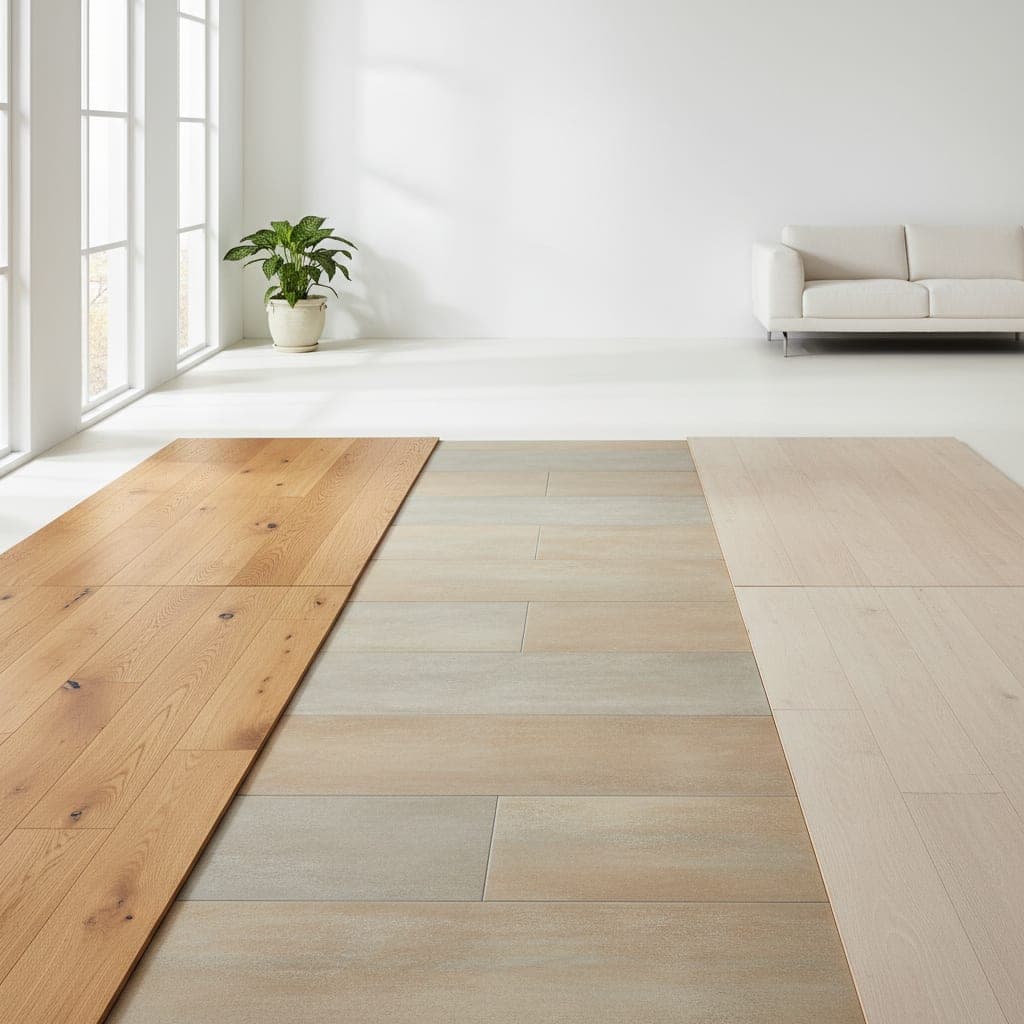
Showroom lighting is designed to flatter, usually bright, evenly diffused, and directly overhead, which is close to the worst possible approximation of a real room. Take samples home. Lay them on the existing floor in the actual room, tape them down so they sit flat, and leave them for at least a week of normal life rather than looking at them for an afternoon. Living with a sample is the point: you want it to accumulate a week of your household's real debris. Check it three times, and check it at the right moments. First in morning or afternoon side light, when the sun comes in low. Second under your own evening bulbs, since warm bulbs push a floor's undertone warmer and cool LEDs flatten it. Third from standing height rather than crouching, because that is the only angle you will ever actually see the floor from.
Look along the floor, not down at it
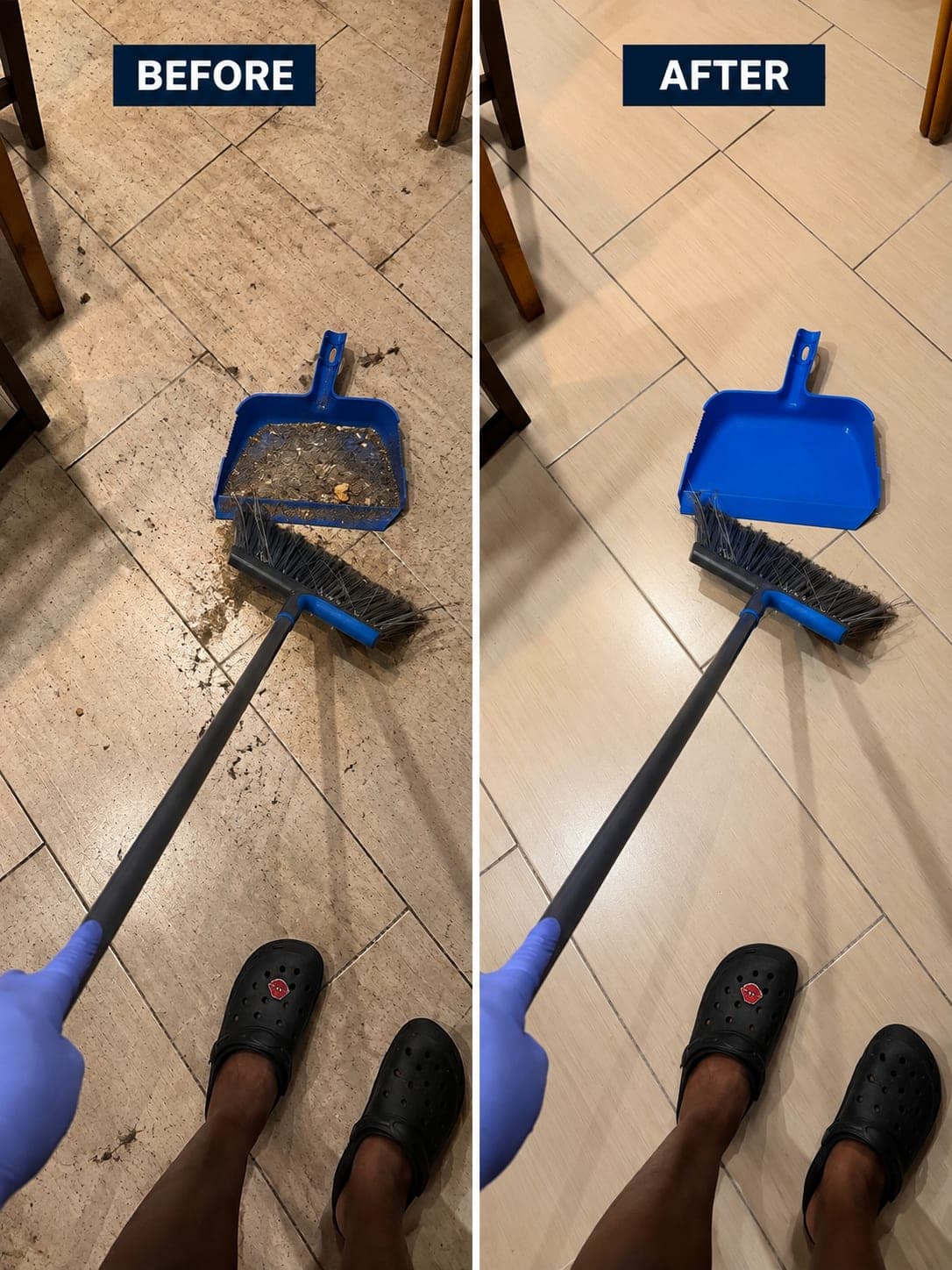
This is the trick worth knowing whichever floor you end up with. Dust is nearly invisible when you look straight down at a surface, and obvious when light rakes across it at a shallow angle. Crouch down at one end of a room with a window ahead of you and look along the floor rather than at it, and a surface you thought was clean will show its real state. Photographing it does the same job, for the same reason a photo helps in a cluttered room: it flattens the scene and strips out the familiarity. Two uses for this. When you are choosing, it tells you how a candidate floor behaves at its least flattering. When you already have a floor, it tells you whether you have a cleaning problem or a lighting problem, and lighting is often the easier thing to change. A lamp throwing light across a floor at a low angle will make any surface look dusty; the same lamp aimed at a wall or ceiling will not.
A floor that hides dust does not contain less of it
This is worth saying out loud, because the whole premise of choosing a low-maintenance floor colour has a catch. Hiding debris changes what you see, not what is there, and what you cannot see you tend not to sweep. In a household where someone has asthma or a dust allergy, that is an argument for the opposite approach. A floor that shows dust is effectively a reminder system, and there is a real case for choosing a surface that nags you rather than one that lets a fortnight slide. Even if you go for the forgiving option, it is worth setting a sweeping rhythm by the calendar rather than by how the floor looks, because a forgiving floor removes the visual prompt you would otherwise be relying on. The honest way to hold both of these together is to treat colour choice as a way of buying back the appearance of tidiness between cleans, not as a way of cleaning less.
If you are stuck with a floor that shows everything
Replacing a floor to reduce sweeping is rarely worth the money, so most people reading this need the workarounds rather than the shopping advice. Rugs and runners in the traffic lanes solve most of it, and they solve it at the source, since a long entry mat catches grit before it travels. Move your lighting before you move anything else: a floor lamp or downlight raking across a floor is doing more damage to how it looks than the dust is, and redirecting it upward changes the room immediately. If your floor is glossy and driving you mad, some finishes can be topped with a lower-sheen coat, though this depends entirely on what the existing finish is, so check with the manufacturer rather than experimenting. For dark floors, a microfibre dust mop used dry two or three times a week does far more than mopping, because the problem is settled dust rather than dirt, and water on a dark floor tends to dry as visible streaks anyway. For pale floors, the intervention that matters is what happens at the door, since almost all dark grit is arriving on shoes.
On wood, the stain decides this and the species barely matters
People shop for wood floors by species, and for dust visibility the stain does nearly all the work. A white oak board can be finished anywhere from a bleached near-white to a near-black, and those two behave like completely different floors. What the species controls is graining, and graining is the variation that breaks up the field. Oak has open, obvious grain and hides debris well. Maple and birch are much tighter and smoother, closer to a flat colour, so they show more at the same tone. If you are choosing between engineered and solid, that runs on subfloor, moisture, and budget rather than on dust, with one exception. Engineered boards often come in wider planks, wider planks mean fewer seams, and seams are small collection points for grit. Fewer of them is marginally easier to keep clean and marginally less forgiving to look at.
Vinyl plank and laminate are printed, so check the repeat
Luxury vinyl and laminate carry a photographic layer, which has an implication worth knowing. The pattern repeats. Cheaper ranges use only a handful of plank images, so the same knot and the same grain run reappear every few boards, and once your eye finds the repeat it keeps finding it. That matters here because a repeating pattern reads as a uniform surface rather than as genuine variation, and it loses much of the debris-hiding benefit real variation would give you. Ask how many plank designs are in the range, or lay eight boards out and look for duplicates. The other thing to check is the embossing. Some ranges emboss in register with the printed grain, which looks convincing and hides dust well. Others stamp a generic texture across every board regardless of the print, which traps grit without giving you the visual payoff.
Your bulbs change the floor you chose
A floor that looked warm and forgiving in daylight can turn flat and unforgiving under the wrong bulbs, which catches people out after installation, when nothing is cheap to change except the lighting. Warm bulbs around 2700K push a floor's undertone warmer and soften the contrast between the surface and pale dust. Cool white and daylight bulbs at 4000K and above flatten warm tones toward gray and sharpen every contrast on the floor, which is the opposite of what you want from a surface you are trying to keep looking clean. Kitchens are where this bites hardest, because they tend to get the coolest, brightest lighting in the house and also the most debris. If your floor only looks bad under artificial light, changing bulbs is the cheapest experiment available and it is reversible in a minute.
Choices that create more work than they look like they will
A few decisions cause most of the regret. Very dark floors in a home with pale carpet elsewhere, because fibre migrates between rooms and lands on the worst possible background. Very pale floors at an entrance, where dark grit arrives daily and no amount of sweeping keeps ahead of it. High gloss anywhere with bare feet or animals, for the footprints and the scratches together. A single flat colour with no variation, which turns the floor into a plain background for everything that lands on it. Cool gray in a house with a garden or a dirt path, where warm soil contrasts against a cool surface. And pale grout with any tile in a kitchen or hallway, which is the one on this list that people notice within weeks and cannot easily undo. None of these are wrong in themselves. They are choices that ask for more sweeping than the person making them usually expects, which is a fine trade if you know you are making it.
Pro Tips
- Check the vacuum canister before you look at a single sample. The dominant colour of what is already coming off your floors tells you which tonal band to shop in, and it takes a minute.
- If you can only optimise one thing, choose the lower sheen. A pale matte floor generally looks cleaner day to day than a mid-tone gloss one, so finish can beat colour outright.
- Tape samples down in the actual room and leave them a full week of normal life. An afternoon in a showroom tells you nothing about how a floor behaves under your own lighting and your own debris.
- If you are choosing finishes throughout to fight visible grime, the same logic applies above the floor. See our guide to the best cabinet colors to hide fingerprints and dust.
Frequently Asked Questions
What floor color hides dirt and dust the best?
A mid-tone with a warm base and some visible variation, in a matte or low-sheen finish. It works because dust skews pale and tracked-in grit skews dark, so a mid-tone sits close to both and neither stands out sharply. The variation matters as much as the colour: a floor with several tones running through it gives the eye a busy field, while a single flat colour behaves like a blank page and shows every crumb as an interruption.
Do dark floors really show more dust?
They show pale dust more, which is most indoor dust, so in practice yes for a typical home. What they hide well is dark tracked-in grit, which is why a dark floor can work at an entrance and be exhausting in a bedroom, where nearly all the debris is pale fibre from bedding and clothes. The bigger factor is usually sheen. A dark matte floor is far more forgiving than a dark gloss one, because gloss reflects light and makes dust sparkle instead of disappearing.
Is matte or glossy flooring easier to keep looking clean?
Matte, clearly, and it is not a close call. Gloss reflects light like a mirror, so it shows dust, footprints, the oil from bare feet, and fine scratches, and the scratches are permanent in a way the dust is not. Matte scatters light, so a thin film of dust changes very little about how the surface reads. Satin is a fair compromise if you want more depth of colour than matte gives.
What grout color hides dirt on a tile floor?
A shade or two darker than the tile, or a mid warm gray. Grout sits slightly below the tile surface so it collects whatever gets swept across it, and unsealed cement grout absorbs staining rather than releasing it, which is why pale grout darkens along traffic lanes and stays dark. Narrower joints help too, since there is simply less grout on show. If you already have pale grout, sealing it is the intervention worth making, and it needs redoing periodically rather than once.
Should I pick a floor that hides dust if someone has allergies?
Possibly not. A forgiving floor changes what you can see, not what is present, and what you cannot see you tend not to sweep. Where someone in the house has asthma or a dust allergy, there is a real argument for a surface that shows dust and effectively reminds you. If you do want the forgiving option, set a sweeping schedule by the calendar rather than by how the floor looks, because you have removed the visual prompt you would otherwise rely on.
How this guide was made
This Paint Colors guide was researched, written, edited, and published by Fredler Pierre-Louis. The 18 steps below are built around Floor swatches, Sample planks and Natural light, and the quantities and dwell times come from published cleaning-chemistry and manufacturer guidance for those materials, not from a controlled trial we ran ourselves. Where a popular version of this hack does not work, or is risky on a particular surface, this 14 min guide says so.
- Checked against manufacturer and materials guidance for the surfaces named.
- Reviewed by a person for chemical safety and surface compatibility before publication.
- Written to explain why a method works, not just to list steps.
- Corrected whenever a reader reports an error or an edge case we missed.
Read our full editorial policy or learn more about the team behind TryCleaningHacks.
Related Cleaning Guides
Safety Notes
- Choose slip-resistant finishes for bathrooms, entryways, and the wet zone in a kitchen. A matte surface is usually the better choice here for grip as well as for hiding marks.
- Ventilate the room while flooring adhesives, stains, or sealers are curing, and follow the manufacturer's stated drying times rather than judging by touch.
- Check your cleaning products against the floor's finish before using them. Vinegar and other acids can dull some sealed wood and stone finishes, and the damage shows as a permanent flat patch.
You might also like
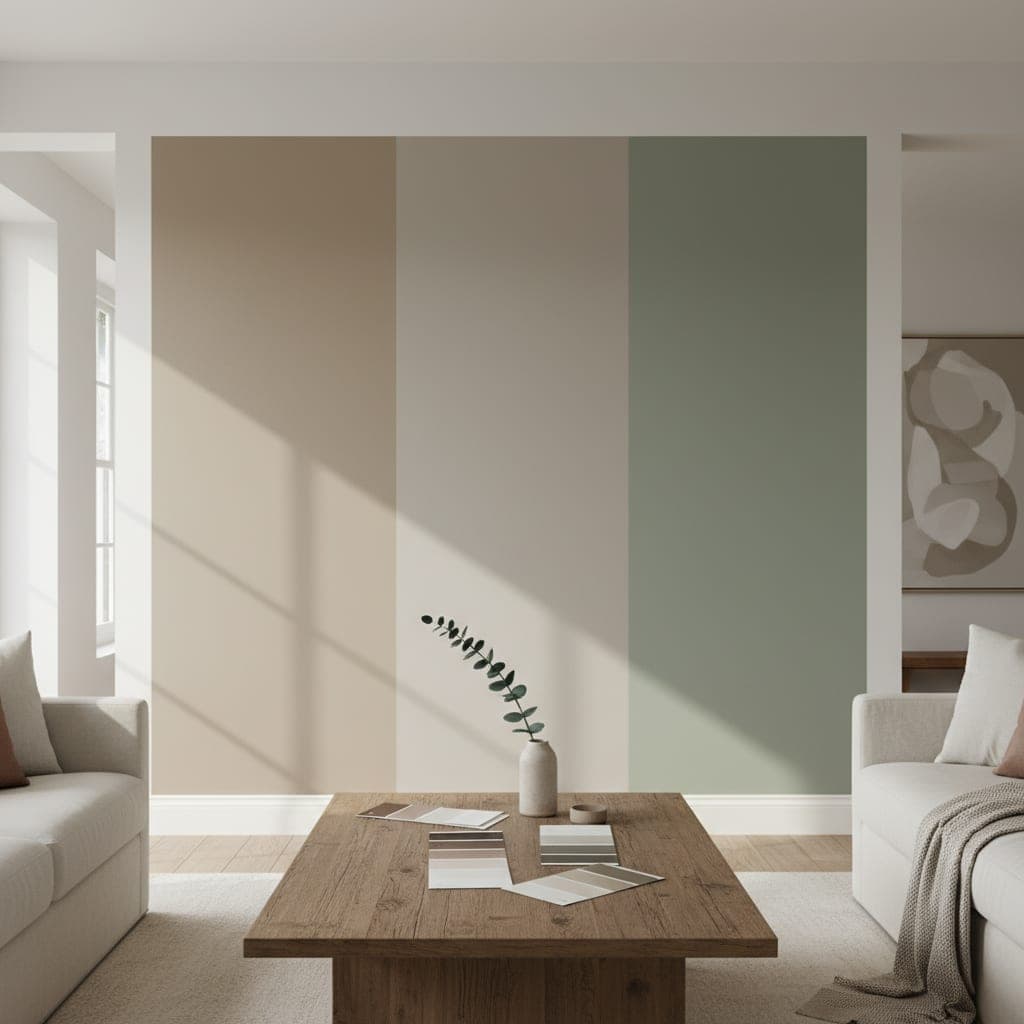
Best Paint Colors to Make Your House Look Less Dusty
After painting four rooms in different shades over three moves, the difference in how fast each wall showed dust was one of the most practical decorating lessons I've learned. Here's what the real-world testing revealed.
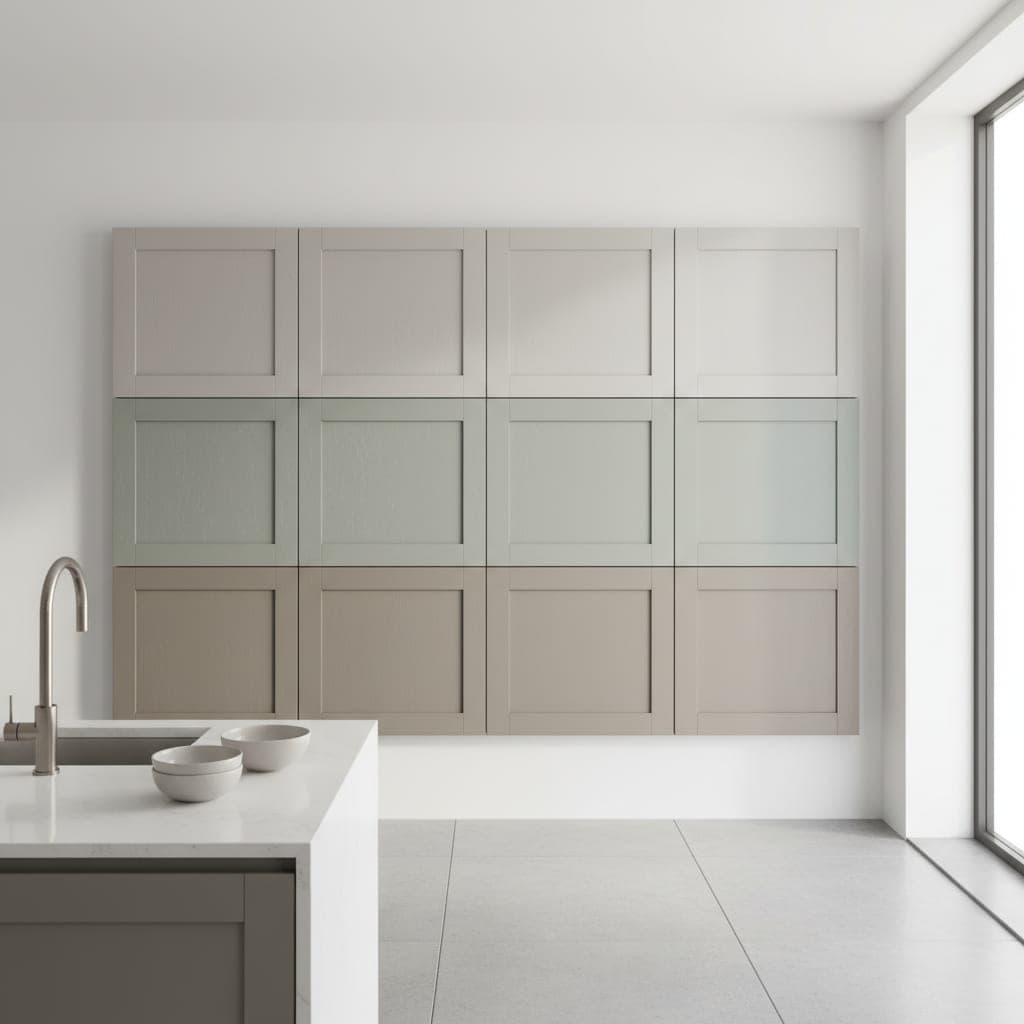
Best Cabinet Colors to Hide Fingerprints and Dust
After repainting our kitchen cabinets twice in three years first a choice that showed every fingerprint within hours, then a shade that didn't the daily maintenance difference between those two decisions was obvious. Here's what the real test revealed.