

10 Borax Cleaning Hacks That Actually Work
Borax gets treated as a product your grandmother used that has since been replaced by something better, which undersells what it actually does. It is an alkaline mineral salt that softens water, boosts detergent, and works as a mild abrasive, and that combination makes it genuinely excellent on toilet rings and baked-on oven door glass. It is also useless for a couple of jobs people swear by it for. Here are ten methods worth using, the exact amounts and dwell times, and the one surface it will pit.
Jump to a section
- What you'll need
- Step-by-step
- Mix an all purpose borax spray for daily surfaces
- Lift the brown toilet ring with an overnight soak
- Clear black mold from tile grout with a borax paste
- Boost your laundry and pull the gray out of dingy whites
- Kill the sour smell in a garbage disposal
- Pre treat carpet stains and pet accidents before deep cleaning
- Pro tips
- FAQ
What You'll Need
Step-by-Step Instructions
Mix an all purpose borax spray for daily surfaces
This is the one I make first because it feeds half the other hacks. Dissolve two tablespoons of borax in two cups of hot water straight from the kettle, then screw the lid on and shake until you cannot feel any grit at the bottom. Once it is fully clear, top it up with a cup of warm water so the bottle is not scalding to hold. That gives you a mild alkaline spray, around pH 9, that cuts soap scum, greasy fingerprints, and the sticky film that builds up on bin lids and light switches. The first batch I made, I got impatient and sprayed it while the powder was still half dissolved. Undissolved crystals settle in the nozzle and can leave a faint scratch haze on glossy tile, so let it dissolve completely. I use it on ceramic tile, sealed countertops, toilet exteriors, and the inside of the kitchen bin. Expect a light, almost soapy residue rather than a squeaky finish, so buff it off with a dry microfiber cloth after wiping. It has essentially no smell, which I came to prefer over fragranced sprays. The solution keeps its punch for roughly two weeks at room temperature before the borax starts dropping out of suspension. When you see a chalky layer resettling at the bottom that will not shake back in, tip it out and mix fresh. Add three or four drops of lemon oil if you want a scent, but it does not change how well it works.
Lift the brown toilet ring with an overnight soak
This was the result I still bring up when people are skeptical about borax. I had a brown mineral ring sitting right at the waterline for the better part of two years. I had scrubbed it, bleached it, and thrown three different commercial gel cleaners at it, and it always came back. What finally worked was almost embarrassingly simple. Before bed, sprinkle a full cup of borax powder into the bowl and use the toilet brush to push some of it up around the ring at the waterline so it clings to the stain rather than sinking straight to the bottom. Then walk away and leave it overnight, ideally eight hours. The alkaline powder sits against the limescale and bacterial film all night and softens the deposit that scrubbing alone just polishes. In the morning, give it thirty seconds with the brush and flush. Mine was gone in one pass. For a heavier ring, add a cup of plain white vinegar on top of the borax at night; it fizzes for a moment, then settles, and the acid works the mineral crust while the borax works the biofilm. One honest caveat: if your ring is actually iron staining from well water rather than limescale, one treatment may only lighten it, and you will need to repeat two or three nights running. It is safe on colored porcelain, which chlorine bleach is not, since bleach can yellow tinted bowls over time.
Clear black mold from tile grout with a borax paste
Grout is porous, so mold does not just sit on the surface, it grows down into the channels, which is why a quick spray never really fixes it. Mix one tablespoon of borax with just enough warm water to make a thin paste, about the texture of pancake batter. Load an old toothbrush and work it into the grout lines, scrubbing back and forth along the grain so the paste packs into the texture rather than skating over it. Leave it fifteen minutes and do not rinse yet. The high pH kills the mold and loosens the black staining bound into the grout. Scrub once more, then rinse with clean water and dry the area. For grout that has gone properly black in a shower, I do the extended version: apply the paste, press a strip of cling film over the grout line to stop it drying out, and leave it two hours. That contact time is what reaches the colony living inside the joint instead of just bleaching the top. The mistake I made early on was rinsing too soon because the paste looked messy; give it the full time. One real limitation to be honest about, borax lightens and kills mold but does not bleach out a permanent dark stain the way chlorine does, so if your grout is dyed by years of mildew, it will look far better but may not go bright white again. It does not eat the grout sealant, though, so regrowth is slower than after bleach.
Boost your laundry and pull the gray out of dingy whites
Borax started life as a laundry product, and this is the hack with the most consistent payoff. Toss half a cup into the drum, right on top of the clothes, along with your normal dose of detergent. It softens the wash water, and softer water lets detergent lather and grab onto soil properly instead of wasting itself fighting dissolved minerals. On gym clothes, kitchen towels, and my kids' grass stained stuff, the difference in how clean and how much less musty they come out is obvious. Half a cup is plenty; more does not clean better and just leaves residue. For whites that have drifted to that tired gray, do a pre soak instead. Dissolve one tablespoon of borax per liter of hot water in a bucket or the sink, submerge the whites, and leave them two hours before washing as usual. The soak lifts the body oil and mineral buildup that ordinary detergent leaves behind in the fibers, which is what reads as gray. I was skeptical this beat a normal hot wash, but old pillowcases came out visibly brighter. A caution: it is safe for cotton, linen, and standard synthetics in both top loaders and HE front loaders, but keep it off wool and silk, which want a pH neutral detergent, because the alkalinity roughens those protein fibers over time.
Kill the sour smell in a garbage disposal
That sour, faintly rotten smell from a kitchen sink usually is not coming from the drain, it is coming from food sludge caked on the underside of the rubber splash guard and the inside walls of the disposal, where running water never actually reaches. Confirm the disposal is switched off, ideally at the wall breaker so it cannot start, then pour three tablespoons of borax straight down into it. Do not run any water. Let it sit thirty minutes so the powder clings to those greasy interior surfaces and the bacteria producing the smell. Then run cold water and flip the disposal on for about thirty seconds. Follow that with a handful of ice cubes fed in with the water running; the ice ricochets around and knocks loose the gunk stuck to the grinding ring, and you will often hear it working. The reason I switched to borax here is that baking soda mostly masks the odor for a day, while borax actually kills what is causing it, so the smell stays gone. I do this once a week now and the sink no longer greets me in the morning. One note: flush thoroughly with cold water afterward so no borax lingers where it could contact food scraps, and never reach into the disposal even with it switched off, use tongs if something needs retrieving.
Pre treat carpet stains and pet accidents before deep cleaning
Borax works on carpet because it pulls moisture up and out of the pile as it dries, dragging dissolved stain compounds along with it. Sprinkle it generously over the stain, fresh or old, whether that is wine, food, or a pet accident. Pull on gloves and gently work the powder down into the fibers with your fingertips or a soft brush so it reaches the base of the pile, not just the surface tuft. Leave it thirty minutes to an hour, then vacuum it up completely; make sure you get all of it because a borax film left in carpet attracts dirt and can irritate bare feet and pets. If a faint shadow remains, blot, do not rub, with a cloth dampened in warm water. Where borax really earns its place is pet urine. The reason old urine keeps smelling is bacteria digesting it and releasing ammonia, and borax kills those bacteria rather than just soaking up the liquid the way baking soda does, so the smell does not creep back a week later. Two honest cautions. First, always test a hidden corner, because on wool carpet or certain dyes the alkalinity can lighten the color. Second, do not use it as a routine deodorizing sprinkle on carpet in homes with cats or crawling babies; reserve it for spot treatment and vacuum it fully every time.
Dissolve rust stains from porcelain and enamel
This is the trick that got me into borax in the first place. Rust stains, the orange streaks under a dripping tap, the ring around toilet bolts, the marks left by a wet steel can on an enamel sink, come from iron oxide, and you cannot scrub those off, you have to chemically break them down. Mix one tablespoon of borax with one tablespoon of lemon juice into a thick paste. The borax brings alkalinity and grit while the citric acid in the lemon actually grabs the iron and lifts it, a chelating reaction, and together they clear the stain without scratching the glaze underneath. Spread the paste right onto the rust, leave it thirty minutes, then scrub with a non scratch pad and rinse warm. For an old, set in rust ring that has been there years, do not just wait longer in the open air where the paste dries out and stops working; spread it on, press cling film over it to keep it moist, and give it two to three hours. That kept wet contact time is usually the difference between a stain that half fades and one that vanishes. Two applications clear almost anything one does not. Keep this to porcelain, enamel, and ceramic. Do not try it on a stainless or aluminum sink, and skip it entirely on natural stone, which the acid and the alkali will both etch.
Cut baked on grease off the inside of the oven door glass
The inside pane of an oven door collects a brown, greasy, baked on haze that normal spray cleaner just smears around. I had assumed for years this needed caustic oven cleaner and a lot of ventilation. It does not. Make a thick paste from three tablespoons of borax, one tablespoon of dish soap, and just enough warm water to spread. The borax provides the alkaline lift and the dish soap surfactants dissolve the grease, and together they handle carbonized splatter without fumes or a razor blade. Smear it liberally over the cool inside glass with a cloth and leave it twenty minutes. Then wipe away with a damp cloth and buff dry with a clean microfiber; you should get clear glass with no streaks. For a really heavy, years deep buildup, my trick is to apply the paste when the oven is still faintly warm from earlier cooking, not hot, just residual warmth you can comfortably touch, then shut the door for an hour. That gentle warmth speeds the grease breakdown noticeably. The one thing to get right: the oven must be off and no more than lukewarm. Never apply a water based paste to hot glass, because the thermal shock can crack the pane, and never let borax touch the heating element or gas ports. Wipe any drips off the door seal and metal frame so nothing bakes on next time you cook.
Clear hard water film off dishes as a dishwasher booster
If your glasses come out of the dishwasher with a cloudy film and your plates feel faintly gritty, you almost certainly have hard water overwhelming your detergent. This was true in my last apartment and I blamed the machine for months. Add two tablespoons of borax to the bottom of the dishwasher tub, right on the floor of the machine, in addition to your normal detergent in its dispenser, then run the cycle as usual. The borax softens the water at the start of the wash so the detergent is not spending itself neutralizing calcium and magnesium, which means more of it goes to actually cleaning. The cloudy film on glassware noticeably backs off after a couple of runs, and cutlery comes out with less spotting. It is safe for the machine itself and for everyday ceramic, glass, and stainless flatware. Two limits worth knowing. Do not put borax in the dishwasher with hand painted or gold rimmed china, delicate crystal, or anything aluminum, including some older pots and certain flatware, because the alkalinity dulls aluminum and can lift decorative overglaze. And this treats the symptom; if your water is very hard, borax in every load helps, but a rinse aid plus borax together works better than either alone. Skip it if your water is already soft, since you will just get a faint residue for no benefit.
Deodorize trash cans, diaper pails, and the mattress
Borax is at its best against smells that come from bacteria rather than from a single spill, which is exactly what makes kitchen bins, diaper pails, and mattresses stubborn. For a bin or pail, empty it, then scrub the inside with a cup of the all purpose spray from the first hack, paying attention to the bottom and the lid rim where liquid pools. Let it air dry, then, and this is the part people skip, dust a light layer of dry borax across the dry base and leave it there between liner changes. It keeps killing odor producing bacteria instead of just perfuming over them, and my kitchen bin stopped needing a scrub every few days. For a mattress that smells musty or has had an accident, make sure the surface is dry, sift a thin, even layer of borax over it, work it in gently with a soft brush, and leave it a full hour, longer if you can. Then vacuum it up thoroughly with the upholstery attachment; go over it two or three passes because you want every bit out of the fabric. The result is a genuinely fresher mattress without the damp chemical smell of a spray deodorizer. Important cautions: never leave borax powder sitting where a child, a pet, or a sleeping person will contact it, so vacuum mattresses completely and do not use the dusting trick on open bins in homes with toddlers or cats.
Pro Tips
- Always dissolve borax fully in hot water before you add cold water or spray it. Undissolved grit can leave a fine scratch haze on glossy tile and glass.
- For any grout or detail scrubbing, an old electric toothbrush on medium speed does the work with a fraction of the effort and does not leave your wrist aching.
- Keep a labeled borax spray bottle in the bathroom and use it as your weekly shower wipe down. Once grout is clean, that habit stops mold from re establishing so you never have to do the two hour paste again.
- Cling film is the quiet hero of borax cleaning. Anywhere you want a long dwell time (rust, black grout, a set in toilet ring), covering the paste to keep it wet is what turns a partial result into a complete one.
- Borax shines on dwell time jobs, not quick wipes. For a fast counter pass, reach for your regular spray; save the borax for the overnight and thirty minute tasks where its slow alkaline action actually pays off.
- Warm borax water is a great grime cutter for grilles and registers. When dust is baked onto the louvers, follow how to clean an AC vent the safe way so you do not push debris deeper into the ducts.
Frequently Asked Questions
Is borax the same thing as baking soda?
No, and they are not interchangeable for the tougher jobs. Borax is sodium tetraborate, a mineral salt with a high pH around 9. Baking soda is sodium bicarbonate with a gentler pH around 8.3. Borax is markedly more alkaline, which makes it far better at killing mold and odor causing bacteria and at boosting laundry, but it also needs gloves and more careful storage. For light, everyday deodorizing where you want something food safe, baking soda is the safer pick. For dwell time cleaning power, borax wins.
Is borax the same as boric acid?
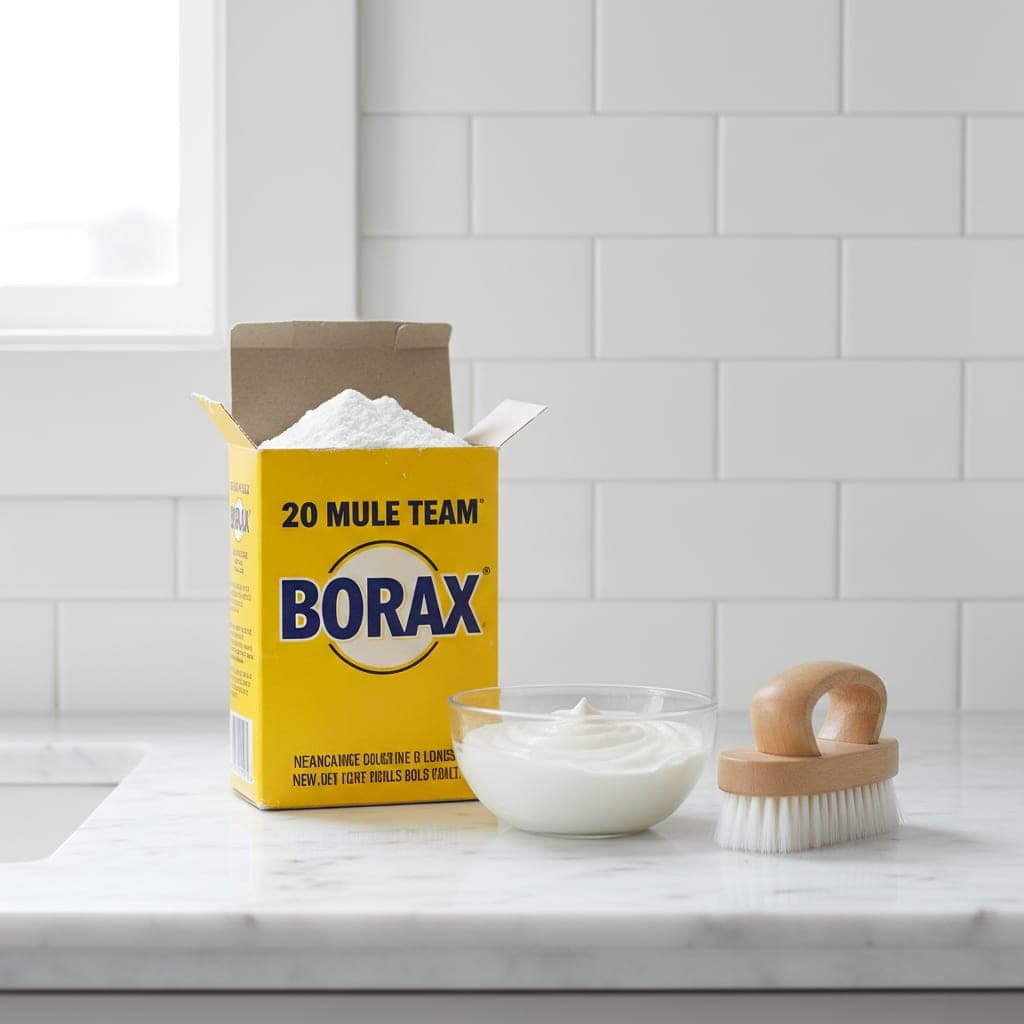
No, this is a common and important mix up. Borax is sodium tetraborate and is the laundry aisle cleaning product these hacks use. Boric acid is a different, more refined compound often sold as an insecticide and antiseptic. They are related chemically but are not the same product, are not equally safe, and should not be substituted for one another. When you shop, look specifically for a box labeled borax, such as 20 Mule Team, in the laundry section.
Is it safe to use borax in the washing machine, including HE front loaders?
Yes. Half a cup added to the drum with your normal detergent is safe for top loaders and for high efficiency front loaders. It softens the water and boosts your detergent, and half a cup is plenty; adding more does not clean better and can leave residue. The exceptions are wool and silk, which need a pH neutral detergent, because the alkalinity of borax roughens those protein fibers over repeated washes.
Can I leave borax on a surface overnight?
Yes, and overnight is actually where borax does its best work. Toilet mineral rings and set in grout mold respond far better to a long soak than to scrubbing. Just rinse thoroughly with water in the morning. The one rule: never leave it sitting on aluminum or natural stone, both of which are damaged by sustained alkaline contact, and never leave loose powder where a child or pet can reach it overnight.
What should I never use borax on?
Keep it off natural stone (marble, granite, limestone, travertine), because the alkaline pH etches the polished surface permanently. Keep it off aluminum, including some older pots, flatware, and sinks, because it pits and dulls the metal. Skip it on wool and silk fabrics, and avoid the acidic lemon and borax rust paste on any stone or metal that is not porcelain, enamel, or ceramic. On everything else in these hacks it is safe when rinsed off properly.
How long does a borax cleaning solution last once I mix it?
A dissolved borax spray stays effective for about two weeks at room temperature. After that the borax starts settling out and you will see a chalky layer at the bottom that will not shake back into solution, which is your cue to mix a fresh batch. Pastes are best made fresh each time you need them, since they dry out and stop working once the water evaporates, which is exactly why covering them with cling film for long jobs helps so much.
How this guide was made
This Deep Clean guide was researched, written, edited, and published by Fredler Pierre-Louis. The 10 steps below are built around Borax (20 Mule Team, from the laundry aisle), Warm to hot water and Empty spray bottle, and the quantities and dwell times come from published cleaning-chemistry and manufacturer guidance for those materials, not from a controlled trial we ran ourselves. Where a popular version of this hack does not work, or is risky on a particular surface, this 12 min guide says so.
- Checked against manufacturer and materials guidance for the surfaces named.
- Reviewed by a person for chemical safety and surface compatibility before publication.
- Written to explain why a method works, not just to list steps.
- Corrected whenever a reader reports an error or an edge case we missed.
Read our full editorial policy or learn more about the team behind TryCleaningHacks.
Related Cleaning Guides
Safety Notes
- Store borax in its original box, out of reach of children and pets, ideally in a high or locked cabinet. It is not acutely toxic in trace amounts, but it is not edible; a swallowed mouthful can cause nausea and vomiting and should be treated as a poison control call.
- Wear rubber gloves when handling the powder or a concentrated solution, and avoid breathing the fine dust. Prolonged skin contact dries and irritates skin, and any airborne powder irritates airways.
- Never use borax on natural stone (marble, granite, limestone, travertine) or on aluminum. The alkaline pH permanently etches polished stone and pits and dulls aluminum over time.
- Do not mix borax with chlorine bleach. It gives you no cleaning benefit and only adds needless chemical complexity, and you should never improvise chemical mixtures around bleach in general.
- Rinse any food contact surface thoroughly after using borax. A trace is harmless but tastes bitter enough to ruin food, and cutting boards or prep counters should be wiped clean and dried.
You might also like
7 Deep Cleaning Tricks That Save Hours Every Week
Most of the time spent cleaning a bathroom is spent waiting or backtracking, not scrubbing. Spraying one surface, waiting for it, wiping it, then starting the next one means you pay every dwell time separately. Batching those dwell times so every cleaner works at once is the single change that cuts the job roughly in half. None of this involves a gadget or a miracle spray, just the order you work in and where you stop wasting motion.
How to Deep Clean a Shower (10 Proven Methods)
I deep cleaned the same shower twice in one week once with my old routine and once with these ten methods applied in the right sequence. The difference wasn't even close. Here's what changed and the daily habit that eliminated most of my scrubbing for good.
30 Cleaning Myths You Need to Stop Believing
I believed most of these myths for years, and two of them left permanent marks on surfaces in my own house. This is the honest version of what I got wrong, why the popular advice fails, and the two safety myths that actually send people to the emergency room. I have kept the failures in here on purpose, because the mistakes taught me more than the wins did, and a myth is only dangerous while you still trust it.