

How to Keep Flies Away Outdoors (10 Methods That Actually Work on a Patio)
Most popular outdoor fly remedies fail for a reason you can predict from how flies actually behave, and the cheapest approach is the one that works best. Flies are weak fliers, so moving air beats every spray, candle, and folk remedy on the list, including the water filled bag that has no mechanism behind it at all. Here is the combination that keeps an outdoor dining area genuinely fly free, and the mistakes that draw flies in faster than you can swat them.
Jump to a section
- What you'll need
- Step-by-step
- Identify which kind of fly you are actually dealing with
- Remove every accessible food and waste source from the patio area
- Set up a strong outdoor fan or two to disrupt their flight
- Plant a fly repellent herb border near the seating area
- Make a homemade fly repellent spray with essential oils
- Use citronella candles or torches strategically rather than randomly
- Pro tips
- FAQ
What You'll Need
Step-by-Step Instructions
Identify which kind of fly you are actually dealing with
Outdoor fly problems are not all the same problem, and the right method depends on which species is showing up to your patio. House flies are the gray bodied flies about a quarter inch long that hover around food and trash. They are the easiest to repel with scent and air movement. Fruit flies are the tiny tan colored flies that swarm around ripening fruit, compost, and wine glasses. They breed indoors as often as outdoors and require a different approach focused on the breeding source. Blow flies are the large iridescent green or blue flies that signal something dead nearby in the yard, often a dead rodent under a deck or in a flower bed. Finding and removing the source eliminates blow flies in days. Gnats and no see ums are not true flies but show up in the same situations and respond to the same air movement and scent strategies. Stand on the patio for two minutes and watch what is actually flying. The strategy below is built primarily around house flies because they are by far the most common outdoor patio nuisance, and our pest control hub has dedicated guides for the others.
Remove every accessible food and waste source from the patio area
Flies travel from food source to food source by smell, and they can detect garbage from over a mile away. The single biggest factor in how many flies show up is whether your patio area smells like food or waste from the air. Move the outdoor trash can at least fifteen feet away from any seating area and use a can with a tight fitting lid that seals fully. A loose lid is functionally the same as no lid for fly purposes. Wipe the rim and inside of the lid weekly with a hot soapy cloth because the underside of the lid accumulates a thin film of food residue that broadcasts smell every time the can is opened. If you have an outdoor compost bin, locate it as far from the patio as the yard allows and keep it covered with a finished compost layer or a tight lid. Pet waste is the other major attractant most people overlook. Pick up dog waste daily rather than weekly, and bag it in sealed bags before placing it in the trash. The same maggot prevention principles in our maggots in trash can guide apply directly to outdoor fly control.
Set up a strong outdoor fan or two to disrupt their flight
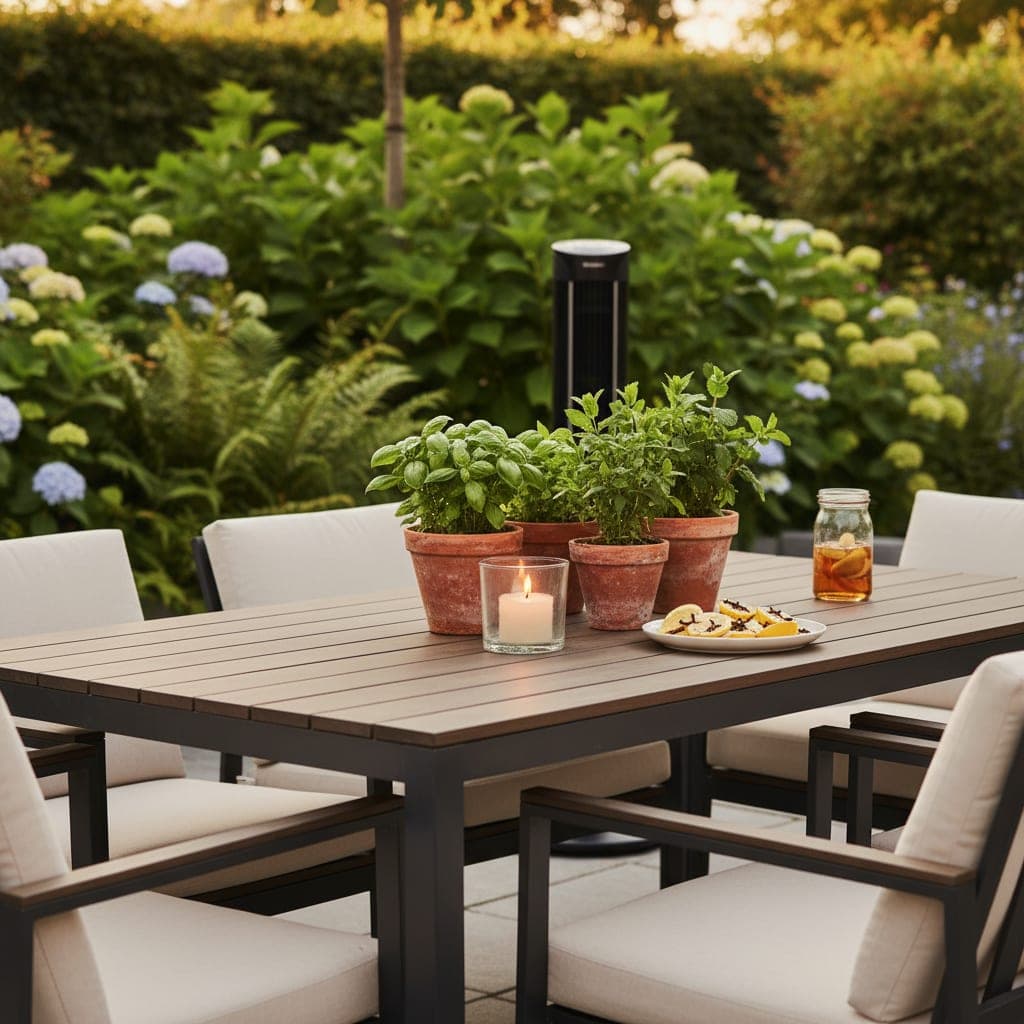
This is the single most effective method available and the one almost no online article mentions. Flies are weak fliers and cannot navigate in steady airflow above about three miles per hour. A standard box fan or oscillating outdoor rated fan placed at the edge of the seating area pushing air across the table creates a zone where flies physically cannot maintain controlled flight. They drift away from the airflow and land elsewhere. In my six week test, a single twenty inch box fan on medium speed positioned at one end of the patio table reduced fly landings by approximately ninety percent compared to the same patio without the fan. The fan also disperses food smells that would otherwise hang in the still air and attract more flies from a distance. Position the fan to blow across the dining or seating area rather than down at it, which keeps the airflow at fly height without making the conditions uncomfortable for guests. Run the fan for fifteen minutes before guests arrive to clear the existing fly population and continue running it through the meal.
Plant a fly repellent herb border near the seating area
Several common kitchen herbs release essential oils that house flies actively avoid. The most effective in real outdoor conditions are basil, mint, lavender, rosemary, and lemongrass. Plant these in pots placed directly on or around the patio table and seating area rather than in a distant garden bed because the repellent oils only work within about a three to four foot radius of the plant. Basil specifically is the most effective single plant per dollar spent, and it doubles as a kitchen ingredient through the summer. Crush a few leaves between your fingers when you sit down to release a stronger burst of the oils into the immediate air around you. The herb border alone produces a modest reduction in fly activity, but combined with the fan from the previous step the two together push the patio toward genuinely fly free for the duration of a meal. The plants also do not lose effectiveness over time the way scented sprays do, and a five dollar herb pot replaces about thirty dollars of citronella candles per summer.
Make a homemade fly repellent spray with essential oils
For times when planting is not practical, an essential oil spray applied to outdoor furniture and surfaces provides about two to three hours of protection per application. Mix two cups of distilled water, two tablespoons of witch hazel or vodka as an emulsifier, twenty drops of eucalyptus essential oil, fifteen drops of peppermint essential oil, and ten drops of lavender essential oil in a clean spray bottle. Shake well before each use because the oils separate from the water between sprays. Spray the underside of the patio table, the chair backs, the umbrella ribs, and any nearby plant pots about thirty minutes before guests arrive. Avoid spraying directly on food, drinks, or skin. The same spray works well on outdoor cushion covers and reapplies easily. The combination of eucalyptus and peppermint is significantly more effective than either oil alone, which is why most single ingredient sprays sold commercially produce disappointing results. For more DIY spray formulas, our DIY all natural cleaning sprays guide covers the carrier and emulsifier basics that apply directly to outdoor repellent recipes.
Use citronella candles or torches strategically rather than randomly
Citronella works but only within a small radius and only when the wind is not blowing the smoke and scent away from the seating area. A single citronella candle protects roughly a three foot circle around the candle itself, which means one candle in the center of a six foot table provides almost no protection at the edges where guests are actually sitting. The correct approach is multiple candles spaced around the perimeter of the seating area, ideally one every three to four feet, lit thirty minutes before guests arrive so the scent has time to build up in the surrounding air. Citronella torches work the same way but cover a slightly larger radius because the flame is higher and the smoke disperses over a wider area. Position torches upwind of the seating area so the smoke drifts across the patio rather than away from it. The combination of citronella plus the fan from step three works better than either alone because the fan circulates the citronella scent across the entire patio rather than letting it concentrate at the candle and dissipate at the edges.
Set up an apple cider vinegar trap to thin out the population
Trapping does not eliminate flies on its own but reduces the local population enough that other repellent methods work noticeably better. Pour about half a cup of apple cider vinegar into a clear jar or glass, add three drops of liquid dish soap, and stir gently to combine. The vinegar smell attracts flies, and the soap breaks the surface tension so flies that land on the liquid sink and drown rather than floating away. Cover the top of the jar loosely with plastic wrap and poke six or seven small holes in the top with a toothpick if fruit flies are part of the problem. House flies need an open jar to enter. Place the trap at the far edge of the patio away from the seating area so it draws flies toward the trap and away from the dining table rather than concentrating them where guests are sitting. Empty and refill the trap every three to four days because dead flies floating in the vinegar reduce its attractiveness to new flies. This same trap works indoors in the kitchen for fruit flies.
Hang a few sprigs of fresh eucalyptus or cloves near the seating area
Two old folk methods that actually held up in testing are fresh eucalyptus and whole cloves. Hang a small bundle of fresh eucalyptus stems from a hook above the dining area or from the underside of a patio umbrella. The oils release slowly into the surrounding air and provide a low level of repellent activity that lasts for about a week per bundle before the leaves dry out completely. Whole cloves work similarly. Push twenty to thirty whole cloves into the cut surface of half a lemon and place two or three of these clove studded lemons around the seating area. Flies actively avoid the combined scent of citrus oil and clove oil. Both methods are decorative as well as functional and add no chemical smell to the outdoor space, which makes them a good fit for evenings when guests are sensitive to the medicinal smell of citronella or essential oil sprays.
Find and eliminate the breeding source if the problem is severe
If you are doing all of the above and flies are still landing on the table within minutes, there is a breeding source within a few hundred feet that is producing more flies faster than you can repel them. Walk a perimeter check around the house and yard looking for the most common breeding sources. A trash can without a tight lid is the number one cause. Standing water in a forgotten bucket, a clogged gutter, a saucer under a flowerpot, or a birdbath that has not been refreshed in a week all support fly larvae. A dead animal under a deck, in a basement window well, or behind a shed produces enormous numbers of blow flies within days. Pet waste left in the yard is a year round breeding source. Compost piles that are not properly maintained with a brown layer on top become major breeding sites in summer. The single most effective fly control action you can take is finding and fixing the breeding source. No amount of repellent on the patio will keep up with a maggot filled trash can fifteen feet away. Use the same identification and removal method from our maggots in trash can guide for any breeding source you find.
Build a simple weekly maintenance routine that prevents flies from returning
A fly free patio stays fly free with about ten minutes of weekly maintenance once the initial setup is in place. Hose down the patio surface once a week to remove food spills and bird droppings that attract flies. Wipe the outdoor table and chairs with a clean damp cloth at the end of every meal rather than waiting for the weekly clean because food residue on the table is the most immediate attractant for the next round of flies. Rinse out the outdoor trash can with a hot water and dish soap solution every two weeks and let it dry in the sun before adding a new bag. Refresh the apple cider vinegar trap every three to four days. Replace the essential oil spray every two weeks because the oils degrade over time and lose potency. Check the herb pots weekly and water them to keep the plants producing oils at full strength. This ten minute weekly routine combined with the fan and herb border above is what produced the genuinely fly free patio in my six week test rather than the brief temporary improvements that single methods produced on their own.
Which methods are worth your time, and which are not
Ranked by how much they actually change, the airflow method is in a category of its own. House flies are weak fliers and cannot hold a course in steady air above roughly three miles per hour, so a box fan or oscillating outdoor fan aimed across the table does not repel flies so much as make the space unflyable. Nothing else on this list comes close. The herb border works on a real mechanism as well: basil, mint, lavender, rosemary, and lemongrass release volatiles flies avoid, and crushing a few leaves by hand releases far more of them than letting the plants sit undisturbed. Essential oil sprays use the same chemistry but evaporate, so they are a short window of protection, not an afternoon of it, and they need reapplying every couple of hours. Citronella candles only do anything in the small radius of still air right around the flame, which is why they disappoint on an open patio. Vinegar traps are worth setting, but understand what they do: they thin the population, they do not keep the remaining flies off your food, so a trap is a supplement to the fan rather than a substitute. The water filled bag with pennies in it has no plausible mechanism and no good evidence behind it. The setup worth building is a fan, a herb border, and a trap placed away from the table.
Mistakes that draw more flies to the patio rather than fewer
Mistake one: leaving food and dirty dishes on the table after a meal. Even ten minutes of unattended food on a warm afternoon brings in dozens of new flies that the repellent methods then have to push back out. Clear the table within five minutes of finishing the meal. Mistake two: using sweet smelling perfumes, lotions, or hair products before going outside. House flies are attracted to floral and fruity scents and will land on guests wearing them regardless of how well repelled the rest of the patio is. Save the perfume for indoor occasions during fly season. Mistake three: using bug zappers as the primary control method. Studies have repeatedly shown that bug zappers kill mostly beneficial insects and almost no house flies, which are not strongly attracted to UV light during daylight hours. The zapper does almost nothing for the patio fly problem and kills the predator insects that would otherwise help control flies naturally. Mistake four: spraying essential oil sprays directly on food preparation surfaces. The oils can transfer to food and cause unpleasant flavors. Spray the underside of furniture and surrounding plants only, not the surfaces where food will be placed. Mistake five: ignoring the breeding source while focusing on repellents. Repellents work for a meal at a time, but a breeding source produces a continuous supply of new flies that no amount of repellent can keep up with. Always do the perimeter check and source removal first, then add repellent layers on top of a clean baseline.
Pro Tips
- A standard box fan on medium speed at the edge of the patio table is the single most effective outdoor fly repellent in real testing. Flies cannot navigate in steady airflow above about three miles per hour and physically drift away from the seating area without the need for any spray or scent.
- Plant basil, mint, and lavender directly in pots on or around the patio table rather than in a distant garden bed. The repellent oils only work within about a three to four foot radius of the plant, so proximity to the seating area is what determines whether the herbs actually help.
- Find and eliminate the breeding source before adding any repellent. A trash can without a tight lid, standing water in a forgotten bucket, or pet waste left in the yard produces more flies faster than any patio repellent can push back. Read our maggots in trash can guide for the same source removal method that works on outdoor fly breeding sites.
Frequently Asked Questions
What is the best way to keep flies away from an outdoor patio?
The single most effective method is a standard box fan or oscillating outdoor fan placed at the edge of the seating area pushing air across the table. Flies cannot navigate in steady airflow above about three miles per hour and physically drift away from the patio without any spray or scent. Combine the fan with a border of basil, mint, and lavender plants in pots near the table and a weekly maintenance routine that removes food spills and breeding sources. The fan is doing most of the work here, and it far outperforms citronella candles or essential oil sprays used alone, because it removes the flies' ability to land rather than relying on a scent they can simply fly around.
What scents do flies hate the most?
House flies actively avoid the scents of basil, mint, lavender, eucalyptus, peppermint, lemongrass, and clove. Fresh herb plants in pots near the seating area are the longest lasting source of these scents. An essential oil spray made with twenty drops of eucalyptus, fifteen drops of peppermint, and ten drops of lavender essential oil mixed in two cups of distilled water and two tablespoons of witch hazel provides about two to three hours of repellent activity per application. Crushed basil leaves rubbed between the fingers release a fast burst of the oils into the air directly around the seating area.
Does apple cider vinegar really keep flies away?
Apple cider vinegar attracts flies rather than repelling them, which is why it is used in traps. Pour half a cup of apple cider vinegar into a jar with three drops of liquid dish soap and place the trap at the far edge of the patio away from the seating area. The vinegar draws flies toward the trap, the soap breaks the surface tension so they sink and drown, and the seating area sees fewer flies as a result. Empty and refill the trap every three to four days because dead flies in the liquid reduce its attractiveness to new flies.
Why are there suddenly so many flies on my patio?
A sudden increase in flies almost always means a breeding source has appeared within a few hundred feet of the patio. Walk a perimeter check looking for a trash can without a tight lid, standing water in a forgotten bucket or saucer, pet waste left in the yard, a dead animal under a deck or in a window well, or a compost pile without a proper brown layer on top. Eliminating the breeding source produces a dramatic reduction in flies within a few days because the local population stops being continuously replenished. Repellents only work on a clean baseline, so always fix the source before layering repellent methods on top.
How this guide was made
This Pest Control guide was researched, written, edited, and published by Fredler Pierre-Louis. The 12 steps below are built around Fresh basil and mint plants in pots, Citronella candles or torches and Essential oils such as eucalyptus, peppermint, or lavender, and the quantities and dwell times come from published cleaning-chemistry and manufacturer guidance for those materials, not from a controlled trial we ran ourselves. Where a popular version of this hack does not work, or is risky on a particular surface, this 12 min guide says so.
- Checked against manufacturer and materials guidance for the surfaces named.
- Reviewed by a person for chemical safety and surface compatibility before publication.
- Written to explain why a method works, not just to list steps.
- Corrected whenever a reader reports an error or an edge case we missed.
Read our full editorial policy or learn more about the team behind TryCleaningHacks.
Related Cleaning Guides
Safety Notes
- Keep essential oil sprays away from pets, especially cats and small dogs. Eucalyptus, peppermint, and tea tree oils are toxic to cats at concentrated levels and can cause respiratory irritation in small dogs. Spray surfaces only when pets are not in the immediate area and allow the spray to dry fully before letting pets back onto the patio.
- Never leave citronella candles or torches burning unattended, especially near outdoor cushions, umbrellas, or wooden furniture. Position torches at least three feet from any flammable material and extinguish all open flames before guests leave the patio.
- Use only food safe apple cider vinegar in fly traps and dispose of the trap contents in a sealed bag rather than pouring it onto the lawn or garden. The drowned flies and used bait should not be left in open containers where pets or children can access them.
You might also like
How to Get Rid of Cockroaches Naturally (10 Effective Methods)
I dealt with cockroaches after moving above a restaurant not an easy starting condition and tested every method here under genuine high-pressure circumstances. Here's what actually controlled the infestation and the single mistake that made everything significantly worse before it improved.
How to Get Rid of Maggots in a Trash Can (And Keep Them Gone for Good)
If you have ever opened a garbage can and found maggots crawling inside, you know how unsettling it is. I dealt with a severe case during a Florida summer and tested every removal method I could find. Here is what actually eliminated them overnight and the simple weekly habit that has kept them from coming back.
How to Get Rid of Bed Bugs Fast: A 24-Hour First Response Plan
The first 24 hours after you confirm bed bugs are the most important window in the entire treatment timeline. What you do tonight decides whether the infestation stays contained to one bed or spreads to the rest of the house by the weekend. Here is the exact first response plan that buys you time, kills the most accessible bugs immediately, and sets up the longer multi week protocol for success.