

10 DIY All-Natural Cleaning Sprays You Can Make at Home
Homemade cleaning sprays range from genuinely better than the commercial equivalent to actively counterproductive, and the difference comes down to chemistry rather than effort. Here are the recipes worth making from pantry staples, the exact ratios, which ones out-perform the bottle they replace, and the popular formula that cancels itself out in the mixing bowl.
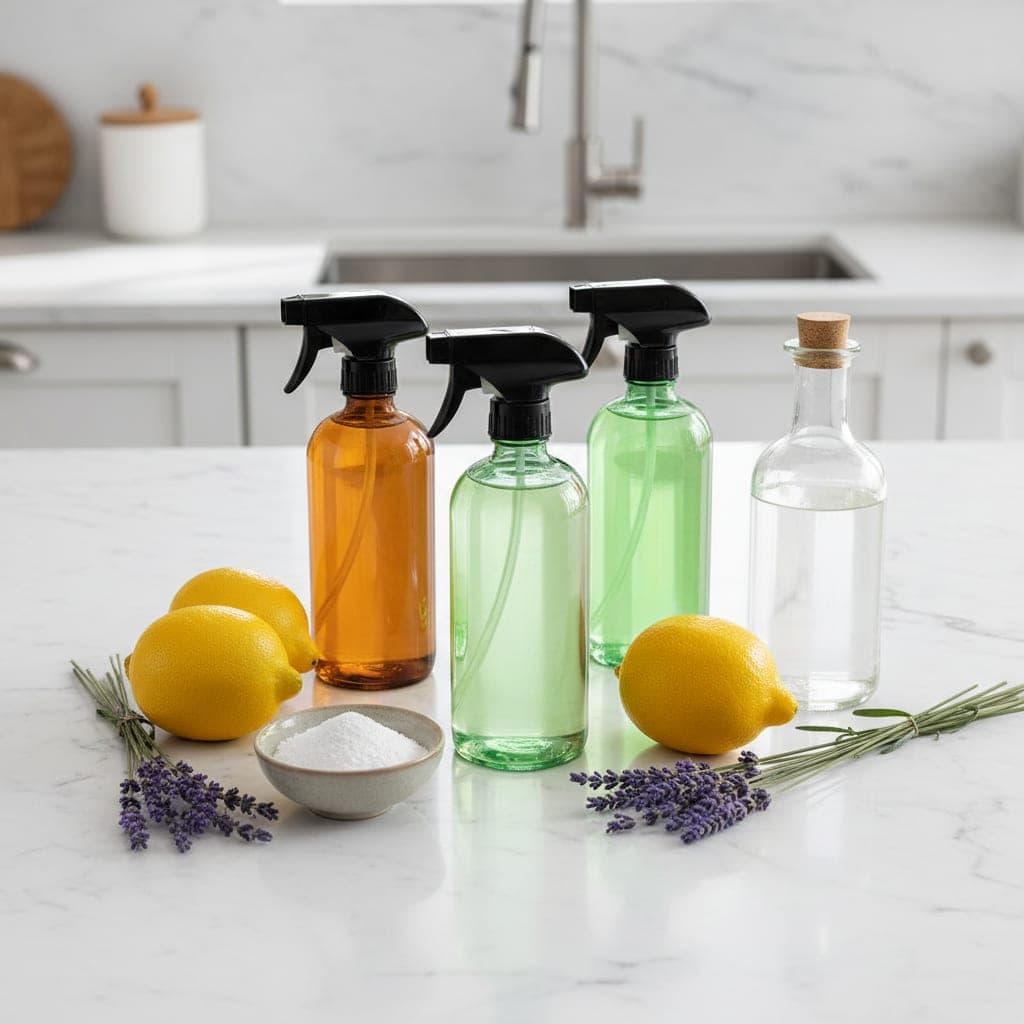
Jump to a section
- What you'll need
- Step-by-step
- All purpose vinegar and lemon spray for everyday surfaces
- Streak free glass and mirror spray
- Warm water castile soap kitchen degreaser
- Tea tree everyday sanitizing surface spray
- Lemon and salt scrub for sinks, faucets, and tubs
- Baking soda soft scrub paste for baked on grime
- Pro tips
- FAQ
Which method to use
| Method | Effort | Best for | Where it falls short |
|---|---|---|---|
| Vinegar and lemon all purpose | 2 minutes to mix | Sealed counters, glass, chrome, ceramic tile | Acidic, so it etches natural stone, marble, and unsealed grout. Never use it on those. |
| Alcohol and water glass spray | 2 minutes to mix | Mirrors, windows, shower glass | Needs distilled water. Tap water leaves the mineral spots you are trying to remove. |
| Castile soap degreaser | 3 minutes, warm water | Range hoods, cabinet fronts, greasy backsplash | Never mix castile soap with vinegar. The acid breaks the soap back into oils and leaves a white curd. |
| Tea tree sanitizing spray | 2 minutes to mix | Bins, high touch surfaces, damp corners | Not an EPA registered disinfectant. Use it for everyday cleaning, not where real disinfection matters. |
| Lemon and salt scrub | 1 minute, use immediately | Sink basins, faucet bases, hard water film | Does not keep. Mix it per use, and keep it off stone and off anything with a soft finish. |
| Baking soda soft scrub | 3 minutes to mix | Baked on grime, stainless sinks, enamel | Mildly abrasive. It will dull acrylic tubs and polished surfaces over repeated use. |
What You'll Need
Step-by-Step Instructions
All purpose vinegar and lemon spray for everyday surfaces
This is the bottle I reach for most, so it earns the first spot. Combine one cup of distilled water, one cup of white vinegar, and 15 drops of lemon essential oil in a 16 ounce glass bottle, then give it a gentle shake before every use because the oil floats to the top. I use it on sealed countertops, appliance fronts, the stovetop, bathroom sinks, and tile backsplashes. The acetic acid in vinegar dissolves light grease and the hard water film that dulls chrome, while the lemon oil covers the pickle smell that puts people off vinegar in the first place. A batch costs me under fifty cents. The first time I tried it I made the classic mistake of using straight vinegar with no dilution, which left everything smelling like a salad for an hour and did nothing extra for cleaning. Half and half with water is the sweet spot. The one hard rule: keep this away from natural stone. Vinegar etches marble, granite, travertine, and any polished limestone, and the damage is permanent and dull looking. On stone, swap the vinegar for one teaspoon of castile soap in the same water base. Spray, wait about thirty seconds on dried on spots, then wipe with a damp microfiber cloth. Expect a streak free surface with no sticky residue. If you see faint white haze on dark counters, you used too much and a plain water wipe clears it.
Streak free glass and mirror spray
Store glass cleaners always left me chasing streaks in raking sunlight, so this was the recipe I most wanted to beat, and it does. Mix one cup of distilled water, one cup of white vinegar, and one tablespoon of rubbing alcohol in a glass bottle. The alcohol is the secret. It speeds evaporation so the liquid cannot sit long enough to dry into streaks. Here is the part most tutorials skip: do not spray directly onto the glass. Mist a lint free microfiber cloth instead, then wipe the glass in a top to bottom motion, and immediately buff with the dry side of a second cloth. Spraying the pane itself is what creates those runny edges and corner pooling everyone complains about. Distilled water matters more here than anywhere else, because the minerals in tap water are exactly what dry into the spots you are trying to avoid. I learned that after a frustrating morning cleaning a patio door three times over before I swapped my water. This works on mirrors, windows, glass tabletops, and framed art, though I keep it off electronic screens since alcohol can strip anti glare coatings over time. A 16 ounce bottle lasts me three to four weeks. Do not use it on a hot sunny window at midday, because it flashes off before you can wipe and leaves a film. Wait for shade or an overcast morning and the finish is genuinely better than the blue commercial stuff.
Warm water castile soap kitchen degreaser
This one surprised me more than any other, so I make it in a bigger batch than the rest. Add two tablespoons of liquid castile soap and 10 drops of orange essential oil to two cups of warm water, then swirl rather than shake so you do not whip up a bottle full of foam. Warm water is not optional. The first time I used cold tap water the soap sat in ropey strings and would not disperse. Warm dissolves it into a smooth solution in seconds. Castile soap is a true soap that emulsifies cooking grease, meaning it surrounds the oil and lifts it instead of just smearing it around, and the orange oil adds real cutting power because citrus terpenes dissolve fats. Spray it on greasy stovetops, the range hood, cabinet fronts near the burners, and the microwave interior. Let it sit two to three minutes so it can break the bond between the grease and the surface, then wipe with a damp cloth. It is safe on stainless steel, laminate, painted cabinets, and sealed stone. For baked on splatter, hit it a second time and lay a warm damp cloth over the spot for five minutes to steam it loose. My honest doubt going in was whether a homemade spray could touch a year of stovetop buildup. It beat the branded degreaser I had bought for years, side by side, same grease ring, same afternoon.
Tea tree everyday sanitizing surface spray
I want to be careful and accurate here, so I call this a sanitizing spray for high touch spots rather than a hospital grade disinfectant, because a homemade essential oil blend does not carry an EPA kill claim and I will not pretend otherwise. Combine two cups of distilled water, two tablespoons of white vinegar, and 20 drops of tea tree essential oil in a glass bottle. Tea tree oil has real antimicrobial activity, and it needs genuine contact time to do anything, which is where almost everyone goes wrong. Spraying and instantly wiping accomplishes very little. Mist doorknobs, light switch plates, cabinet pulls, the bathroom vanity, and trash can lids, then let it stay visibly wet for at least ten minutes before wiping dry. If it evaporates before ten minutes, spray again to keep the surface wet the whole time. The tea tree smell is medicinal and strong for the first minute, then fades to nearly nothing, which I actually prefer to lingering fake pine. A couple of cautions from experience: never let this pool on unsealed wood, and keep it well away from cats, since tea tree oil is toxic to them even in small amounts. During cold season I wipe down switches and handles with this every evening, and it has become the one routine I never skip.
Lemon and salt scrub for sinks, faucets, and tubs
Not every cleaner needs a bottle, and this two ingredient scrub replaced three products for me. Cut a fresh lemon in half and press the cut face into a small dish of coarse kosher or sea salt so the crystals stick. Then use the lemon half itself as your scrubbing pad, working it in tight circles across the sink basin, around the faucet base, and over the drain rim. The citric acid dissolves hard water crust and soap scum while the salt gives just enough grit to lift stains without scratching porcelain, stainless steel, or enamel. Squeeze gently as you go to keep the juice flowing. Rinse with warm water and, this is the step people forget, dry the surface with a towel afterward, because leaving it wet lets fresh water spots form right back where you started. It leaves a clean citrus smell that actually lingers for hours instead of the chemical nose burn of scouring powder. One caution: keep it off natural stone and anything with a delicate finish, since the acid plus abrasion combination is too aggressive there. I keep lemons that are past their best for cooking in a bag in the fridge specifically for this, and a slightly dried out lemon scrubs just as well as a fresh one. For a stubborn faucet base I let the juiced lemon rest on the crust for a couple of minutes first.
Baking soda soft scrub paste for baked on grime
When a spray is not enough and I need cling and grit, I mix a soft scrub paste. Stir half a cup of baking soda together with about two tablespoons of liquid castile soap until it looks like thick cake frosting, then add five drops of lemon or tea tree oil. The texture matters. Too runny and it slides off vertical surfaces, too dry and it drags, so add the soap a little at a time until it holds a peak but still spreads. Apply it with a damp sponge onto the oven door glass, tub rings, tile grout, and cooked on stovetop rings. Let it sit for ten minutes so the alkalinity can soften the grime, then scrub in small circles and rinse with warm water. The baking soda is a gentle abrasive that will not scratch glass or enamel, while the castile soap emulsifies the loosened grease so it rinses away instead of smearing. My early mistake was mixing a huge jar of it in advance, and it dried into a hard brick within a couple of days. It does not store well, so make only what you need for the job in front of you. On a truly filthy oven door I spread it thick, walked away for the length of a coffee, and the black film wiped off with almost no elbow grease. Keep it off polished stone and brushed finishes where any abrasive can dull the surface.
Lavender linen and room refresh spray
This is the recipe I have to be honest about, because it is genuinely useful but it is also the one that let me down against the store versions. Fill a glass bottle with one cup of distilled water, two tablespoons of rubbing alcohol, and 20 drops of lavender essential oil, and shake well right before misting. The alcohol does two jobs. It helps the oil disperse into the water instead of floating, and it flashes off fast so you do not leave damp spots on fabric. Mist it lightly over curtains, throw pillows, made beds, and inside closets, holding the bottle a good arm's length away so you get a fine cloud rather than wet dots. Use glass, because citrus and other oils slowly cloud and weaken thin plastic bottles over a few weeks. Here is the letdown: the scent fades much faster than commercial room sprays, which use fixatives and binding agents to make fragrance hang around. Mine smells lovely for maybe twenty minutes, then it is gone. For a quick refresh before guests arrive or a light spritz on a pillow at night, that is honestly fine and it is completely free of synthetic propellants. But if you want a scent that fills a room for hours, this will disappoint you, and I would rather tell you that up front. Always spot test on any fabric first, since alcohol can affect certain dyes and delicate weaves.
Olive oil and lemon wood conditioner
Wood needs conditioning, not the same acidic sprays you use on tile, so this gets its own recipe. Mix three quarters cup of olive oil with one quarter cup of fresh lemon juice in a small glass bottle and shake hard right before use, because oil and juice separate fast. The critical rule is to spray onto a soft cotton cloth, never onto the wood itself, then wipe along the direction of the grain. The oil feeds and protects wood that has dried out, giving tired furniture a warm low sheen, while the small amount of lemon juice cuts the dull film of old dust and fingerprints. Use it sparingly. My first attempt used way too much and left a tacky surface that grabbed dust for a week until I buffed it all back off with a dry cloth. A little goes a surprisingly long way, and you want a thin even film, not a wet coat. It works on sealed and oiled hardwoods like teak, walnut, and cherry, and on wooden shelving and trim. Two honest warnings. Avoid it on high gloss lacquered or painted surfaces where it can look smeary, and never leave an oily cloth crumpled in a warm pile, because oil soaked rags can genuinely combust. Lay the cloth flat to dry or rinse it before laundering. Because it contains fresh juice with no preservative, I keep the bottle in the fridge and mix small amounts.
Baking soda carpet and upholstery deodorizer
Odor problems live in carpet and cushions, and this powder tackles them at the source instead of spraying perfume over the top. Combine one cup of baking soda with 15 drops of essential oil in a jar, then stir well to break up any clumps of scented powder. Lavender, eucalyptus, and peppermint all work, and you can blend two for a custom scent. Poke holes in the jar lid, or reuse an old spice shaker, so you can sprinkle it evenly. Dust it generously over carpets, area rugs, and upholstered seat cushions. Now the part people rush: it needs time. Fifteen minutes will freshen a mild smell, but set in pet or cooking odors need a couple of hours, and overnight is ideal, because baking soda works by chemically neutralizing the acidic molecules that cause the stink rather than covering them. That slow absorption is why the result outlasts an aerosol carpet spray. Vacuum it up with slow overlapping passes, and empty the canister or check the bag afterward, since a lungful of fine powder clogs a filter fast. Skip this if you own a robot vacuum you leave running unattended, because I gummed up mine by letting it grind through a heavy layer. On a rug where my dog had an accident, a thick sprinkle left overnight pulled the lingering smell out completely when nothing sprayed on top had touched it.
Baking soda and vinegar drain refresh
I saved the drain for last because it is maintenance, not daily cleaning, and it keeps the other sink work smelling right. Pour half a cup of baking soda straight down the drain, then follow it with half a cup of white vinegar and immediately cover the opening with a small plate or a wet cloth. Covering it forces the fizzing reaction down into the pipe instead of foaming up and out into the sink, which is the whole point and the step most people miss. Let the reaction work for about fifteen minutes. The bubbling agitation helps loosen the greasy, gunky film that coats the inside of the pipe and holds odor. Then flush it with a full kettle of freshly boiled water to rinse the loosened debris away, and if you like, drop three to five drops of peppermint oil in afterward for a clean finish. Be clear eyed about what this does. It is a freshener and a preventive rinse, not a clog buster. It will not dissolve a solid hair or grease blockage, and if your drain is already fully stopped this will just sit there. I run it monthly in the kitchen and bathroom sinks as upkeep, and since I started, the sour drain smell that used to creep back every few weeks has stayed gone. It is safe for septic systems and every common pipe material, unlike caustic chemical drain openers that can eat away at older pipes.
What it costs
| All purpose vinegar and lemon spray16 oz batch, using bulk white vinegar and 15 drops of lemon oil | $0.38 |
|---|---|
| Name brand all purpose cleanertypical 28 oz trigger bottle | $4.29 |
| Streak free glass and mirror spray16 oz batch, 91% isopropyl and distilled water | $0.61 |
| Name brand glass cleanertypical 26 oz bottle | $3.79 |
| Castile soap kitchen degreaser16 oz batch, 2 tbsp castile soap | $0.72 |
| Name brand kitchen degreasertypical 22 oz bottle | $4.99 |
| Baking soda soft scrub pasteroughly one cup of paste | $0.21 |
| Name brand soft scrubtypical 24 oz bottle | $4.49 |
| Starter kit: 4 glass bottlesone time, reusable indefinitely | $14.00 |
Prices are approximate US retail and will vary by store and region.
Pro Tips
- Buy distilled water by the gallon for a dollar and use it in every water based recipe. The mineral spots and short shelf life people blame on DIY sprays almost always come from tap water.
- Label each bottle with the recipe name and the date you mixed it. Three weeks later you will not remember which one is safe on stone, and the make date tells you when to toss it.
- Mist a microfiber cloth instead of the surface for glass, wood, and delicate finishes. Spraying the surface directly is what causes runs, pooling, and streaks.
- Make small batches every three to four weeks. Water based sprays with no preservative can grow bacteria, castile soap separates, and essential oil scent fades, so a fresh half bottle beats a full stale one.
- Resist adding extra essential oil. More does not clean better, it just makes the blend more irritating to skin and lungs, so stick to the drop counts given.
Frequently Asked Questions
Do these homemade sprays really clean as well as store bought?
For everyday jobs like counters, glass, grease, sinks, and odors, the well made ones hold up against the commercial equivalent, and the castile soap degreaser is genuinely better than most bottled kitchen sprays. They rely on the same working ingredients, vinegar, baking soda, castile soap, and alcohol, without the added dyes and fixatives. The honest exception is the room and linen spray, where the scent fades much faster than commercial products that use binding agents.
How long do the sprays last before I should remake them?
Plan on three to four weeks for water based sprays stored in a cool, dark spot. After that the essential oil scent fades, castile soap can separate, and because there is no preservative, bacteria can start growing in the water. The oil based wood polish contains fresh lemon juice, so keep that one in the fridge and mix only small amounts at a time. Writing the date on the bottle takes the guesswork out.
Can I use tap water instead of distilled?
You can, but you will likely see mineral spots on glass and chrome, and the spray will spoil faster because tap water carries minerals and microbes. If distilled is not available, use the spray within one to two weeks and expect to buff glass a little harder. For the glass and mirror recipe specifically, distilled water makes the biggest visible difference, so it is worth the dollar.
Which essential oils are actually worth buying for cleaning?
If you buy just a few, get tea tree for its antimicrobial punch on high touch surfaces, and lemon or orange for degreasing since citrus terpenes cut through fats. Lavender is nice for the linen spray, and peppermint is good for drains and carpet powder. You do not need a large collection. Four small bottles cover every recipe here, and the scent is a bonus rather than the thing doing the cleaning.
Are these natural cleaners safe around pets?
The plain vinegar and baking soda recipes are generally fine once they have dried. The real concern is essential oils. Tea tree, peppermint, eucalyptus, and citrus oils can be toxic to cats and some dogs even in small amounts, whether licked or inhaled. If you have pets, either leave the oils out or research each one for your specific animals first, and keep freshly sprayed surfaces off limits until they are dry.
Will the vinegar smell linger in my house?
It fades fast. Wet vinegar smells sharp for a minute or two, then disappears completely as it dries, and it does not build up over time. The lemon or orange oil in the recipes covers most of it while you work. If the smell bothers you, wipe the surface with a damp cloth after cleaning, which clears any residue and speeds up the fade. I was skeptical about this until I lived with it, and now I do not notice it at all.
How this guide was made
This DIY Cleaners guide was researched, written, edited, and published by Fredler Pierre-Louis. The 10 steps below are built around Glass spray bottles (16 ounce, at least four), White vinegar and Distilled water, and the quantities and dwell times come from published cleaning-chemistry and manufacturer guidance for those materials, not from a controlled trial we ran ourselves. Where a popular version of this hack does not work, or is risky on a particular surface, this 10 min guide says so.
- Checked against manufacturer and materials guidance for the surfaces named.
- Reviewed by a person for chemical safety and surface compatibility before publication.
- Written to explain why a method works, not just to list steps.
- Corrected whenever a reader reports an error or an edge case we missed.
Read our full editorial policy or learn more about the team behind TryCleaningHacks.
Related Cleaning Guides
Safety Notes
- Never mix vinegar with bleach, ammonia, or hydrogen peroxide. The combinations release toxic gases. Keep your vinegar sprays completely separate from any store bought product containing those ingredients.
- Keep tea tree, peppermint, eucalyptus, and citrus oils away from cats, and be cautious with dogs. These oils can be toxic to pets even in small amounts, so research each oil for your specific animals before use.
- Never use vinegar or the lemon salt scrub on marble, granite, travertine, or other natural stone. The acid etches and permanently dulls the polish. Use a plain castile soap and water spray on stone instead.
- Lay oily wood polish cloths flat to dry or rinse them before laundering. Oil soaked rags left crumpled in a warm pile can spontaneously combust.
- Store every DIY cleaner labeled and out of reach of children and pets, and spot test any new spray on a hidden area before using it on a visible surface.
You might also like
8 DIY Bathroom Cleaning Recipes That Beat Store-Bought
A bathroom can be cleaned entirely with homemade recipes, but only if you match each one to the right problem, because bathroom grime is three different things: mineral scale, soap scum, and mildew. Each needs different chemistry, which is why one all purpose spray disappoints everywhere. Here are eight recipes with exact ratios, where each one shines, and which jobs still deserve a commercial product.