

How to Get Rid of Maggots in a Trash Can (And Keep Them Gone for Good)
If you have ever opened a garbage can and found maggots crawling inside, you know how unsettling it is. I dealt with a severe case during a Florida summer and tested every removal method I could find. Here is what actually eliminated them overnight and the simple weekly habit that has kept them from coming back.
Jump to a section
- What you'll need
- Step-by-step
- Why maggots appear in your trash can in the first place
- Boiling water is the fastest way to kill maggots on contact
- Follow up with a vinegar and baking soda deep clean
- The dish soap method for moderate infestations
- Using bleach for outdoor garbage cans with severe infestations
- Diatomaceous earth as a natural long-term deterrent
- Pro tips
- FAQ
What You'll Need
Step-by-Step Instructions
Why maggots appear in your trash can in the first place
Maggots in a garbage can are not random. They appear because flies found a way in, laid eggs on food waste, and those eggs hatched within 24 hours in warm conditions. The common housefly and the blowfly are the usual culprits, and they are attracted to the smell of rotting meat, dairy, and fruit. A single fly can lay up to 500 eggs in one session, which is why you can go from a clean trash bin to a full infestation seemingly overnight. The warmer the environment, the faster this happens, which is why maggots in trash bins are especially common in southern states during summer, in garages, and near outdoor garbage cans that sit in direct sunlight. Understanding this cycle is actually the most important step because once you know that flies are the root cause, every prevention method becomes obvious. Maggots do not appear from nowhere. They are always the result of a fly gaining access to food waste with enough warmth and moisture to support egg development.
Boiling water is the fastest way to kill maggots on contact
If you open your garbage can and see maggots crawling inside, the fastest and most effective first step is a full kettle of boiling water poured directly over them. Boiling water kills maggots on contact, and you do not need any special products or chemicals for this. Boil a large pot or kettle of water, take the trash can outside if it is an indoor bin, remove the trash bag, and pour the boiling water slowly and thoroughly across every interior surface. Make sure you cover the bottom and the sides where maggots tend to hide in the crevices. If you are dealing with maggots in a large outdoor garbage can, you may need two or three kettles of boiling water to cover the entire interior. After pouring, let the hot water sit in the can for about 30 minutes. Then tip the can to drain the water onto gravel or a paved surface away from garden plants. This single step eliminates nearly every visible maggot. For severe infestations where maggots have worked their way into cracks around the hinge or lid, pour a second round of boiling water after draining the first.
Follow up with a vinegar and baking soda deep clean
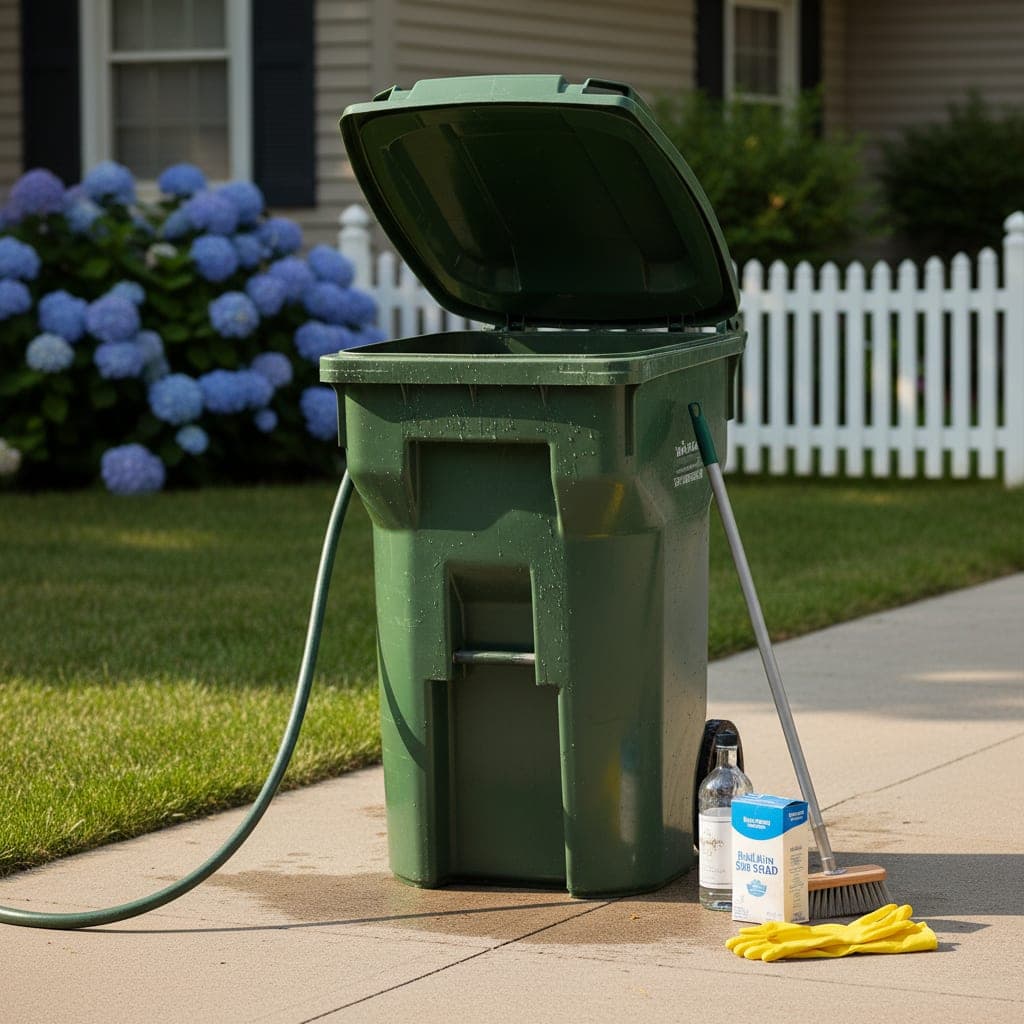
After the boiling water has killed the maggots, you need to scrub the can to remove the residue, odor, and any eggs that might still be clinging to the surface. Mix one cup of white vinegar with half a cup of baking soda and pour it directly into the damp trash can. The mixture will fizz aggressively, and that fizzing action helps lift organic material from the walls and bottom of the can. Let it foam for about ten minutes, then scrub the entire interior with a long-handled brush or a stiff bristled broom. Pay close attention to the bottom corners, the underside of the lid, and the seam around the hinge area, because flies often lay eggs in these hidden spots where food residue collects. After scrubbing, rinse the entire can with a garden hose. You want the rinse water to run clear before you stop. Leave the can upside down in the sun for at least an hour to dry completely. A dry can is critical because moisture combined with any remaining food trace is exactly what attracts flies back.
The dish soap method for moderate infestations
For a moderate case where you are dealing with scattered maggots rather than a full infestation, a concentrated dish soap solution works well and is gentler on the trash can material. Fill the trash can with about four inches of warm water and add a generous squirt of Dawn dish soap, roughly two to three tablespoons. Swirl the water to create a soapy solution. The soap breaks down the maggots' protective coating and suffocates them, and the warm water accelerates the process without the risk of warping a plastic bin the way boiling water sometimes can with thinner plastic cans. Let the soapy water sit for 30 minutes, agitating it once or twice during that time. Then drain, scrub, and rinse. This method works best as a follow up to the boiling water kill if you have a plastic trash bin and are concerned about the plastic deforming under extreme heat. It is also the best option for indoor kitchen trash cans that cannot be taken outside easily.
Using bleach for outdoor garbage cans with severe infestations
For outdoor trash cans where maggots have been breeding for multiple days and the infestation is severe, a diluted bleach solution is the strongest option. After removing the trash bag and pouring boiling water to kill the active maggots, mix one cup of household bleach with one gallon of water and pour it into the can. Use a long-handled brush to scrub the interior thoroughly, making sure the bleach solution contacts every surface including the underside of the lid and the rim. Let the bleach water sit for 15 to 20 minutes. The chlorine kills any remaining larvae and eggs while also destroying the organic residue and bacteria that produce the smell flies are attracted to. After soaking, drain the solution onto a hard surface away from plants and pets, and rinse the can several times with clean water from a hose. The bleach method is overkill for minor cases, but for a garbage can that has been sitting in summer heat with maggots for days, it is the only approach that guarantees complete elimination. Never mix bleach with vinegar or any other acid. Use one or the other, never both.
Diatomaceous earth as a natural long-term deterrent
Food grade diatomaceous earth is one of the most effective natural ways to prevent maggots in a garbage can after you have cleaned it. Once the can is completely dry after scrubbing and rinsing, sprinkle a generous layer of diatomaceous earth across the bottom of the can before dropping in a new trash bag. You can also dust some around the exterior base of outdoor cans and along the rim. Diatomaceous earth works mechanically rather than chemically. The microscopic particles have razor-sharp edges that cut through the soft bodies of maggots and larvae on contact, causing them to dehydrate. It is completely non-toxic to humans and pets, but devastating to soft-bodied insects. The powder remains effective as long as it stays dry, so you may need to reapply after rain or after washing the can. For outdoor garbage cans that are exposed to weather, keeping a layer of diatomaceous earth under the bag is one of the cheapest and most reliable ways to stop maggots from returning.
Essential oil repellent spray to stop flies from laying eggs
Flies hate the smell of peppermint, eucalyptus, and tea tree oil. After cleaning your trash can, create a repellent spray by mixing one cup of water with 20 drops of peppermint essential oil and a teaspoon of dish soap in a spray bottle. The dish soap helps the oil emulsify with the water so it distributes evenly. Spray the interior of the can, the rim, the underside of the lid, and the exterior area around the top where flies typically land. Reapply once a week or after you wash the can. This spray will not kill an existing infestation on its own, but it is highly effective as a prevention measure because it makes the can smell hostile to flies. Layer this with the diatomaceous earth approach and you create two lines of defense: the spray repels flies from landing and the powder kills any larvae that manage to hatch. Together they address the problem from both ends.
How to prevent maggots from coming back permanently
Prevention is far easier than dealing with another infestation. The most important habit is taking out your trash before it sits long enough to attract flies, especially during warm months. In summer, take kitchen trash out every night rather than letting it build up. Rinse any food containers, meat trays, and dairy packaging before tossing them. A yogurt container with residue inside is an open invitation for flies. Double bag anything that contains raw meat, fish, or seafood waste before it goes in the can. Use heavy duty trash bags rather than thin economy bags because flies can detect odors through thin plastic and will lay eggs through tiny tears. Keep the trash can lid closed tightly at all times. For outdoor garbage cans, store them in a shaded area rather than in direct sunlight since heat accelerates decomposition and amplifies the odors that attract flies. Wash the interior of your trash can every two weeks with hot water and dish soap, then dry it completely before putting a new bag in. This simple biweekly routine removes the food residue buildup that accumulates in the bottom of the can even when you use bags, because liquid from food waste inevitably leaks through.
Seasonal adjustments that make a real difference
Maggots in trash bins are overwhelmingly a warm weather problem. Between May and September, the fly lifecycle accelerates so dramatically that eggs can hatch into maggots within eight hours in extreme heat. During these months, increase your cleaning frequency to weekly can washes and nightly trash removal for kitchen bins. Move outdoor garbage cans to the most shaded spot available, ideally under a covered structure rather than against a sun-facing wall. Consider freezing meat scraps and fish bones in a sealed bag until trash pickup day rather than letting them sit in the garbage can for days in summer heat. This freezer trick alone eliminates the single biggest maggot catalyst. In cooler months you can relax the schedule, but the underlying rules stay the same: keep the can clean, keep the lid tight, and never let food waste bake in heat.
What actually worked best after dealing with a severe infestation
I dealt with the worst case after a garbage collection was missed during a July heat wave in Florida. By the time I opened the outdoor can, the infestation was extensive. Boiling water killed everything on contact, and the difference was immediate. The vinegar and baking soda scrub removed the residue and smell that lingered after the kill step. But what prevented recurrence was the combination of three habits I adopted permanently: dusting diatomaceous earth under every new trash bag, spraying the can rim with peppermint oil weekly, and freezing meat scraps until pickup day. I have not had a single maggot in over a year since implementing all three. The single biggest mistake I made initially was washing the can with hot soapy water but not drying it before putting a new bag in. The leftover moisture combined with the Florida heat created a perfect environment for a second round of eggs to hatch within days. Drying the can completely in the sun after washing was the detail that made everything else stick.
Common mistakes that cause maggots to keep coming back
Mistake one: spraying insecticide inside the trash can and calling it done. Bug spray kills the visible maggots but does nothing about the eggs embedded in residue on the can walls, and it does not address the odor that attracted the flies in the first place. You need to physically scrub and rinse the can. Mistake two: only cleaning the inside of the can while ignoring the lid. The underside of the lid and the hinge area are where flies deposit a significant portion of their eggs because food particles splash and stick there when bags are dropped in. Always scrub the lid as thoroughly as the body. Mistake three: using thin, cheap trash bags that tear easily. A single small tear leaks liquid and odor, which is enough for flies to detect and target the can. Heavy duty bags with drawstring closures are worth the small extra cost. Mistake four: leaving the can lid open while waiting for collection or after taking trash out. Even a few minutes with the lid open on a warm day is enough time for flies to enter and lay hundreds of eggs.
Pro Tips
- Freeze meat scraps, fish bones, and seafood waste in a sealed bag until trash pickup day to prevent the odor that attracts flies.
- Sprinkle food-grade diatomaceous earth under each new trash bag as a continuous, non-toxic line of defense against larvae.
- Wash and fully sun-dry your trash can every two weeks during summer months. Moisture left behind is the most common cause of repeat infestations.
- Maggots and roaches are drawn to the same rotting food and grease, and they often show up together. If you are fighting one, get ahead of the other with these natural ways to get rid of cockroaches before an infestation takes hold.
- Maggots in the bin usually mean flies are already breeding nearby. Break the cycle with how to get rid of fruit flies fast and keep them gone using an apple-cider-vinegar trap.
Frequently Asked Questions
What kills maggots in a garbage can instantly?
Boiling water kills maggots on contact and is the fastest method. Pour a full kettle of boiling water directly over the maggots, making sure to cover the bottom and sides of the can. For a chemical approach, a diluted bleach solution of one cup bleach to one gallon of water also kills maggots rapidly. After either method, scrub and rinse the can thoroughly.
Why do I keep getting maggots in my trash can?
Recurring maggots mean flies are still gaining access to food waste in your can. The most common causes are a lid that does not seal tightly, thin trash bags that leak or tear, food containers thrown away without rinsing, and not cleaning the can itself. Flies can smell rotting food from a significant distance and will find even small openings.
Does vinegar kill maggots in a trash bin?
Vinegar alone is not strong enough to kill maggots reliably. However, a mixture of vinegar and baking soda is excellent for scrubbing and deodorizing the can after you have killed the maggots with boiling water or bleach. The fizzing action lifts residue and the vinegar neutralizes the odors that attract flies.
How do you prevent maggots in a garbage can during summer?
Take trash out nightly rather than letting it accumulate. Rinse food containers before tossing them. Double bag raw meat and fish waste or freeze scraps until pickup day. Use heavy-duty trash bags, keep the lid tightly closed, and wash the can with hot soapy water every two weeks. Sprinkle food-grade diatomaceous earth under each new bag for added protection.
Are maggots in a trash can dangerous to humans?
Maggots themselves do not bite or sting, but they feed on decaying organic matter that harbors harmful bacteria including Salmonella and E. coli. Handling an infested trash can without gloves can transfer these bacteria to your skin. Always wear rubber gloves during cleanup and wash your hands thoroughly afterward.
How this guide was made
This Pest Control guide was researched, written, edited, and published by Fredler Pierre-Louis. The 11 steps below are built around Boiling water, White vinegar and Dish soap (Dawn), and the quantities and dwell times come from published cleaning-chemistry and manufacturer guidance for those materials, not from a controlled trial we ran ourselves. Where a popular version of this hack does not work, or is risky on a particular surface, this 12 min guide says so.
- Checked against manufacturer and materials guidance for the surfaces named.
- Reviewed by a person for chemical safety and surface compatibility before publication.
- Written to explain why a method works, not just to list steps.
- Corrected whenever a reader reports an error or an edge case we missed.
Read our full editorial policy or learn more about the team behind TryCleaningHacks.
Related Cleaning Guides
Safety Notes
- Always wear rubber gloves when cleaning a maggot-infested trash can. Maggots feed on decaying organic matter that harbors harmful bacteria including E. coli and Salmonella.
- Never mix bleach with vinegar or any acid-based cleaner. The combination produces toxic chlorine gas that causes respiratory damage. Use one method or the other, rinse fully between treatments.
- When using boiling water, pour slowly and carefully to avoid splashback. Wear closed-toe shoes and stand back from the container as you pour. Keep children and pets away from the area during the entire cleaning process.
You might also like
How to Get Rid of Cockroaches Naturally (10 Effective Methods)
I dealt with cockroaches after moving above a restaurant not an easy starting condition and tested every method here under genuine high-pressure circumstances. Here's what actually controlled the infestation and the single mistake that made everything significantly worse before it improved.

How to Keep Flies Away Outdoors (10 Methods That Actually Work on a Patio)
Most popular outdoor fly remedies fail for a reason you can predict from how flies actually behave, and the cheapest approach is the one that works best. Flies are weak fliers, so moving air beats every spray, candle, and folk remedy on the list, including the water filled bag that has no mechanism behind it at all. Here is the combination that keeps an outdoor dining area genuinely fly free, and the mistakes that draw flies in faster than you can swat them.
How to Get Rid of Bed Bugs Fast: A 24-Hour First Response Plan
The first 24 hours after you confirm bed bugs are the most important window in the entire treatment timeline. What you do tonight decides whether the infestation stays contained to one bed or spreads to the rest of the house by the weekend. Here is the exact first response plan that buys you time, kills the most accessible bugs immediately, and sets up the longer multi week protocol for success.