

How to Get Rid of Fruit Flies Fast (and Keep Them Gone)
Fruit flies do not go away because you swatted a few. They go away when you find and destroy the wet, fermenting spot they are breeding in, and I learned that the hard way over one very buggy August. Here is the exact routine that cleared mine in about four days: the vinegar trap that actually works, the drain and disposal cleaning most people skip, and the habits that keep them from coming back.
Jump to a section
- What you'll need
- Step-by-step
- Understand what you are actually fighting before you set a single trap
- Do a slow, honest hunt for the breeding source
- Build the apple cider vinegar and dish soap trap that genuinely works
- Skip the viral traps that waste your time
- Clean and treat the drain and garbage disposal
- Deal with the trash, recycling, and compost like they matter
- Pro tips
- FAQ
What You'll Need
Step-by-Step Instructions
Understand what you are actually fighting before you set a single trap
The first thing I got wrong was thinking the flies buzzing around my fruit bowl were the problem. They are not. They are the symptom. A female fruit fly lays around 500 eggs in her short life, and she lays them on any moist, fermenting, organic film she can find. That means the eggs and larvae are hidden somewhere, and killing the adults you can see does almost nothing to the population. This is why people set a trap, catch a dozen flies, feel victorious, and then find twenty more the next morning. The generation you did not see just matured. Understanding this changed my whole approach. My job was not to swat flies. It was to hunt for the breeding site and destroy it while simultaneously trapping the adults so they stop reproducing. The common breeding spots, in my experience, are overripe produce, the sink drain and garbage disposal, the recycling bin with a splash of soda or beer in the bottom of a can, a mop that stayed damp, and the little puddle under the dish rack. Honest note: you will not get instant results. Anyone promising you a fly free kitchen in an hour is selling something. The adult flies live one to two weeks, and the eggs already laid will keep hatching for a few days. A realistic timeline is three to five days of consistent effort. Set that expectation now so you do not give up on day two when it looks like nothing changed.
Do a slow, honest hunt for the breeding source
Grab a flashlight and give yourself ten minutes. This step is the one everyone skips, and it is the one that actually matters. Start with produce. Pick up every piece of fruit and check the underside and the stem, where a soft brown spot the size of a dime is enough to raise a whole colony. Check the bottom of the bowl for juice. Then move to the potatoes and onions in the cabinet, because a single rotting potato in the back is a classic hidden source that people overlook for weeks. Next, the trash. Look at the can itself, not just the bag, because juice pools between the bag and the plastic. Then the recycling, which for me was the actual culprit: a beer bottle I had rinsed poorly and a soda can with a sticky half inch in the bottom. Then the sink. Run water and watch where it beads up around the drain lip and the rubber disposal splash guard. Lift that rubber flap and shine the light under it. Mine was coated in a gray film, and that film is a breeding buffet. Also check the drip tray under the fridge, the base of houseplants (fungus gnats look almost identical and breed in wet soil), and any recycling of wine or juice. Troubleshooting tip: if you cannot find a single source and the flies keep coming, the source is almost always a drain. I chased my counters for two days before I accepted that. Honest observation: sometimes there are two or three sources at once, so do not stop hunting after you find the first one.
Build the apple cider vinegar and dish soap trap that genuinely works
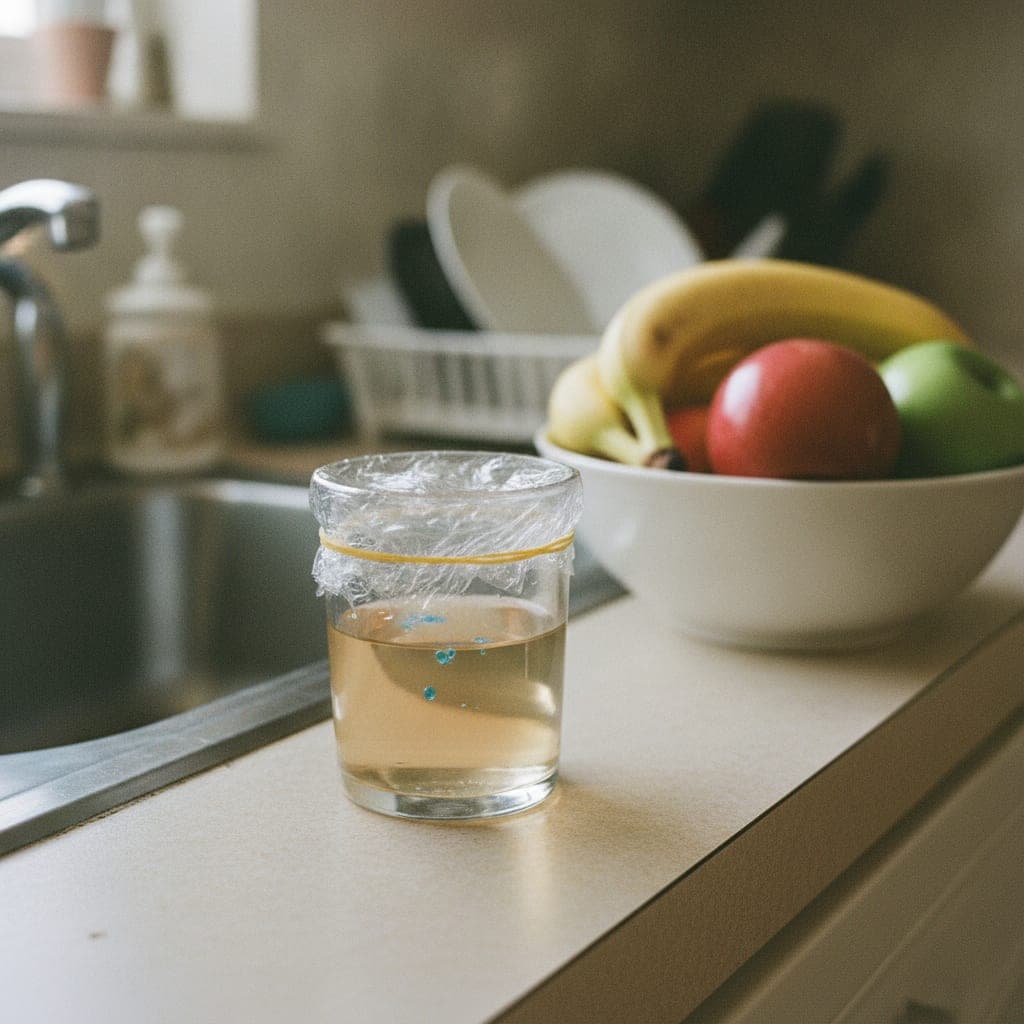
This is the workhorse trap, and it is cheap. Take a small glass or jar and pour in about half an inch of apple cider vinegar. The flies are drawn to the fermented, fruity smell, and cider vinegar smells more like rotting fruit than plain white vinegar does, which is why I use it here. Now the critical part that most people leave out: add two or three drops of liquid dish soap and stir gently. The soap breaks the surface tension of the vinegar. Without it, a fly lands on the surface, drinks, and flies away. With it, the fly touches the surface, sinks, and drowns. That one detail is the difference between a trap that works and a puddle of vinegar that does nothing. You have two good delivery options. Option one: stretch plastic wrap tightly over the top, secure it with a rubber band, and poke five or six holes with a toothpick, each about the width of a pencil lead. The flies crawl in and cannot find their way out. Option two, which I prefer because it is faster: skip the wrap entirely and rely on the soap. An open cup of soapy cider vinegar catches plenty. Set two or three traps, not one, near the sink, the fruit bowl, and the trash. Give it a full day. Troubleshooting: if you are catching nothing, your trap is competing with a stronger smell nearby, which means you still have an uncleaned source. A working trap collects flies within a few hours. Honest note: this catches adults only. It never touches the eggs and larvae, so a trap alone will never end an infestation.
Clean and treat the drain and garbage disposal
For most kitchen infestations, this is the real fix. Fruit flies, and their close cousins the drain flies, breed in the slimy organic gunk that coats the inside of your drain pipe and the underside of the disposal splash guard. You cannot rinse that away with water because the film clings. Start mechanical. Pull out that rubber splash guard if it lifts free, and scrub both sides with hot soapy water and a brush, because the underside is where the eggs sit. Then take a stiff bottle brush or a dedicated drain brush and scrub the inside walls of the drain as far down as you can reach, working the brush around the full circumference. You will pull up gray sludge, and that is exactly what you are after. Next, pour about one cup of baking soda down the drain, follow it with one cup of white vinegar, and let it foam for ten to fifteen minutes to loosen the residue. Chase it with a full kettle of boiling water. If you own an enzyme based drain cleaner, use it overnight per the label, because enzymes actually digest the organic film rather than just rinsing it. For a full walkthrough on how to clean out the drain where they are breeding, that dedicated routine covers the disposal and the P trap in more detail. Run the disposal with cold water and a handful of ice and a lemon wedge to knock loose anything left. Troubleshooting: if flies still hover right over the drain the next day, the film is deeper in the pipe, so repeat the brush and enzyme step two nights running. Honest note: do not mix bleach into any of this. Baking soda, vinegar, boiling water, and enzymes are all you need, and they are safe together.
Deal with the trash, recycling, and compost like they matter
These three are the sources people are most embarrassed to find, and they are incredibly common. Start with the trash can itself. Take the bag out, and if there is any liquid in the bottom of the can, wash the can with hot soapy water and dry it, because that sticky residue is a breeding film. From now on, tie the bag tightly and take it out more often than feels necessary, especially any bag holding fruit scraps, coffee grounds, or meat packaging. Recycling is the sneaky one. Every bottle and can you toss in should be rinsed until it is genuinely clean, not just tipped out. A soda can with a sticky quarter inch in the bottom is a five star fruit fly nursery, and I had several. Wine and beer bottles are just as bad. If your recycling bin has developed a smell, wash it out and let it dry in the sun. Compost, if you keep a countertop bin, needs a tight lid and frequent emptying, every day or two during an active infestation, and I stopped keeping mine on the counter entirely until the flies were gone. Troubleshooting: if you keep finding a few flies near the bins after cleaning, check the floor and wall behind them for a splash you missed, and check the recycling lid hinge where juice collects. Honest observation: this step is unglamorous and it is the one that keeps them from coming back. You can win the battle at the sink and still lose the war if a sticky can is sitting in the bin. Consistency here matters more than any trap.
Store produce so it stops feeding the next generation
Once you have knocked back the source, you have to stop rebuilding it. Fruit flies ride into your home on produce, often as eggs already laid on the skin at the store, so the fruit does not even have to be visibly rotten to start a colony on your counter. My rule now: anything ripe goes in the fridge. Bananas are the exception people worry about, since the cold blackens the peel, but the fruit inside is fine, and a black peel in the fridge beats a fly cloud on the counter. For fruit you want to ripen on the counter, keep it in a bowl with a loose lid or under a mesh dome, and eat or refrigerate it the moment it hits ripe. Wash berries and grapes only right before you eat them, but inspect them when you buy them and toss any that are already split or moldy, because one moldy berry infects the clamshell. Give incoming produce a quick rinse under cool water and a light scrub, which knocks off surface eggs; some people do a brief soak in a bowl of water with a splash of vinegar, then dry thoroughly, and I found that genuinely reduced how fast new flies appeared. Keep onions, potatoes, and garlic in a cool, dark, dry spot and check them weekly for softness. Troubleshooting: if flies reappear specifically around the fruit bowl after everything else is clean, you have a single overripe item hiding in the middle, so empty the bowl completely and wash it. Honest note: the fridge is boring advice, but it broke the cycle for me faster than anything except cleaning the drain.
Wipe down the surfaces where the film lives
Fruit flies do not only breed in obvious wet spots; they feed and lay on any thin film of sugar or ferment on your counters, and that film is often invisible. Think about the ring left by a juice glass, the sticky spot where honey dripped, the splash behind the coffee maker, the seam where the counter meets the backsplash, and the little tray under the dish rack that stays damp. Mix a bucket or spray bottle of hot water with a few drops of dish soap and wipe every counter, paying attention to corners and the base of appliances. Pull the toaster and kettle forward and wipe under them, because crumbs and drips collect there and you never see it. Clean the cutting board grooves, since fruit juice sits in the knife scoring. Do not forget the dish rack tray, the sponge (microwave a wet sponge for one minute or run it through the dishwasher, and replace it if it smells), and the little rubber gasket on any water pitcher. For anything sticky and stubborn, warm soapy water and a few minutes of dwell time beats scrubbing dry. Troubleshooting: if the counters look clean but flies still linger in one spot, run your hand across the surface, because a tacky feel means invisible sugar film that a plain water wipe missed. Honest observation: this step does not catch or kill flies directly, so it feels pointless in the moment, but it removes the thin food layer that lets a few survivors keep going. It is the difference between knocking the numbers down and actually finishing them off.
Hold the line for a full week and confirm they are gone
This is where patience pays off. Even after you have cleaned the source and set the traps, eggs that were already laid will keep hatching for a few days, so you will still see a few flies on day two and three. Do not panic and do not conclude that nothing worked. Keep the soapy vinegar traps fresh, dumping and refilling them every couple of days because the vinegar loses its punch and drowned flies make it less appealing. Keep taking the trash out daily, keep the produce in the fridge, and give the drain one more baking soda, vinegar, and boiling water treatment on about day three to catch any film you missed. By day four or five, the trap catches should drop to near zero, and that declining count is your real progress meter, more reliable than how many you spot in the air. To confirm you truly won, leave one trap out for another few days after you think they are gone; if it stays empty, the breeding cycle is broken. Troubleshooting: if the count is not dropping by day five, you still have an active source you have not found, so go back to the flashlight hunt and check the less obvious spots, the drip tray under the fridge, a potted plant, or a second drain like a bathroom sink. Honest note: if you have flies in more than one room, or they cluster around a drain that never gets food, you may be dealing with drain flies or gnats rather than fruit flies, and the fix shifts more heavily toward drains and soil. Confirming zero catches over several quiet days is the only ending I trust.
Prevent the next infestation before it starts
Getting rid of them once teaches you exactly how to never do it again, and prevention costs far less effort than a full cleanup. My standing habits now: fit a fine mesh strainer over the sink drain so no food particles slip down to feed the film, and rinse the disposal with cold water and run it a few extra seconds after every use. Rinse every recyclable until it is actually clean before it goes in the bin, take the kitchen trash out on a schedule rather than when it overflows, and keep ripe produce in the fridge as a default. Once a week I pour boiling water down the drain and once a month I do the baking soda and vinegar treatment as maintenance, which keeps the film from ever building back up. Wipe the counters at the end of the day so no sugar film sits overnight. In summer I am extra strict, because warmth speeds up the whole fly life cycle and a colony that took a week in spring can explode in three days in July. If your flies were coming in from outside through a window or a patio door, tightening up screens and managing the area just outside helps, and the same principles apply to keeping flies off your patio so they never make it to the kitchen in the first place. Troubleshooting: if you still get a small seasonal wave every summer despite good habits, set one preventive vinegar trap near the fruit bowl as an early warning system, and you will catch the problem when it is two flies instead of two hundred. Honest observation: no kitchen is ever perfectly fly proof, but these habits took mine from a yearly crisis to a rare, minor annoyance.
Pro Tips
- Use apple cider vinegar, not white vinegar, in your trap. The fermented, fruity smell is far more attractive to fruit flies, and the two or three drops of dish soap are what actually drown them by breaking the surface tension.
- Set at least two or three traps in different spots (sink, fruit bowl, trash) instead of one big one. Flies stay near wherever they hatched, so spreading traps catches more of them faster.
- Warm the vinegar for about fifteen seconds in the microwave before adding soap. A warm trap releases more scent and pulled in noticeably more flies for me in the first hour.
- Treat the drain even if you think produce is the culprit. Nine times out of ten there is film in the drain too, and cleaning both at once stops you from chasing the problem for a second week.
- Track your daily trap catch as your progress meter. A falling count means you are winning even while you still see a few flies in the air; a flat count means you missed a source.
- Fruit flies are a nuisance, but bed bugs are a genuine emergency that spreads fast. If you suspect them, do not wait, here is how to get rid of bed bugs fast before they establish.
Frequently Asked Questions
How long does it actually take to get rid of fruit flies?
Plan on three to five days of consistent effort, not an afternoon. The adult flies you see live one to two weeks, and any eggs already laid will keep hatching for a few days after you clean, so you will still spot a few flies on day two and three even when your method is working. The real fix is removing the breeding source and trapping adults at the same time so the population cannot regenerate. If you are still catching just as many flies by day five, you have an active source you have not found yet, and it is almost always a drain or a hidden piece of rotting produce.
Does the apple cider vinegar trap really work?
Yes, but only for the adults, and only if you add dish soap. Pour about half an inch of apple cider vinegar into a cup, add two or three drops of liquid dish soap, and stir. The vinegar smell lures them and the soap breaks the surface tension so they sink and drown instead of drinking and flying off. That soap step is the detail most people skip, and without it you just have a cup of vinegar that catches almost nothing. Just remember the trap never touches the eggs and larvae, so a trap by itself will never end an infestation. You have to clean the source too.
Why do the fruit flies keep coming back after I trap them?
Because you are killing the flies you can see while the next generation is quietly maturing somewhere you cannot. A single female lays hundreds of eggs on any moist, fermenting film, and those hatch on their own schedule regardless of how many adults you catch. If they keep returning, you still have a live breeding site: an overripe fruit, a sticky can in the recycling, or, most often, a film of gunk inside your sink drain or under the disposal splash guard. Find and destroy that source and the returns stop within a few days.
How do I know if they are breeding in my drain?
Watch where the flies hover. If they cluster around the sink and drain even when there is no fruit out, and they seem to appear from the drain itself, that is your answer. Try this test: at night, tape a piece of clear plastic loosely over the drain opening, sticky side down, and check it in the morning. If flies are stuck to the underside, they came up from the pipe. The fix is mechanical scrubbing of the drain walls and disposal splash guard, followed by baking soda, vinegar, and boiling water, and ideally an overnight enzyme cleaner. Drain flies, which look similar, breed exclusively in that pipe film.
What is the difference between fruit flies, drain flies, and fungus gnats?
They get confused constantly because they are all small and annoying. Fruit flies are tan with reddish eyes and hover around ripe produce and fermenting liquids. Drain flies are darker, fuzzier, and moth like, and they sit on walls near drains where they breed in the pipe gunk. Fungus gnats are skinny, dark, and mosquito like, and they come from the wet soil of houseplants. The clue is location: produce means fruit flies, drains mean drain flies, and potted plants mean gnats. The treatments overlap for drains, but gnats need you to let plant soil dry out rather than treating a drain or a fruit bowl.
Which fruit fly hacks are a waste of time?
The inverted plastic bottle funnel is the biggest letdown; the funnel is wide enough that flies simply walk back out, and a plain open cup of soapy vinegar catches more. Sticky ribbon catches a few but does nothing to the breeding cycle and looks grim. Essential oil and lemongrass repellent sprays just push adults to another room where they keep breeding, which is the wrong goal. And any method that focuses only on catching adults while ignoring the drain and produce will fail, because the population rebuilds from the source. Boring source cleaning plus a soapy vinegar cup beats every clever viral trap.
Can I use these methods if I have pets or kids?
Mostly yes, with sensible placement. The soapy apple cider vinegar trap is low toxicity, but set it where a toddler or cat cannot knock it over or drink it, up on a high shelf near the problem area rather than on the floor. Keep enzyme drain cleaners and any commercial products sealed and out of reach. The one firm rule for everyone is never to mix bleach with vinegar, ammonia, or peroxide, since that can produce toxic gas. Stick to baking soda, vinegar, boiling water, and enzyme cleaner for the drain, and you are using only things that are safe in a home with kids and animals.
How this guide was made
This Pest Control guide was researched, written, edited, and published by Fredler Pierre-Louis. The 10 steps below are built around Apple cider vinegar (about 1 cup total), Liquid dish soap and Plastic wrap and a rubber band, or a small jar, and the quantities and dwell times come from published cleaning-chemistry and manufacturer guidance for those materials, not from a controlled trial we ran ourselves. Where a popular version of this hack does not work, or is risky on a particular surface, this 18 min guide says so.
- Checked against manufacturer and materials guidance for the surfaces named.
- Reviewed by a person for chemical safety and surface compatibility before publication.
- Written to explain why a method works, not just to list steps.
- Corrected whenever a reader reports an error or an edge case we missed.
Read our full editorial policy or learn more about the team behind TryCleaningHacks.
Related Cleaning Guides
Safety Notes
- Never mix bleach with vinegar, ammonia, or hydrogen peroxide, and do not pour bleach down a drain right after vinegar. The combination can release toxic chlorine gas. For fruit flies you only need baking soda, vinegar, boiling water, and enzyme cleaner, which are safe used in sequence.
- Pour boiling water down the drain carefully and slowly to avoid splashback and burns, and be cautious with older plumbing, since some PVC pipes and certain glued joints can be affected by repeated boiling water. When in doubt, use very hot tap water instead.
- Keep vinegar traps, enzyme cleaners, and any drain products out of reach of children and pets. The soapy vinegar is not highly toxic, but it is not something you want a curious toddler or cat drinking.
- If you find flies breeding in the soil of houseplants, you are likely dealing with fungus gnats rather than fruit flies. Let the soil dry out between waterings rather than dousing it with chemicals, which can harm the plant.
You might also like
How to Get Rid of Cockroaches Naturally (10 Effective Methods)
I dealt with cockroaches after moving above a restaurant not an easy starting condition and tested every method here under genuine high-pressure circumstances. Here's what actually controlled the infestation and the single mistake that made everything significantly worse before it improved.
How to Get Rid of Maggots in a Trash Can (And Keep Them Gone for Good)
If you have ever opened a garbage can and found maggots crawling inside, you know how unsettling it is. I dealt with a severe case during a Florida summer and tested every removal method I could find. Here is what actually eliminated them overnight and the simple weekly habit that has kept them from coming back.
How to Keep Flies Away Outdoors (10 Methods That Actually Work on a Patio)
Most popular outdoor fly remedies fail for a reason you can predict from how flies actually behave, and the cheapest approach is the one that works best. Flies are weak fliers, so moving air beats every spray, candle, and folk remedy on the list, including the water filled bag that has no mechanism behind it at all. Here is the combination that keeps an outdoor dining area genuinely fly free, and the mistakes that draw flies in faster than you can swat them.